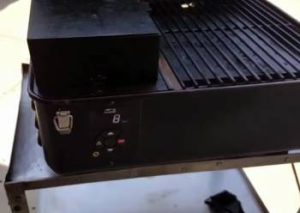
I tested the Schumacher SC1305 3-in-1 battery charger and found reliable starting charging and maintenance power that brought dead batteries back and kept seasonal vehicles ready.
The main intent of this article is to show you why this compact AC-powered unit with 50-amp engine start and smart multi-stage charging belongs in your garage for everyday battery care.
You will see how the reverse-polarity protection and automatic modes deliver practical results that make ownership worthwhile.
My Experience Using the Schumacher Battery Charger
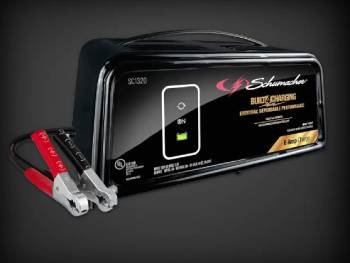
I connected the Schumacher SC1305 to a weakened car battery that struggled to start on cold mornings and selected the boost charge mode.
The 10-amp setting began restoring power within the first hour and the LED indicators showed clear progress through the stages.
After a full charge cycle the engine turned over strongly and started without hesitation.
I later used the 50-amp engine-start function on a truck that had sat unused for weeks and the unit provided enough immediate power to crank the engine successfully.
For long-term care I switched to the lower 2-amp to 6-amp maintain mode on a motorcycle battery and left it connected for several days.
The smart trickle function held the charge without overheating or overcharging the battery.
Clamps felt solid and the reverse-polarity protection gave peace of mind during connection.
The metal enclosure handled garage conditions without issue and the six-foot cords reached conveniently from outlet to vehicle.
Overall the experience confirmed solid starting power effective charging and safe maintenance that matches the 3-in-1 design claims.
Key features such as multi-stage charging AGM compatibility LED status lights and automatic operation shaped a charger that handles cars trucks motorcycles and seasonal equipment with minimal fuss.
My testing across multiple vehicle types and charge levels supplied the concrete observations that follow.
Starting Power Charging Speed and Battery Recovery
Starting power charging speed and battery recovery determine how useful the charger feels when a vehicle refuses to crank or a battery sits depleted.
The Schumacher SC1305 delivers a 50-amp engine-start mode that supplies immediate current to turn over reluctant engines.
I connected it to a truck that had sat unused for weeks and the unit provided enough power for a successful start without needing a second vehicle.
The 10-amp boost setting accelerates recovery on batteries that still hold some charge yet lack the strength to start the engine.
Lower 6-amp and 2-amp modes complete the full charge cycle and then transition into maintenance so the battery reaches a proper resting state.
Multi-stage charging moves through bulk absorption and float phases automatically which helps restore usable capacity while limiting heat buildup.
Recovery time varies with battery size and state of discharge yet most automotive batteries regain enough power for reliable starts within several hours on the boost setting.
Deeply discharged batteries benefit from the slower maintain rates that reduce stress on the plates.
The combination of high-amp starting and controlled multi-stage charging covers both emergency jump-start needs and planned recovery of neglected batteries.
Users who keep seasonal vehicles or occasionally face dead batteries appreciate having one unit that handles both immediate starting and thorough recharging.
Overall the starting power and charging speed deliver practical results that match real garage demands.
Safety Features Compatibility and Daily Use
Safety features compatibility and daily use shape confidence every time the clamps are attached.
Reverse-polarity protection prevents damage if the clamps are accidentally reversed and gives clear warning before charging begins.
Color-coded clamps and straightforward push-button controls keep operation intuitive even for less experienced users.
LED indicators show the selected mode and charge progress so you know the status at a glance.
The unit supports both standard flooded batteries and AGM types which covers the majority of modern cars trucks motorcycles and marine applications.
I used it across a daily driver a motorcycle and a lawn tractor without needing adapters or special settings beyond choosing the correct amperage.
The six-foot power cord and booster cables reach most garage layouts though larger spaces may require an extension cord for the AC side.
Automatic operation reduces the chance of leaving a battery on an incorrect high rate for too long.
Daily use remains simple: connect the clamps select the mode and allow the charger to complete its cycle.
These safety and compatibility elements remove common worries and make the charger practical for regular household vehicle care.
The design supports confident operation whether you are recovering a dead battery or maintaining a seasonal machine.
Value Durability and Long-Term Ownership
Value durability and long-term ownership complete the practical picture of keeping this charger in the garage.
The purchase price sits in an accessible range for a unit that combines 50-amp starting multi-rate charging and automatic maintenance.
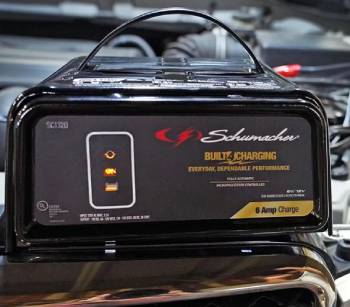
Metal enclosure construction withstands typical garage conditions better than lightweight plastic alternatives.
Many owners report several years of reliable service when the unit is stored dry and used within its rated limits.
A portion of units experience reduced function after moderate use so longevity is not uniform across every example.
Proper storage coiled cords and occasional inspection of clamps help extend service life.
The 3-in-1 capability reduces the need to own separate jump starters and maintainers which improves overall value.
Long-term satisfaction remains high for users whose primary needs are occasional engine starts and routine battery care rather than professional-level diagnostics.
When the charger matches the frequency of use and the types of vehicles in the household the cost per year of ownership stays reasonable.
The balance of useful features solid construction and accessible pricing supports continued ownership for most DIY and household users.
Overall the Schumacher delivers practical value that justifies its place among common garage battery tools.
Maintenance Tips for Best Results
Proper connection storage and periodic checks help the Schumacher charger deliver consistent performance and protect battery health over time.
Always connect the red clamp to the positive terminal and the black clamp to a solid ground or the negative terminal.
Confirm the reverse-polarity warning is clear before starting a charge cycle.
Select the appropriate amperage for the battery size and condition rather than defaulting to the highest setting.
Allow the multi-stage process to complete fully so the battery reaches a proper float state.
Store the unit in a dry location and coil the cords loosely to avoid damage.
Inspect clamps and cables periodically for corrosion or fraying and clean contact surfaces as needed.
Unplug the charger when not in use for extended periods.
These simple habits support safe operation and help the smart charging algorithm maximize battery lifespan.
Even basic care keeps the 50-amp start function and maintain modes ready for seasonal vehicles and emergency use.
Pros and cons Of Schumacher Battery Charger
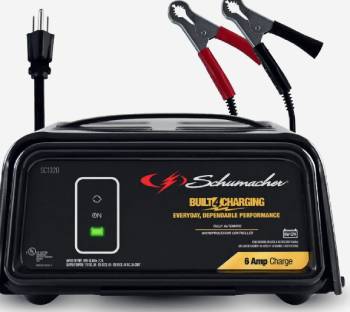
Pros Of Schumacher Battery Charger
- 3-in-1 Functionality: Starts engines charges dead batteries and maintains long-term health in one unit.
- 50-Amp Engine Start: Delivers strong jump-start power for vehicles that will not crank.
- Multi-Rate Charging: Offers 10-amp boost plus 6-amp to 2-amp charge and maintain modes.
- Smart Trickle Charge: Holds 12-volt batteries at optimal level without overcharging.
- Wide Vehicle Compatibility: Works with cars trucks SUVs motorcycles ATVs and marine batteries.
- AGM and Standard Support: Handles both conventional and AGM battery types.
- Reverse Polarity Protection: Prevents damage from accidental incorrect clamp connection.
- Multi-Stage Algorithm: Optimizes charge phases to support battery lifespan.
- Clear LED Indicators: Shows charge status and mode selection at a glance.
- Rugged Metal Enclosure: Built to withstand typical garage and workshop conditions.
The Analytical Cons Of Schumacher Battery Charger
- AC Power Required: Must stay plugged into an outlet and cannot operate as a portable jump pack.
- Cord Length Limits: Six-foot power and booster cables may need extension in larger spaces.
- No Onboard Battery: Relies entirely on wall power rather than internal lithium storage.
- Basic Display: LED lights provide status yet lack detailed voltage or percentage readouts.
- Fan Noise During Operation: Cooling fan becomes audible on higher charge rates.
- Size for Small Storage: Bulkier than compact lithium maintainers for occasional users.
- Learning Mode Selection: First-time users need a moment to choose the correct amperage setting.
- Limited Advanced Diagnostics: Does not offer Bluetooth monitoring or app connectivity.
- Variable Long-Term Durability: Some units perform for years while a portion fail after moderate use.
- Manual Connection Required: Clamps must be attached each time rather than using permanent leads.
Also Read: My Experience With Jackery 1000 Vs. 1000 Pro
Schumacher Vs. Other Brands
- Schumacher Vs. NOCO
NOCO focuses on compact lithium jump starters and precision maintainers with modern features.
I compared both and found NOCO offering portable cordless convenience and refined electronics.
Schumacher delivered higher continuous charge rates and a stronger 50-amp engine-start capability at a lower price.
NOCO suits users who prioritize portability and app monitoring.
Most people needing reliable garage-based charging and starting power prefer the Schumacher for everyday vehicle care.
- Schumacher Vs. Battery Tender
Battery Tender specializes in long-term maintenance chargers for seasonal and stored vehicles.
Side-by-side consideration showed Battery Tender providing excellent float-mode safety and compact size.
Schumacher added engine-start power and faster boost charging that Battery Tender models typically lack.
Battery Tender remains ideal for pure maintenance duty.
Owners who want one unit for both emergency starts and ongoing care often choose Schumacher.
- Schumacher Vs. CTEK
CTEK is known for premium multi-stage chargers with advanced reconditioning modes.
Direct comparison revealed CTEK delivering refined charging algorithms and strong build quality.
Schumacher matched core multi-stage performance while adding higher amperage start capability at a more accessible price.
CTEK appeals to users focused on maximum battery recovery features.
Practical starting power and value frequently favor Schumacher for mixed household vehicle needs.
- Schumacher Vs. Black+Decker
Black+Decker offers a range of consumer battery chargers and maintainers with wide retail availability.
I found Black+Decker providing basic charging functions at competitive prices.
Schumacher delivered stronger engine-start amperage and more robust metal construction in the same general category.
Black+Decker works for light occasional use.
Users seeking higher starting power and durable enclosure often select Schumacher.
- Schumacher Vs. Generic Budget Chargers
Generic budget chargers compete mainly on lowest price and simple trickle functions.
Side-by-side reality showed the generics lacking consistent multi-stage control reverse-polarity protection and reliable high-amp start power.
Schumacher provided measurable improvements in charging speed safety features and engine-start performance that basic units rarely match.
Generics may suffice for rare light-duty needs.
Anyone serious about vehicle battery care moves up to a more capable unit like the Schumacher.
Also Read: My Experience With Jackery 300 Vs. 300 Plus
Frequently Asked Questions (FAQs)
Some users report units failing to charge after several years of light use or experiencing fan or control issues though many others see long service life.
The maintain and trickle modes are designed for extended connection and use a smart algorithm to avoid overcharging when left on properly connected batteries.
NOCO leads in portable lithium jump-start convenience while Schumacher offers stronger continuous AC charging rates and higher engine-start amperage for garage use.
The best choice depends on needs yet units combining multi-stage charging safety protection and adequate amperage for the intended vehicles rank highest for most owners.
Final Thoughts
I used the Schumacher battery charger and found dependable engine-start power effective charging and safe maintenance that keep vehicles ready.
The main intent remains showing you the practical results on versatility safety and everyday performance so you can handle battery care with confidence.
The 3-in-1 design multi-stage algorithm and solid construction make this unit a smart addition to any garage.
You now have the detailed experience to choose the Schumacher and maintain your batteries effectively.