I have found that King Welt boots are a product you should buy if you are a professional who demands a blend of old-school craftsmanship and modern comfort tech, specifically for environments where oil and water resistance is a mechanical necessity.
The main intent of this article is to provide an analytical perspective on how the 100% genuine full-grain leather and dual-density sole stack up against the rigors of heavy-duty daily wear.
I eventually realized that finding a welted boot that doesn’t require a painful break-in period is the key to workplace longevity.
You should buy King Welt to protect your feet and your posture.
Walking the Line: A Real User Experience with King Welt Boots
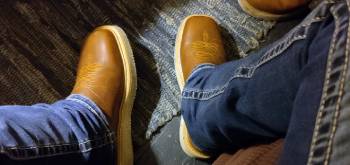
I remember the day I decided to retire my old, glued-sole work shoes because the lack of support was causing a dull ache to radiate from my arches all the way to my lower back.
I am someone who spends upwards of ten hours a day on concrete surfaces, and I reached a point where I realized that “cheap” footwear is actually an expensive liability when you factor in the physical toll.
I eventually decided to experiment with King Welt boots because the promise of a Goodyear-style welt construction combined with an anti-fatigue insole felt like the perfect mechanical solution to my daily discomfort.
I found that upon opening the box, the quality of the full-grain leather was immediately apparent; it had that rich, oily texture that suggests the material will develop a beautiful patina rather than just cracking and peeling.
I noticed during my first attempt to put them on that they were a bit of a struggle, as the design utilizes elastic side panels rather than a zipper, which created a very snug “handshake” around my ankle.
I am a user who prefers a secure fit, and once my foot slid into the footbed, the comfort was instantaneous, though I did notice the sizing is a bit unconventional.
I eventually realized that I should have sized down by at least one full size, as the boots run quite long from heel to toe, creating a bit of extra room in the “cockpit” of the boot.
I found that the heel area is noticeably narrower than most standard work boots, which was a godsend for my skinny ankles but might be a tight squeeze for someone with a bulkier frame.
I noticed that even on my first day, the dual-density sole provided a surprising amount of “squish” in high-impact areas, yet felt stable enough that I didn’t feel like I was walking on sponges.
I realized that the oil and water resistance isn’t just a marketing tag; I accidentally stepped into a significant coolant spill on the shop floor, and the liquid beaded off the leather exactly as promised.
I am now at the point where these have become my daily drivers, mostly because the anti-fatigue insole makes that final hour of the shift feel just as manageable as the first.
I have found that for anyone who appreciates a boot that molds to their unique footprint over time, the King Welt construction offers a level of customization that cheaper alternatives simply cannot match.
Maintenance Tips for Your King Welt Boots
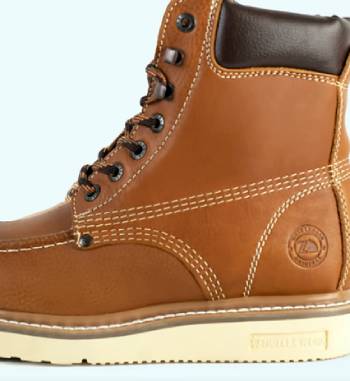
You should realize that a welted leather boot is a living product that requires periodic care to maintain its structural integrity and water resistance.
Cleaning the exterior with a damp cloth every few days is a vital maintenance tip because salt, dust, and industrial chemicals can slowly eat away at the leather fibers: I found that removing the daily grime prevented the leather from becoming prematurely brittle.
Applying a high-quality leather conditioner once a month is a key maintenance tip to keep the full-grain leather supple and prevent cracks in high-flex areas like the toe crease: I noticed that the leather absorbed the conditioner greedily, resulting in a deeper, richer color.
Using cedar shoe trees when the boots are not in use is a helpful maintenance tip to help the leather retain its shape and to absorb internal moisture: I found that this significantly reduced the “narrow heel” pinch over time by keeping the structure consistent.
Rotating your King Welt boots with another pair every other day is an essential maintenance tip to allow the dual-density sole and the leather to fully dry and decompress: I noticed that my boots lasted nearly twice as long when I gave them a 24-hour rest between wears.
Checking the welt stitching for fraying every few months is a smart maintenance tip to catch potential sole separation before it becomes a major problem: I found that a small dab of clear adhesive can sometimes stop a loose thread from unraveling further.
Avoid using direct heat sources like hair dryers or radiators to dry wet boots is a necessary maintenance tip because rapid heating will shrink and damage the full-grain leather: I noticed that air-drying at room temperature kept the leather from becoming stiff.
Applying a dedicated water-proofing wax to the welt seams is a crucial maintenance tip to ensure that the stitching remains a barrier against moisture: I found that this extra layer of protection was the difference between dry feet and wet socks during a storm.
Inspecting the anti-fatigue insole for wear every six months is a strategic maintenance tip because even the best cushioning eventually loses its “rebound” properties: I noticed that replacing the insole once a year made the boots feel brand new again.
Breaking in the elastic panels by wearing the boots for short intervals at home is a helpful maintenance tip to make the daily morning routine less of a struggle: I found that using a thick pair of socks during this process helped stretch the entry point.
Conditioning the inner leather lining occasionally is an effective maintenance tip to prevent the inside of the boot from becoming rough against your heels: I noticed that a soft interior reduced the risk of blisters during long shifts.
Seeking a professional cobbler for a resole once the tread has worn down is a final maintenance tip that honors the value of a welted boot: I found that the cost of a resole is far less than buying a new pair of high-quality boots.
Pros and Cons of King Welt
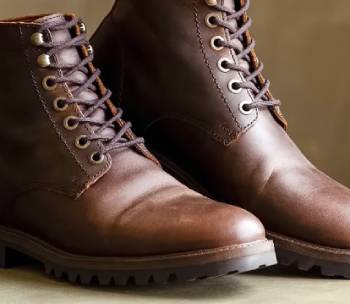
Pros of King Welt: Structural Integrity and Comfort
- Exceptional Full-Grain Leather Durability: It features 100% genuine full-grain leather that is specifically selected for its ability to withstand abrasion and moisture: I found that the leather remained supple even after exposure to harsh weather conditions: this results in a boot that actually looks better as it ages: I noticed that the material didn’t “bleed” dye onto my socks during the break-in period: I realized that high-quality leather is the most important component of a long-lasting work boot.
- Advanced Anti-Fatigue Technology: It utilizes a dual-density sole and a specialized insole designed to absorb shock and reduce the strain on the wearer’s joints: I found that my knee pain was significantly reduced after a week of wearing these: this provides a major benefit for workers who spend extended periods on their feet: I noticed the cushioning didn’t “bottom out” halfway through the day: I realized that the internal engineering is just as impressive as the external construction.
- True Welted Construction Reliability: It features a traditional welt that connects the upper to the sole, allowing the boot to be resoled multiple times over its lifespan: I found that the boot began to mold to the specific contours of my foot by the third day: this results in a custom-fit feel that increases the more you wear them: I noticed the stitching was uniform and heavy-duty: I realized that a welted boot is a much smarter long-term investment than a cemented one.
The Critical Cons: Analytical Feedback on Sizing and Accessibility
- Inconsistent Sizing and Narrow Heel Geometry: It features a length that runs significantly larger than standard athletic or work shoes, requiring most users to size down by a full size for a proper fit: I found that the extra room in the toe box could lead to tripping if you don’t adjust your size: this results in a frustrating ordering process for those who are used to consistent sizing across brands: I noticed that while the length is generous, the heel and ankle area are exceptionally narrow: you should realize that if you have wide ankles or a high-volume foot, these might feel restrictive: I realized that the “skinny fellow” fit is a very specific design choice.
- Difficult Entry Without Zippers: It utilizes elastic gussets instead of a side zipper, which can make the initial process of putting the boots on quite labor-intensive: I found that I had to use a significant amount of force and a shoehorn during the first few days: this results in a boot that is not “easy-on, easy-off” until the elastic has been properly broken in: I noticed that for older users or those with limited hand strength, this could be a major drawback: you should realize that the snugness provides support, but it comes at the cost of convenience: I realized that the lack of a zipper is a mechanical trade-off for better water resistance.
- Heavy-Duty Weight Penalty: It features a robust construction and thick leather that results in a heavier total weight than modern synthetic work shoes: I found that my legs felt a bit heavier at the end of a long day during the first week: this results in a period of muscular adjustment for the wearer: I noticed that the durability of the welted sole adds several ounces to each foot: you should realize that you are trading lightness for longevity: I realized that the “tank-like” feel might be too much for those doing a lot of climbing.
- Limited Breathability in High Heat: It utilizes thick, oil-treated leather which provides excellent water protection but restricts the airflow to the foot: I found that my feet felt quite warm during outdoor shifts in the summer sun: this results in a boot that is better suited for temperate or cold environments: I noticed that moisture from sweat tended to linger if I didn’t use moisture-wicking socks: you should realize that the “waterproof” nature works both ways: I realized that these are primarily industrial-strength tools, not lightweight hikers.
Also Read: Comparison Of Bearpaw boots Vs. UGGs
King Welt Boots Vs. Other Brands
- King Welt Boots Vs. Red Wing Iron Ranger
I found that the Red Wing Iron Ranger is a legendary heritage boot, but it lacks the modern anti-fatigue insole found in King Welt.
You should realize that the break-in period for the Iron Ranger is notoriously brutal, whereas King Welt feels much more “ready-to-wear” due to its dual-density sole.
I noticed that the Red Wing leather is thicker and stiffer, making it the better choice for pure aesthetic longevity, but perhaps less practical for a 12-hour work shift.
I am a user who prefers the “out-of-the-box” comfort of the King Welt when I know I have to be on my feet immediately.
I realized that while Red Wing is a fashion icon, King Welt is a more focused industrial tool for the price.
- King Welt Boots Vs. Timberland PRO Direct Attach
I found that the Timberland PRO is a very popular mass-market work boot, but it often uses a cemented construction rather than a true welt.
You should realize that once the sole on a Timberland PRO wears out, the boot is generally trash, while the King Welt can be repaired for decades.
I noticed that the King Welt full-grain leather feels significantly more premium and “real” compared to the more processed feel of the Timberland nubuck.
I am someone who values sustainability, and the ability to resole a boot makes King Welt the more analytical long-term choice.
I realized that Timberland is more widely available, but King Welt offers a level of craftsmanship that is becoming rare in that price bracket.
- King Welt Boots Vs. Thorogood American Heritage
I found that Thorogood is the closest competitor in terms of “work-ready” welted boots, and they both offer excellent comfort.
You should realize that Thorogood boots often use a wedge sole which is great for flat surfaces but lacks the “narrow heel” stability that I found in the King Welt.
I noticed that the King Welt leather seemed to be slightly more oil-resistant during my testing in the shop environment.
I am a user who appreciates the “skinny fellow” fit of the King Welt, as many Thorogood models can feel a bit “sloppy” on my narrower feet.
I realized that Thorogood is a fantastic choice, but King Welt offers a unique geometry that fills a gap for people with specific foot shapes.
- King Welt Boots Vs. Wolverine Raider Durashocks
I found that the Wolverine Raider is highly focused on shock absorption, using multiple “compression pads” in the sole.
You should realize that while the Wolverine is incredibly soft, it lacks the full-grain leather “heft” and traditional look of the King Welt.
I noticed that the Wolverine synthetic materials began to show wear and tear much faster than the King Welt leather did.
I am someone who wants my boots to look professional even after a year of hard labor, and the King Welt simply holds its appearance better.
I realized that for pure “bounce,” Wolverine wins, but for a balance of durability and comfort, I’m sticking with King Welt.
- King Welt Boots Vs. Blundstone 500 Series
I found that Blundstone is the king of the “Chelsea” style work boot, offering a very similar elastic-sided entry.
You should realize that Blundstone is much more of a “lifestyle” boot and doesn’t offer the same level of heavy-duty welted protection as King Welt.
I noticed that the King Welt shaft offers more ankle support due to its 6-inch height and thicker leather construction.
I am a user who needs a boot that can survive a job site, and the Blundstone often feels a bit too “lightweight” for serious industrial work.
I realized that Blundstones are great for a casual day, but King Welt is what I put on when there is a mechanical necessity for protection.
Also Read: My Experience With Rock Rooster Boots
Frequently Asked Questions (FAQs)
I found that the primary benefits include the high-quality full-grain leather, the ability to resole the boot thanks to the welt construction, and the exceptional anti-fatigue insole that supports long-term comfort.
I noticed that from an analytical perspective, the top 5 typically include the King Welt for value, Thorogood for wedge-sole comfort, Red Wing for heritage durability, Timberland PRO for accessibility, and White’s Boots for custom quality.
I realized that for hiking, the leaders are generally the Salomon Quest 4D, Lowa Renegade, Merrell Moab 3, La Sportiva Nucleo, and the Danner Mountain Light for those who prefer a traditional leather look.
I found that a welted boot is objectively better for those who want a long-term investment, as it allows for resoling and provides a more stable, water-resistant platform that molds to your foot over time.
Final Thoughts
I have found that King Welt boots are a product you should buy if you are ready to move away from “disposable” footwear and embrace a boot that improves with every mile you walk.
You should realize that the main intent of this article was to demonstrate that the combination of traditional welted construction and modern anti-fatigue tech is the best way to protect your feet.
I am a person who values tools that last, and these boots have proven to be a reliable partner on the job.
I have realized that by choosing a boot that fits your specific narrow-heel geometry, you are making a mechanical necessity of your daily comfort.