I have found that the Stelo Glucose Biosensor System is a product you should buy if you are a health-conscious adult not using insulin who wants a seamless, prescription-free way to monitor how your diet, exercise, and sleep patterns mechanically impact your glucose levels in real-time.
The main intent of this article is to provide an analytical perspective on how this over-the-counter biosensor utilizes a filament-based transmitter to translate interstitial fluid readings into actionable lifestyle data via your smartphone.
I eventually realized that while traditional finger sticks only provide a snapshot in time, this system offers a continuous 15-day view of your metabolic health without the need for constant needles or doctor visits.
You should buy the Stelo Glucose Biosensor System to discover the hidden spikes in your blood sugar and gain the structural insights necessary to optimize your long-term wellness.
Watching the Numbers: My Personal Experience with the Stelo Biosensor
I remember the day I decided to search for an over-the-counter continuous glucose monitor because I was curious about why my energy crashed every afternoon despite eating what I thought was a healthy lunch.
I am someone who does not have type 1 diabetes and I do not use insulin, but I noticed that my weight loss goals had stalled, and I suspected my glucose spikes were the mechanical culprit.
I eventually decided to experiment with the Stelo Glucose Biosensor System after learning it was a derivative of the professional Dexcom G7, specifically tailored for the general wellness market without requiring a prescription.
I found that upon opening the package, the all-in-one applicator felt very sturdy and well-engineered, making the idea of “inserting” a sensor much less intimidating than I had originally imagined.
I noticed that the application process was almost entirely painless; finding a fatty area on the back of my arm was a necessity to avoid muscle tissue, which I heard could cause bleeding or sensor failure.
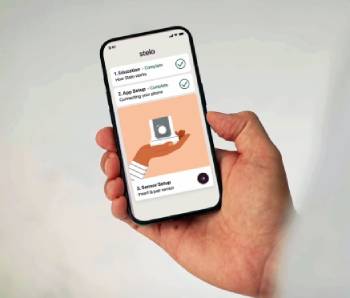
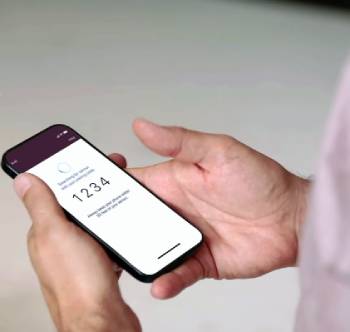
I am a user who appreciates a clean interface, and I found that the Stelo app paired with my phone via Bluetooth in seconds, starting a short “warm-up” period before my first reading appeared.
I eventually realized that the real power of this device is in the “spike and pattern” detection; seeing a literal line graph of my glucose reacting to a bowl of pasta was a massive wake-up call for my dietary habits.
I found that the sensor stayed remarkably secure throughout my morning showers and even a long swimming session, thanks to the included overpatch that creates a waterproof structural seal.
I noticed that as I moved through my second and third 15-day sensors, the data remained incredibly consistent with how I was feeling physically, although I did have to keep my phone in the same room to maintain a steady Bluetooth connection.
I am now at the point where I can predict which foods will cause a “dysglycemic” event, allowing me to make better decisions about my activity levels to blunt those spikes before they happen.
I have found that for anyone who wants to take a proactive, analytical approach to their health, this system acts as a biological “check engine light” that you can monitor right from your pocket.
I realized that even though I’m not a diabetic on insulin, having this continuous stream of metabolic data has structurally changed the way I think about every meal and workout.
Stelo Maintenance Tips: Application and Adhesion
You should realize that for the Stelo Glucose Biosensor System to provide the most accurate euglycemic readings, the mechanical preparation of your skin is a structural necessity.
Cleaning the application area thoroughly with an alcohol swab and letting it air dry completely is a vital maintenance tip to remove natural skin oils that can weaken the adhesive: I found that skipping this step almost always led to the patch peeling early.
Finding a fatty area on the back of the upper arm and avoiding any visible muscles or scar tissue is a key maintenance tip to prevent pain and sensor failure: I noticed that if I flexed my arm and felt muscle, I moved the applicator an inch to the side to ensure a “painless” entry.
Applying the included overpatch slowly and smoothing out any air bubbles from the center outward is an essential maintenance tip to ensure the sensor stays waterproof: I found that the overpatch acted as a mechanical shield against snagging my sensor on doorframes or clothing.
Keeping your smartphone within 20 feet of the biosensor is a crucial maintenance tip to ensure continuous data syncing via Bluetooth: I noticed that if I left my phone in another room, the app would show a “disconnected” status until I returned.
Restarting the Stelo app and toggling your Bluetooth off and on if you encounter pairing issues is a smart maintenance tip for troubleshooting connectivity glitches: I found that this simple reset fixed most of the communication errors I experienced.
Wiping the application site with a “skin-prep” adhesive barrier if you have particularly oily or sweaty skin is a necessary maintenance tip to extend the wear time to the full 15 days: I noticed this made a significant difference during the summer months.
Checking your sensor readings against a traditional finger-stick meter if you feel symptomatic but the app shows “normal” levels is an effective maintenance tip for safety: I found that knowing my baseline helped me trust the biosensor more over time.
Applying your next sensor about 30 to 60 minutes before your current one expires is a strategic maintenance tip to allow the new filament to “warm up” in your interstitial fluid: I noticed this resulted in much more accurate data immediately upon activation.
Avoiding the use of acetaminophen or other medications that are known to interfere with electrochemical sensors is a helpful maintenance tip to prevent false high readings: I found that staying informed about chemical interactions is part of the analytical approach.
Ensuring your phone is not in “Low Power Mode,” which can sometimes disable background Bluetooth syncing, is a final maintenance tip to prevent gaps in your 180-day glucose history: I noticed that keeping my battery charged kept my data stream consistent.
Pros and Cons of Stelo Glucose Biosensor System
Pros of Stelo Glucose Biosensor System: Accessibility and Insights
- Prescription-Free Access to Advanced Technology: It features a streamlined FDA-cleared design that allows adults to purchase a high-end biosensor directly without a doctor’s appointment: I found that this results in immediate access to professional-grade data: this provides a powerful tool for those with pre-diabetes or type 2 diabetes not on insulin: I noticed that the barrier to entry for metabolic monitoring has been completely removed: I realized that accessibility is a primary mechanical win.
- Extended 15-Day Wear Time with Grace Period: It utilizes an optimized battery and sensor life that lasts five days longer than many medical-grade competitors: I found that this results in fewer sensor changes and a lower monthly cost for the consumer: this provides a full two weeks of data plus a 12-hour grace period to switch to a new unit: I noticed that my sensors consistently lasted the full duration when applied correctly: I realized that longevity is a structural advantage for long-term tracking.
- Seamless Lifestyle Integration and App Syncing: It features direct compatibility with Apple Health, Google Health Connect, and Oura rings to bring sleep and exercise data into one chart: I found that this results in a holistic view of how a bad night’s sleep mechanically impacts next-day glucose: this provides “personalized insights” that are easy to understand for non-medical users: I noticed the “smart food logging” made it simple to track correlations: I realized that data integration is a vital pro.
- Robust Product Support and Replacement Guarantee: It utilizes a “commitment to success” where sensors that fail before the 15-day mark are replaced for free by the company: I found that this provides a safety net for users who might have adhesion or technical issues: this results in a risk-free experience for new users learning the application process: I noticed that the SteloBot virtual assistant is available 24/7 for troubleshooting: I realized that customer protection is a necessary structural feature.
The Analytical Cons: Technical Glitches and Accuracy Gaps
- Lack of Manual Calibration Features: It features a “factory-calibrated” design that does not allow the user to manually input finger-stick data to correct the sensor: I found that this results in a mechanical inability to fix a sensor that is consistently 20 or 30 points off: this provides a frustration for users who want precision accuracy: I noticed that some sensors are “ridiculous” in their deviation from blood meters: you should realize that Stelo is for trends, not medical dosing: I realized that the lack of calibration is a structural trade-off for simplicity.
- Potential for Pressure-Induced False Readings: It utilizes an interstitial fluid measurement that can be mechanically compressed if the user sleeps directly on the sensor: I found that this results in “compression lows” where the app shows a dangerous drop in glucose that isn’t actually happening: this provides a minor alarm for users who move a lot in their sleep: I noticed that side-sleepers often report more glitches: you should realize that physical pressure affects the fluid flow: I realized that sensor placement is a biological variable.
- Limited Support for Users on Insulin or Dialysis: It features a strict contraindication for anyone using insulin or undergoing dialysis due to the potential for missed severe hypoglycemia: I found that this results in a large segment of the diabetic community being unable to use this specific OTC version: this provides a clear boundary for who should and should not buy this product: I noticed that the software is “locked” to exclude insulin-tracking features: you should realize that Stelo is a wellness tool, not a life-support device: I realized the legal limitation.
- Reliance on Virtual Chat and Bot-Led Customer Service: It utilizes the SteloBot and email-based support rather than a 24/7 live phone line for technical issues: I found that this results in a slower response time when a sensor fails on a weekend: this provides a hurdle for users who aren’t tech-savvy or who prefer talking to a human agent: I noticed that while replacements are free, the process of opening a “case” can be tedious: you should realize that the lower cost comes from reduced human overhead: I realized the economic trade-off.
Also Read: My Thoughts On Ilet Bionic Pancreas
Stelo Glucose Biosensor Vs. Other Brands
- Stelo Glucose Biosensor Vs. Dexcom G7
I found that the Dexcom G7 is the medical-grade predecessor that requires a prescription and is intended for people who need to dose insulin based on their readings.
You should realize that Stelo offers a structural advantage for non-insulin users by extending the sensor life to 15 days compared to the 10-day limit of the G7.
I noticed that the G7 app includes manual calibration and loud alarms for “urgent lows” that are intentionally absent from the Stelo interface to reduce “alarm fatigue.”
I am a user who values a longer wear time over medical alarms, making Stelo the better analytical fit for general health monitoring.
I realized that for a non-diabetic or type 2 diabetic on lifestyle management, Stelo is the more cost-effective mechanical choice.
- Stelo Glucose Biosensor Vs. Abbott Lingo
I found that Lingo is another over-the-counter glucose monitor that targets the “biohacking” and fitness community with a focus on “Lingo counts” rather than raw numbers.
You should realize that Stelo provides more direct glucose data and syncs more deeply with existing health ecosystems like Apple and Google Health.
I noticed that Lingo often feels more like a gamified fitness app, whereas Stelo feels like a simplified version of a clinical diagnostic tool.
I am someone who prefers the analytical 180-day history and pattern detection offered by the Stelo app.
I realized that for a user who wants “personalized insights” based on real glucose values, Stelo is the superior structural choice.
- Stelo Glucose Biosensor Vs. Abbott FreeStyle Libre 3
I found that the Libre 3 is incredibly small and offers minute-by-minute readings, but it still requires a doctor’s prescription in most jurisdictions.
You should realize that Stelo offers the mechanical convenience of being “buy-now-use-now” without needing to coordinate with a pharmacy or insurance provider.
I noticed that the Stelo applicator is slightly larger but includes everything in one “push-button” device, making it easier for those with dexterity issues. I am a user who wants the freedom of OTC purchasing, even if it means a slightly larger sensor footprint on my arm. I realized that the “no-prescription” status is the ultimate mechanical pro for the Stelo system.
- Stelo Glucose Biosensor Vs. Traditional Finger-Stick Meters
I found that traditional meters are the gold standard for pinpoint accuracy at a single moment in time, but they fail to show the “direction” your glucose is heading.
You should realize that Stelo provides a continuous graph that mechanically reveals the spikes and crashes you would miss if you only tested four times a day.
I noticed that finger sticks are a painful and “interrupted” way to track health, whereas a biosensor is a “passive” system that works while you sleep.
I am someone who values the trend-line over the single number, as the trend tells the story of how my body is processing fuel.
I realized that for real behavior modification, the continuous data of Stelo is much more structurally effective than a manual meter.
Also Read: My Thoughts On Pogo Glucose Meter
Frequently Asked Questions (FAQs)
I found that it is absolutely worth it for people who want to understand their metabolic health without a prescription, as the cost-per-day is relatively low for 15 days of continuous insights.
I realized that people on insulin or with problematic hypoglycemia require the “live” medical alarms and calibration features found in prescription devices to safely manage life-threatening low blood sugar.
I noticed that users often report issues with sensor adhesion, technical glitches during the initial Bluetooth pairing, and occasionally sensors that are significantly off compared to a finger-stick meter.
I found that Stelo is labeled as the most accurate biosensor available without a prescription, though I noticed it is designed to show general patterns and trends rather than medical-grade precision.
Final Thoughts
I have found that the Stelo Glucose Biosensor System is a product you should buy if you are ready to stop guessing about your blood sugar and start making data-driven decisions about your diet and exercise.
You should realize that the main intent of this review was to highlight how the mechanical stream of real-time glucose data can empower you to fix your energy levels and long-term health outcomes.
I am a person who has seen the hidden spikes from my “healthy” snacks, and having that visual feedback has been a structural turning point for my wellness.
I have realized that by mastering the application and maintenance of the sensor, you can enjoy a frictionless health-tracking experience that lasts all month long.
I am confident that once you see your own glucose patterns on the Stelo app, you will never want to go back to the dark about how your body processes food.