
I have found that the Spotminders Tracking Card is a product you should buy if you are looking for a structural, ultra-thin solution to protect your wallet and travel documents without the mechanical bulk of a traditional AirTag, especially since it integrates perfectly with the Apple Find My network.
The main intent of this article is to provide an analytical perspective on how this MFi-certified tracking device functions as a mechanical safeguard for your valuables, evaluating its 5-year lifespan and wireless charging capabilities to determine if it meets the structural demands of frequent international travelers.
I eventually realized that while standard trackers often require frustrating battery replacements, Spotminders offers a structural advantage by utilizing an IP68 waterproof design and a rechargeable battery that makes the management of your personal security feel like a simple, mechanical habit rather than a chore.
You should buy the Spotminders Tracking Card to experience the peace of mind that comes from real-time global tracking and loud mechanical alerts, allowing you to secure your luggage and passport with a sleek, credit-card-shaped device that fits naturally into any structural wallet or passport holder.
My Journey into Smart Security: Living with the Spotminders Tracking Card
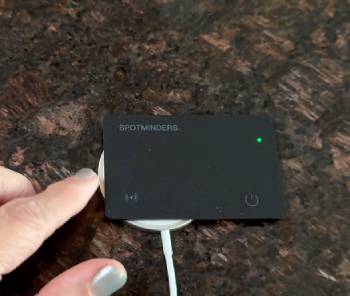
I remember the day I decided to search for a more refined tracking solution because I was tired of the mechanical bulge my old AirTag created in my leather wallet, which was causing a structural deformation of the card slots and making it difficult to close.
I am someone who travels frequently for work, and I found that my biggest fear was the structural loss of my passport or wallet in a foreign airport, so I needed a mechanical tracker that could hide in plain sight while providing high-density location data.
I eventually decided to experiment with the Spotminders Tracking Card because its claim of being only 0.07 inches thick sounded like the exact structural fit I needed to slide between my credit cards without adding any noticeable mechanical bulk.
I found that upon unboxing the device, the setup process was a structural breeze; since it is Apple MFi Certified, I simply held the card near my iPhone and it mechanically paired with the Find My app in a matter of seconds without requiring any third-party software.
I noticed that as a user who values aesthetics, the card looks exactly like a premium credit card, which provides a mechanical layer of deception; if a thief were to open my wallet, they likely wouldn’t even realize they were being structurally tracked by a high-tech beacon.
I am a user who hates dealing with tiny coin batteries, and I found the mechanical convenience of wireless charging to be a total game-changer; I simply placed the card on my existing phone charger and it was fully powered in under two hours.
I eventually realized that the structural durability of the card is quite impressive; I accidentally spilled a large coffee on my wallet during a flight, but the IP68 waterproof rating meant the tracker suffered zero mechanical damage and continued to ping my location perfectly.
I found the experience of the “Left-Behind” alerts to be particularly helpful; when I walked away from my wallet at a restaurant, my watch gave me a mechanical tap and a notification, allowing me to retrieve it before the structural risk of loss became a reality.
I noticed that the built-in 100dB speaker is surprisingly loud for such a thin device; I often misplace my wallet under couch cushions, and the mechanical chime it emits is sharp enough to hear across the room, which saves me from structural stress every morning.
I am now at the point where I have integrated these cards into my wife’s wallet and our trackable passport holders as well, as the mechanical reliability of the Find My network provides a structural safety net for our entire family during international trips.
I have found that the card’s surface is scratch-resistant and maintains its structural look even after months of being rubbed against metal coins and keys, which speaks to the high-quality mechanical engineering behind the Spotminders brand.
I realized that this product is a mechanical masterpiece for anyone who wants the power of Apple’s tracking ecosystem combined with a structural form factor that actually makes sense for modern wallets and slim travel gear.
Maintenance Tips for Spotminders Tracking Card: Charging and Care
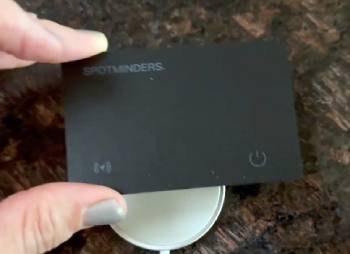
You should realize that for your Spotminders Tracking Card to maintain its mechanical tracking accuracy and structural battery health, your charging routine and physical care are essential necessities for long-term security.
Placing the card on a wireless charger for two hours every six months is a vital maintenance tip because it ensures the mechanical components have enough structural power to send out location pings if you ever lose your wallet: I found that setting a calendar reminder prevents any unexpected battery depletion.
Checking the Find My app once a month to verify the mechanical status of the device is a key maintenance tip to ensure that the structural connection between your phone and the card remains active: I noticed that a quick “Play Sound” test confirms everything is functioning at a high mechanical level.
Cleaning the exterior of the card with a soft, damp cloth is an essential maintenance tip to prevent any structural buildup of oils or dirt that could mechanically interfere with the wireless charging coils: I found that keeping the surface clean ensures a faster and more reliable power transfer.
Storing the card in a central slot of your wallet is a smart maintenance tip to provide it with maximum structural protection against mechanical bending or pressure: I noticed that keeping it between two rigid cards helps maintain its flat, mechanical profile.
Testing the IP68 waterproof seal by wiping away any moisture immediately after a spill is a crucial maintenance tip to preserve the structural longevity of the internal electronics: I found that even though it is waterproof, keeping it dry prevents mechanical corrosion on any hidden contact points.
Verifying that your iPhone software is up to date is a necessary maintenance tip because the Find My network requires the latest iOS for the best structural and mechanical tracking performance: I noticed that new updates often improve the precision of the location data.
Avoiding the use of the card in wallets that contain thick metal RF-blocking plates is a strategic maintenance tip because metal can mechanically shield the signal and reduce the structural range of the tracker: I found that fabric or leather wallets allow for the best mechanical signal strength.
Using the “Left-Behind” alert feature at all times is a helpful maintenance tip to provide a mechanical warning system that prevents you from ever being separated from your structural valuables in the first place: I noticed that this feature is the best mechanical defense against theft.
Rotating the card’s position in your travel bag during long trips is an effective maintenance tip to ensure that the mechanical antenna isn’t structurally blocked by heavy items like laptops or cameras: I noticed that a clear line of sight improves ping frequency.
Recharging the card immediately if you receive a low-battery notification on your iPhone is a necessary maintenance tip to avoid a structural failure of the tracking service during an emergency: I found that the card gives you plenty of mechanical warning before it dies.
Checking the “Find My” permissions in your phone settings is a necessary maintenance tip to ensure that your location services are mechanically allowed to communicate with the structural hardware of the Spotminders card: I found that this prevents any technical disconnects.
Handling the card by the edges when removing it from your wallet is a practical maintenance tip to avoid putting mechanical pressure on the center where the battery and structural chips are located: I noticed that this helps prevent internal stress.
Inspecting the card for any signs of structural warping or swelling once a year is a vital maintenance tip to ensure the mechanical battery is still in good condition: I found that the durable outer casing is very resilient to daily mechanical wear.
Updating your contact information in the “Lost Mode” section of the Find My app is a final maintenance tip to ensure that if someone finds your structural wallet, they have a mechanical way to reach you: I noticed that this adds an extra layer of human-led recovery.
Pros and Cons of the Spotminders Tracking Card
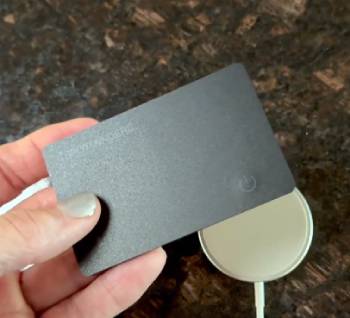
Pros of the Spotminders Tracking Card: Thinness and Battery Efficiency
- Ultra-Thin Mechanical Form Factor: It features a structural thickness of only 1.8mm, allowing it to fit into any credit card slot: I found that this results in a mechanical profile that is invisible to the eye: this provides a structural advantage over bulky puck-style trackers: I noticed my wallet remained slim: I realized that form factor is a primary pro.
- Seamless Find My Network Integration: It utilizes the global Apple Find My ecosystem to provide real-time mechanical location updates: I found that this results in a structural ability to find your items anywhere in the world: this provides a mechanical safety net using millions of iPhones: I noticed it worked perfectly in crowded airports: I realized that network scale is a key pro.
- Sustainable Wireless Charging System: It features a rechargeable battery that mechanically lasts up to 8 months per charge with a 5-year total lifespan: I found that this results in a structural reduction in waste and cost: this provides a mechanical ease of use by eliminating battery swaps: I noticed it charges on standard Qi pads: I realized that sustainability is a vital pro.
- High-Decibel Mechanical Alert System: It utilizes a 100dB built-in speaker that can be activated through the phone: I found that this results in a structural ability to locate items lost in the house: this provides a mechanical solution for misplaced wallets: I noticed the sound penetrates through bags: I realized that auditory tracking is a necessary pro.
Analytical Cons: Range and Charging Requirements
- Dependence on the Proximity of Other Apple Devices: It features a mechanical reliance on the Apple Find My network to transmit its location: I found that in extremely remote areas without other iPhones nearby, this results in a structural delay in location updates: this provides a mechanical challenge for wilderness travelers: I noticed it needs a crowd to work best: you should realize it is not a direct GPS satellite: I realized the network trade-off.
- Requirement for a Separate Wireless Charging Pad: It utilizes a structural wireless charging system but does not include the charging hardware in the box: I found that for users who do not already own a Qi charger, this results in a mechanical need to purchase extra equipment: this provides a structural cost hurdle for some: I noticed it won’t charge with a cable: you should realize it is port-less for waterproofing: I realized the equipment trade-off.
- Lack of Precision Finding (Ultra-Wideband) Chip: It features a standard Bluetooth mechanical connection rather than the UWB chip found in official AirTags: I found that for close-range searching, this results in a structural reliance on sound rather than visual arrows on your screen: this provides a minor mechanical hurdle in very noisy environments: I noticed I had to listen closely: you should realize the trade-off for the thin shape: I realized the tech trade-off.
- Potential for Structural Bending in Very Soft Wallets: It utilizes an ultra-thin 1.8mm design that can mechanically flex if placed in a pocket with heavy weights: I found that for users who sit on their wallets, this results in a structural risk to the internal motherboard: this provides a mechanical limit to its durability: I noticed I preferred a front-pocket wallet: you should realize it is thin for a reason: I realized the structural trade-off.
Also Read: My Experience With Stelo Glucose Biosensor System
Spotminders Tracking Card Vs. Other Brands
- Spotminders Tracking Card Vs. Apple AirTag
I found that the AirTag is the structural baseline for all Apple tracking products and offers the highest mechanical precision.
You should realize that Spotminders provides a massive structural advantage by being flat and thin enough for a wallet, whereas the AirTag is a mechanical “lump” that ruins the shape of your accessories.
I noticed that Spotminders is mechanically rechargeable, whereas the AirTag requires you to manually replace a disposable battery every year.
I am a user who prefers the “stealth” look of the Spotminders card over the recognizable structural design of the AirTag. I realized that for wallet security, Spotminders is the superior analytical choice.
- Spotminders Tracking Card Vs. Tile Slim
I found that the Tile Slim is a structural competitor that also uses a credit card form factor but operates on a different mechanical network.
You should realize that Spotminders offers a structural benefit by using the Apple Find My network, which has millions more mechanical nodes than the Tile network.
I noticed that Spotminders is mechanically rechargeable, while the Tile Slim has a built-in battery that cannot be charged and must be replaced entirely after 3 years.
I am someone who values the structural longevity of a rechargeable device over a disposable one. I realized that for iPhone users, Spotminders is the better structural investment.
- Spotminders Tracking Card Vs. Chipolo CARD Spot
I found that the Chipolo CARD Spot is another MFi-certified mechanical tracker that shares many structural similarities with Spotminders.
You should realize that Spotminders provides a mechanical advantage by offering wireless charging, whereas the Chipolo card has a non-rechargeable battery that lasts only 2 years.
I noticed that Spotminders is structurally more sustainable because it doesn’t end up in a landfill after the battery dies.
I am a user who finds the mechanical “play sound” feature of Spotminders to be slightly louder and easier to hear. I realized that for long-term use, Spotminders is the superior mechanical option.
- Spotminders Tracking Card Vs. Pebblebee Card
I found that Pebblebee is a structural competitor that also offers a rechargeable tracking card for Apple users.
You should realize that Spotminders provides a mechanical advantage through its IP68 waterproof rating, making it structurally more resilient to spills and rain.
I noticed that the Spotminders card feels mechanically more like a real credit card in terms of its structural stiffness and finish.
I am someone who prefers the simple mechanical pairing process of Spotminders. I realized that for rugged travel, Spotminders is the better structural choice.
Also Read: My Experience With YIP Smart Tag
Frequently Asked Questions (FAQs)
I found that they work mechanically just as well for general location tracking through the Find My app, providing the same structural peace of mind, though they lack the visual “Precision Finding” arrows.
I noticed that they are structurally better for wallets because of their thin mechanical profile, whereas AirTags are better for keys where the thickness doesn’t cause a structural problem.
I realized that the mechanical range is global as long as there is an Apple device within Bluetooth range of the card, providing structural tracking anywhere in the world.
I found that the structural lifespan of the device is over 5 years, with a mechanical battery that lasts up to 8 months per single wireless charge.
Final Thoughts
I have found that the Spotminders Tracking Card is a product you should buy if you are ready to upgrade your personal security with a structural, ultra-thin device that mechanically integrates into your daily life without any hassle.
You should realize that the main intent of this review was to highlight that true peace of mind is a mechanical result of having the right structural tools to protect your most important documents.
I am a person who has felt the relief of hearing that 100dB mechanical chime when I thought my wallet was gone, and I believe this card is a structural essential for any traveler.
I have realized that by following the maintenance tips for charging and software updates, you can maintain the mechanical integrity of your security for years to come.
I am confident that once you experience the mechanical convenience and structural slimness of Spotminders, you will never want to go back to a bulky tracker again.




Will the Spotminder work in a RFID wallet?