If you want to escape the constant limitations of a basic flatbed sewing setup and scale up a profitable home business, you should buy this product to secure commercial-grade multi-needle embroidery power at an affordable price.
Making the transition into specialized commercial production can feel intimidating when looking at heavy industrial machines that cost as much as a new car.
The main purpose of this analytical review is to examine the Smartstitch S-1201 multi-needle commercial embroidery machine from a true user perspective, evaluating its unique compact footprint, daily processing speeds, and long-term business value.
You should buy this product right now if you want an accessible, space-saving, and highly precise embroidery machine backed by comprehensive human technical training.
My Personal Experience with the Smartstitch S-1201

When my Smartstitch S-1201 arrived via freight delivery just ten days after ordering, I was incredibly impressed by how meticulously the factory secured the unit inside its protective wooden shipping crate.
The machine itself weighs roughly eighty to ninety pounds, which makes it totally manageable for two people to carry up a flight of stairs or position within a dedicated home spare bedroom workshop.
Unlike massive industrial units that require a permanent heavy warehouse footprint, this chassis is incredibly compact, measuring around twenty-nine by twenty-three inches, which allows it to sit neatly in tight spaces.
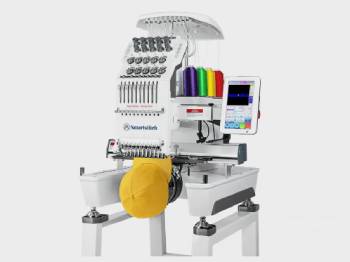
Unpacking was straightforward because the machine comes fully assembled from the factory, and they even include a pre-hooped cap with a finished test design stitched right in the needle bar to prove that the mechanical timing is perfect upon arrival.
My husband and I spent about an hour assembling the heavy-duty steel rolling stand using the clear unpacking videos on their channel, and we were immediately struck by how sturdy the entire structure felt.
The machine starter pack was immensely generous, arriving with fifteen full spools of high-quality embroidery thread, specialized backings, pre-wound bobbins, and a complete mechanical tool kit that I completely did not expect to receive.
As a creator who previously only worked on a standard single-needle flatbed sewing machine, I felt an initial wave of anxiety about managing twelve separate needles and getting the mechanical tension balanced correctly.
However, the day after unboxing, I scheduled my complimentary one-on-one video training session with a dedicated US-based industrial expert who patiently walked me through the touchscreen controls, laser positioning system, and needle bar mapping.
On my very first real production run, I attempted to embroider a complex, multi-colored denim jacket design requiring eight distinct thread color transitions at a blazing speed of one thousand stitches per minute.
The machine handled the dense denim layers flawlessly, automatically trimming the jump stitches and shifting between needle bars with an incredibly crisp, fluid mechanical motion.
I did notice that during the initial setups, the machine can be slightly persnickety about exact needle alignment and bobbin case placement, and any minor thread breaks I experienced early on were completely down to my own user errors.
Once I dialed in the upper tension dials and learned the personality of the machine, it transformed into an absolute jewel that runs reliably every single day, enabling me to churn out beautiful customized gear without any friction.
A Real User Perspective on Engineering and Functionality
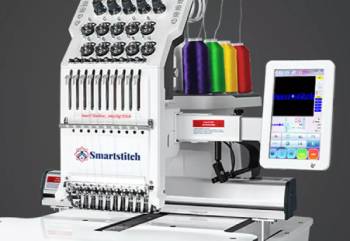
When you study the mechanical design of the Smartstitch S-1201, you see an appliance engineered to bridge the gap between portable home convenience and authentic industrial output.
The main structural foundation relies on a rigid metal chassis that provides excellent stability during high-speed production cycles, preventing the sewing head from shifting out of alignment when ramping up to twelve hundred stitches per minute.
The twelve-needle setup means you can keep twelve individual thread colors permanently loaded, eliminating the tedious, time-consuming task of manually re-threading your machine between different text fields or color blocks.
The centerpiece of user operation is the massive ten-inch LCD touchscreen interface, which is bright, highly responsive, and displays your imported design files with incredible clarity.
The computer terminal possesses a massive memory capacity of one hundred million stitches, allowing you to store hundreds of detailed patterns directly on the physical board without needing a constant connection to an external computer.
Data transfer is beautifully modern, supporting traditional USB flash drives alongside wireless WiFi connections, meaning you can send completed .DST or .DSB design files from your design desktop straight to the machine across the room.
The inclusion of an automatic color-changing motor and an integrated laser positioning pointer removes all the guesswork from aligning your designs, allowing you to trace your hoop boundaries precisely before a single needle strikes the fabric.
Furthermore, the machine delivers a generous embroidery field measuring nine and a half by twelve and a half inches, providing ample room for oversized jacket back logos, large tote bags, and structured team hoodies.
Performance Analysis Across Different Fabric Mediums
I spent several weeks putting the Smartstitch S-1201 through a diverse range of production tests to determine if its compact build could truly handle the punishing materials typical of a commercial custom shop.
When stitching lightweight items like custom polyester polo shirts and delicate cotton t-shirts, the machine holds excellent registration accuracy, provided you use the proper stabilizer backing included in the starter pack.
The satin stitches look incredibly glossy, and the fill patterns are dense and uniform without showing any puckering or gaps along the edges of the artwork.
Transitioning to heavy, rugged materials like stiff duck canvas work jackets and thick marine vinyl bags, the industrial-grade motor shows its true strength, pushing the needles through multiple layers with absolute ease and minimal noise variation.
The cap embroidery assembly requires a brief mechanical setup using the included brackets, but once locked into place, the curved driver allows you to execute clean typography across structured baseball hats without flagging.
The open-arm design underneath the needle plate provides excellent clearance, allowing you to slide tubular items like pre-sewn sleeves, pant legs, and small drawstring backpacks onto the frame without stretching the seams out of shape.
The automatic thread trimmer performs consistently across all these materials, slicing both the upper needle thread and lower bobbin thread cleanly to leave an exceptionally neat reverse side that requires zero manual clean-up before delivery to a customer.
Maintenance and Lubrication Protocols for Industrial Longevity
Maintaining a rigid, undisciplined maintenance schedule is the single biggest mistake home business owners make when stepping up to a commercial multi-needle machine.
Because the Smartstitch S-1201 operates at industrial speeds up to twelve hundred stitches per minute, the mechanical friction generated inside the mechanical parts is immense, making proper lubrication your absolute highest defense against mechanical wear.
You must apply one to two drops of clear sewing machine oil to the rotary hook race assembly after every four to eight hours of active stitching time.
If you run the hook mechanism dry, the intense friction will cause the metal to heat up rapidly, leading to constant thread shredding, snapped needles, and a catastrophic loss of mechanical timing.
Every single week, you need to use a can of compressed air or a soft brush to thoroughly clean out the accumulation of fabric lint, stabilizer dust, and loose thread fibers that naturally build up behind the throat plate and around the automatic trimming knives.
A heavy accumulation of compressed lint inside the knife cavity will prevent the automated blades from executing clean trims, forcing you to stop production and manually snip long thread tails on the back of your garments.
Regularly check the upper tension discs for tiny fragments of thread or sticky adhesive residue left behind by temporary hooping sprays; you can slide a clean piece of dental floss through the steel discs to clear out any invisible obstructions that are distorting your tension balance.
Always make sure the machine power cord is plugged directly into a high-quality, heavy-duty surge protector or dedicated voltage regulator, as sudden home power spikes can damage the delicate circuit boards inside the LCD screen.
By investing just five minutes at the start of every production day to oil the hook and clear out lint, you will keep the machine running like a absolute jewel for years to come.
Pros and Cons of the Smartstitch Embroidery Machine
Pros:
- The compact thirty-nine-kilogram weight and streamlined physical frame make it exceptionally easy to set up and move within a small home workshop or spare room.
- It features a blazing fast maximum production speed of twelve hundred stitches per minute, allowing you to turn around custom orders with incredible efficiency.
- The massive ten-inch color LCD touchscreen provides an intuitive, highly responsive terminal for managing files, adjusting speeds, and checking alignments.
- It arrives with an immensely comprehensive starter pack that includes fifteen spools of embroidery thread, backing paper, tools, and rolling stand components.
- Outstanding one-on-one technical support that pairs you directly with a US-based expert for video training and personalized troubleshooting for an entire year.
Cons:
- The automatic tension discs can be quite persnickety during your initial setup days and require careful calibration based on your specific thread brand:
- The instruction manual translated from the factory can occasionally use slightly confusing phrasing, making the online video tutorials the preferred way to learn:
- The thread stand design places the spools close together, which means you must ensure your thread tails are trimmed neatly to prevent neighboring lines from tangling:
- The machine requires you to meticulously save the original wooden pallet and inner accessory boxes for several days following delivery to validate any potential return requests.
Smartstitch Embroidery Machine Vs. Other Brands
- Smartstitch Embroidery Machine Vs. BAI Mirror
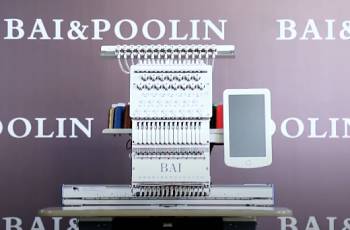
When you compare the Smartstitch S-1201 to the popular BAI Mirror, the primary distinctions involve physical needle count, machine weight, and overall portability.
The BAI Mirror comes equipped with a fifteen-needle setup, which naturally provides three additional color paths compared to the twelve-needle configuration found on the Smartstitch model.
However, that extra hardware makes the BAI Mirror a significantly heavier, bulkier industrial unit that can be incredibly difficult to move around or fit into a standard home office environment without specialized equipment.
The Smartstitch S-1201 focuses heavily on space optimization, offering a lightweight thirty-nine-kilogram chassis that delivers nearly identical industrial stitching speeds of twelve hundred stitches per minute while remaining highly portable.
The Smartstitch user interface features a massive ten-inch touchscreen display, which feels considerably larger and much easier to navigate than the standard display sizes found on competing entry-level commercial machines.
While BAI has built a vast community via social media platforms, Smartstitch provides a highly personalized customer service experience that includes dedicated, one-on-one video training with an assigned US-based technical expert for a full year after purchase, making it an incredibly comforting option for solo entrepreneurs transitioning from a hobby background.
- Smartstitch Embroidery Machine Vs. Ricoma EM-1010
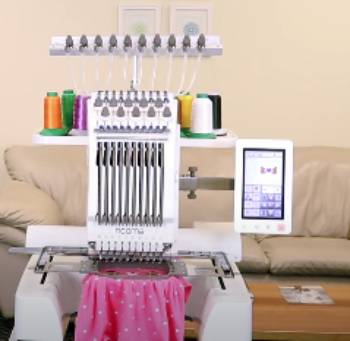
The Ricoma EM-1010 is a widely recognized entry-level multi-needle model, but it carries a steep brand premium that makes it far more expensive on a per-needle basis than the Smartstitch S-1201.
The Ricoma EM-1010 offers only ten needles, meaning you lose out on two critical color lines that the twelve-needle Smartstitch provides at a much lower consumer price point.
In terms of workspace availability, the Smartstitch S-1201 delivers an expansive nine and a half by twelve and a half inch embroidery field, outperforming the restricted hooping areas often found on standard starter packages from legacy brands.
The memory capacity of the Smartstitch board is also highly competitive, handling one hundred million stitches to ensure you never run out of storage space for massive corporate contract designs.
Ricoma machines are famously heavy and require a substantial physical workspace, whereas the Smartstitch layout is explicitly optimized for home-based startups, side hustles, and Etsy crafters who cannot dedicate an entire garage or commercial storefront to their equipment.
When you analyze the total out-of-pocket investment, the Smartstitch includes a complete starter pack with thread and stabilizer alongside personalized support, making it a much more economical and feature-rich path to starting a business.
- Smartstitch Embroidery Machine Vs. Brother PR1055X
The Brother PR1055X is a luxury ten-needle machine designed primarily for high-end home crafters, but it suffers from extreme financial bloat, often costing two to three times the price of the Smartstitch S-1201.
While the Brother machine features incredibly polished consumer features like built-in camera positioning and automatic needle threading, its internal infrastructure is heavily reliant on plastic components and complex sensors that can be expensive to repair outside a certified dealership.
The Smartstitch S-1201 utilizes a streamlined, industrial-first mechanical design that emphasizes raw physical durability, cast-metal structural points, and heavy-duty stepping motors built to withstand non-stop commercial shifts.
The Smartstitch provides twelve needles instead of Brother’s ten, giving you more color options while running at identical maximum production speeds of twelve hundred stitches per minute.
Brother machines use proprietary design files and often require expensive ecosystem accessories, whereas the Smartstitch reads open industrial format DST and DSB files smoothly via WiFi or a basic USB stick.
For an ambitious entrepreneur focused on maximizing their profit margins and generating a rapid return on investment, spending the price of a small car on a domestic craft brand makes little analytical sense when the Smartstitch delivers true commercial utility for a fraction of the cost.
Frequently Asked Questions (FAQs)
Smartstitch embroidery machines are manufactured by a specialized, high-tech industrial embroidery equipment company located in China, utilizing premium manufacturing lines to build compact commercial hardware that is distributed, trained, and supported by local engineering teams across international markets including the United States.
The choice depends entirely on your workspace and color needs; BAI is better if you absolutely require a fifteen-needle setup and do not mind a much heavier, bulkier industrial machine, while Smartstitch is the superior choice if you want a lighter, highly compact twelve-needle machine that fits easily into a home office while providing larger touchscreen displays and personalized one-on-one US video training.
The Smartstitch S-1201 is widely considered the best embroidery machine for the money because it delivers true twelve-needle commercial output, high-speed performance, and a massive accessory starter pack at a price point that is thousands of dollars less than traditional commercial brands.
The Smartstitch S-1201 reads standard industrial .DST and .DSB files, meaning you can use any major embroidery digitizing software on the market such as Hatch by Wilcom, Chroma, Embrilliance, or Wilcom DecoStudio to design your artwork before transferring it to the machine via WiFi or USB.
Final Thoughts
Stepping up to a multi-needle commercial workspace is the most rewarding choice you can make to eliminate the constant slowdowns of craft sewing and maximize your income potential.
The Smartstitch S-1201 perfectly balances industrial strength with a space-saving physical footprint, providing twelve fully automated needles and wireless file transfers without commanding a massive retail price tag.
Throughout this analysis, we examined how its lightweight design, massive ten-inch screen, and stellar localized training program easily outperform overly expensive options like the Brother PR1055X.
If you are ready to scale your side hustle into a thriving production line from the comfort of your home, you should buy this product today to instantly transform your creative capabilities and business workflow.