
I wrote this article to compare Redmond Real Salt and Celtic sea salt through actual kitchen use so you can choose the one that matches your taste texture and daily seasoning habits.
You will see how each salt performs in cooking how the moisture and mineral profiles differ and what those differences mean for real meals.
Both are unrefined options yet they come from very different sources and feel distinct in the hand and on food.
Comparison Between Redmond Salt Vs. Celtic Salt
| Feature | Redmond Real Salt | Celtic Sea Salt |
| Origin | Ancient seabed Utah USA | Coastal France |
| Texture | Drier crystals | Moist grey crystals |
| Color | Off-white to light pink or gray | Light to medium grey |
| Sodium Level | High similar to many mined salts | Lower due to moisture and minerals |
| Key Minerals | 60+ trace minerals including magnesium | Magnesium potassium calcium |
| Harvest Method | Mined unrefined | Hand harvested unrefined |
| Flavor Profile | Clean mild mineral | Briny earthy oceanic |
| Moisture Content | Relatively low | Naturally high |
| Common Forms | Fine coarse grinding salt | Fine and coarse moist |
| Storage Need | Airtight recommended | Airtight essential |
I used Redmond Real Salt for several months as my main kitchen salt because the dry crystals poured cleanly and the mild mineral taste stayed in the background of most dishes.
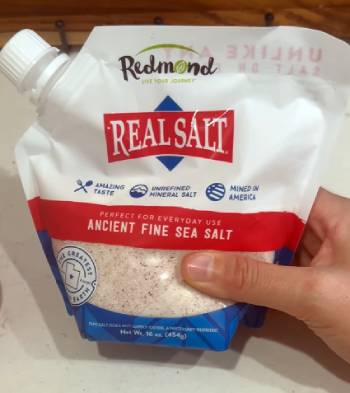
The fine grind worked well in a shaker and the coarser version performed reliably in a mill for table use.
Roasted vegetables took on a clean seasoning that let the natural sweetness of the produce stay forward.
Eggs scrambled with a pinch of Redmond tasted balanced without any strong oceanic edge.
When I introduced Celtic sea salt into the same rotation the moisture difference became obvious right away.
The grey crystals felt damp and clung to my fingers and to the surface of food more than the drier Redmond salt.
On the same roasted carrots the Celtic version delivered a deeper briny note that reminded me of actual sea air.
In a simple tomato salad the Celtic salt stood out more while Redmond blended into the olive oil and vinegar.
I cooked identical pots of soup on consecutive nights using the same volume by weight of each salt.
The Celtic batch carried a stronger mineral finish while the Redmond batch tasted cleaner and less assertive.
Baking bread with both salts produced normal dough behavior once I adjusted for the extra moisture in the Celtic crystals.
I began weighing portions instead of relying on volume spoons because the damp Celtic salt packed differently.
Storage habits settled into a clear routine.
Both salts went into separate glass jars with tight lids kept away from stove steam and humidity.
Redmond stayed free flowing longer while Celtic needed an occasional stir or gentle break-up when the air grew damp.
Over weeks of daily use I reached for Redmond when I wanted neutral seasoning that disappeared into the dish and for Celtic when I wanted a noticeable oceanic character on finished food.
Neither salt created dramatic changes in how I felt day to day yet both improved the taste of simple meals compared with highly refined table salt.
I stayed aware of total sodium because any salt still contributes and moderation remained the practical approach.
Friends who tasted the same plates often preferred one or the other which confirmed that personal flavor preference plays a large role.
The drier texture of Redmond made grinding and shaker use more convenient while the moist Celtic salt excelled at clinging to roasted surfaces.
After extended side-by-side cooking I kept both jars because each filled a slightly different role rather than one fully replacing the other.
That practical kitchen experience forms the foundation of the comparison that follows.
Maintenance Tips for Redmond Salt Vs. Celtic Salt
Proper care of both Redmond Real Salt and Celtic sea salt centers on controlling moisture and protecting the crystals from contamination.
Store each salt in its own clean airtight glass jar with a tight lid and keep the containers in a cool dry pantry away from the stove dishwasher steam and direct sunlight.
Moisture in the surrounding air is the primary reason unrefined salts clump so limiting exposure preserves texture.
When clumping occurs break the mass gently with a clean dry spoon or press the crystals through a small dry sieve before returning them to the jar.
Always use a completely dry utensil to scoop salt so no extra water enters the container. Wipe the jar rim and lid after each use to prevent residual crystals from forming a hard seal.
Label the jars clearly to keep the distinct flavors and moisture levels separate. For longer storage maintain a stable temperature rather than placing the jars in the refrigerator where condensation can form.
Discard any portion that develops an off odor or unusual discoloration and replace it with fresh product. When precision matters weigh the salt instead of relying on volume measures because moisture content affects how the crystals settle.
Clean spilled crystals promptly so they do not attract humidity or leave residue. Rotate stock so older product is used first.
These consistent habits keep both salts free flowing and ready for daily seasoning roasting baking and finishing without unnecessary waste or texture problems.
I cooked with both salts across a wide range of meals and the differences settled into clear practical patterns.
Redmond Real Salt performed best when I wanted clean mild seasoning that supported the other flavors in the dish.
Celtic sea salt excelled when I wanted a stronger oceanic finish that clung to the surface of roasted or finished food.
Neither salt required special skills beyond ordinary moisture management and both delivered reliable results once measuring and storage habits adjusted.
Heavy metal conversations around unrefined salts apply to both products and reinforce the value of moderation rather than exclusive dependence on any single source.
Taste remains personal and the better choice is simply the one you enjoy using most often in your own kitchen.
Price availability and handling preferences also influence the long term decision.
After months of rotation I continue to keep both jars because each serves a slightly different purpose rather than one dominating every meal.
That balanced outcome from real cooking is what I want you to carry into your own decision.
Pros and Cons Of Redmond Real Salt

Pros Of Redmond Real Salt
- Drier Crystal Texture: The relatively low moisture content makes the salt easy to pour grind and store without rapid clumping in most kitchen conditions.
- Clean Mild Mineral Flavor: The taste stays balanced and less assertive which works well for everyday cooking where other ingredients should remain the focus.
- Broad Trace Mineral Profile: The ancient seabed source contributes a range of minerals that distinguish it from highly refined table salt.
- Reliable Performance In Grinders: The drier structure works consistently in salt mills and shakers for table and finishing use.
- USA Mined Origin: Sourced from an ancient deposit in Utah the salt carries a clear domestic harvesting story.
- Versatile Kitchen Use: Fine and coarse options cover baking stovetop cooking roasting and general seasoning without difficulty.
- Consistent Everyday Results: The salt dissolves and seasons predictably once basic storage habits are in place.
The Analytical Cons Of Redmond Real Salt
- High Sodium Density: The sodium chloride percentage sits in a range similar to many mined salts so portion control remains important for daily intake.
- Heavy Metal Findings In Independent Tests: Laboratory reports have detected lead arsenic and aluminum in varying amounts a situation common to many unrefined salts.
- Mineral Amounts Remain Trace: The additional minerals exist in small quantities that do not replace a varied diet rich in whole foods.
- Flavor May Feel Neutral: Users seeking a strong oceanic taste sometimes find the mild profile less distinctive for finishing dishes.
- Price Above Basic Table Salt: Cost is higher than ordinary refined salt especially for branded fine grind versions.
- Potential For Fine Dust: Some bags contain more powder that can affect texture in certain delicate recipes.
- Storage Still Requires Care: Although drier than Celtic the salt benefits from an airtight container to maintain free flowing quality.
Also Read: My Thoughts On Madluvv Brow Stamp
Pros and Cons Of Celtic Sea Salt

Pros Of Celtic Sea Salt
- Moist Texture Improves Adhesion: The natural dampness helps the salt cling to food surfaces and dissolve gradually during cooking.
- Distinct Briny Flavor: The oceanic and slightly earthy taste adds noticeable depth to roasted vegetables soups and finished plates.
- Lower Sodium Relative To Many Salts: Moisture and mineral content reduce the sodium percentage compared with typical table salt.
- Established Mineral Contribution: Magnesium potassium and calcium support the unrefined profile that many cooks seek.
- Flexible Grind Availability: Fine and coarse versions serve baking table seasoning and general kitchen tasks.
- Traditional Coastal Harvest: Hand harvested methods and long market presence give the salt a familiar reputation.
- Effective Enhancement Of Simple Dishes: The flavor stands out in a way that elevates basic meals without complex technique.
The Analytical Cons Of Celtic Sea Salt
- Clumping Due To Moisture: Residual water content causes hardening in humid air and requires airtight storage plus occasional stirring.
- Variable Heavy Metal Reports: Independent testing and public discussions have noted lead and arsenic in some samples.
- Higher Cost For Regular Use: Price exceeds basic salts and becomes noticeable in households that cook frequently.
- Batch To Batch Flavor Shifts: Intensity and mineral edge can vary slightly between packages.
- Texture Adjustment Period: The moist grey feel differs from dry salts and may require familiarization.
- Sodium Contribution Continues: Normal seasoning amounts still add meaningful sodium despite the lower percentage.
- Visual And Handling Differences: The grey moist appearance and feel differ from the drier crystals many people expect.
Also Read: Comparison Of Baja Gold Vs. Celtic Sea Salt
Frequently Asked Questions (FAQs)
No. Celtic sea salt is a moist harvested sea salt from France while Redmond Real Salt is a drier mined ancient sea salt from Utah.
Redmond Real Salt is an unrefined mined salt from an ancient Utah seabed that contains a range of trace minerals and offers a clean mild flavor with relatively dry crystals.
Better depends on personal taste texture preference and intended use. Some prefer the drier mild profile of Redmond or other unrefined options.
People advised by a doctor to strictly limit sodium or those with specific medical restrictions on salt intake should use caution with any sea salt including Celtic.
Final Thoughts
I compared Redmond Real Salt and Celtic sea salt in real cooking so you can see the differences in texture flavor and daily handling without the usual marketing language.
Both provide unrefined mineral content yet the drier mild Redmond salt and the moist briny Celtic salt each perform better in different kitchen situations.
Choose the one whose taste and texture you prefer then store it properly and season with intention so the salt supports your meals rather than becoming the center of attention.