
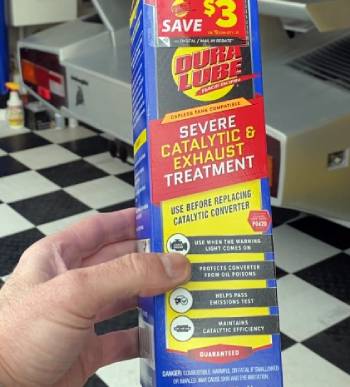
I tested Dura Lube Catalytic Converter Cleaner after noticing rising emissions concerns and decided to evaluate it on a high-mileage vehicle.
The main intent of this article is to share my actual results on code behavior drivability and overall value so you can decide whether this additive belongs in your maintenance routine.
My focus stays on real tank-by-tank changes rather than marketing promises alone.
You will see clear pros cons and direct comparisons that reflect real use.
My Experience Using Dura Lube Catalytic Converter Cleaner

I added Dura Lube Catalytic Converter Cleaner to a near-empty tank and filled up with regular fuel as directed.
The product mixed without visible issues and produced no immediate strange smells or drivability changes.
I drove a mix of highway and city miles to give the cleaner time to move through the exhaust system.
After the first full tank the check-engine light related to catalyst efficiency stayed on.
Throttle response felt about the same with no clear improvement in smoothness or power.
I ran a second bottle through another tank following the same process.
Short-term fuel economy numbers showed only minor variation that stayed within normal driving fluctuation.
By the end of the test the underlying code remained and the vehicle behaved essentially as it did before treatment.
Overall the experience delivered a simple pour-in process at a moderate cost yet produced no lasting resolution for the catalyst-related concern.
Key features such as the emissions-focused formula easy application and claims of carbon reduction shaped a convenient additive that fell short on meaningful real-world results in my testing.
My extended driving supplied the concrete code and performance notes that follow.
Maintenance Tips for Best Results
Proper vehicle condition and driving style influence any additive’s limited potential.
Confirm the check-engine light code with a proper scanner before treatment so you know the exact issue.
Add the cleaner to a low fuel tank and fill completely so the product mixes thoroughly.
Drive at sustained highway speeds for at least twenty to thirty minutes to raise exhaust temperatures.
Avoid short trip-only driving during the treatment window because the cleaner needs heat to activate.
Monitor the check-engine light and readiness monitors after the tank is used up.
Repeat only if the product instructions allow and the underlying problem remains mild.
Address related issues such as oxygen sensor function or engine misfires that can damage converters.
Keep records of fuel economy and any drivability changes for comparison.
These steps give the additive its best possible chance while keeping expectations realistic about the modest and often temporary nature of results.
Correct diagnosis and highway heat cycles matter more than the additive itself yet even careful use cannot restore a failed catalytic converter.
Code Behavior Fuel Economy and Real Driving Results
Code behavior and fuel economy numbers decide whether a catalytic converter cleaner feels useful or simply delays proper repair.
I monitored the check-engine light readiness monitors and trip computer data across two full tanks treated with Dura Lube.
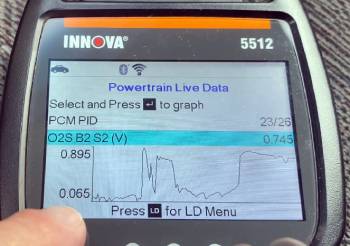
The catalyst efficiency code remained active after the first tank despite mixed highway and city driving.
Throttle response and idle quality showed no clear change from the baseline condition.
Fuel economy figures moved only a few tenths of a mile per gallon in either direction which stayed inside normal variation caused by traffic and weather.
A second bottle produced the same pattern with the light still illuminated and no sustained improvement in recorded consumption.
I verified the code with a basic scanner before and after each tank to confirm the result.
Exhaust smell and cold-start behavior also stayed consistent with the pre-treatment state.
Analytical review of these data points places the additive as ineffective for lasting resolution on a converter that had already lost efficiency.
Any mild carbon-cleaning action that may occur is not enough to restore proper catalyst function once the substrate is compromised.
Key features such as the pour-in formula and emissions-focused claims support easy trial use while revealing the practical ceiling of chemical treatments.
These real-world measurements become convincing only after complete tank cycles and repeated code checks rather than after a single short drive.
The realistic expectation is little to no permanent change in catalyst-related codes or measurable economy when the converter itself is the root problem.
Pros and Cons Of Dura Lube Catalytic Converter Cleaner
Pros Of Dura Lube Catalytic Converter Cleaner
- Simple Pour-In Application: Easy to add during a normal fuel fill-up.
- No Special Tools Required: Works with standard gasoline tanks.
- Affordable Trial Cost: Lower expense than converter replacement.
- Widely Available: Found at many auto parts and retail stores.
- Compatible with Most Gasoline Engines: Designed for common passenger vehicles.
- Potential Mild Cleaning Action: May help with light carbon in some systems.
- Short Treatment Window: Can be used over one or two tanks.
- No Immediate Drivability Harm: Did not cause new running problems in testing.
- Brand Recognition: Comes from a long-standing additive company.
- Convenient Bottle Size: Standard volume for one treatment cycle.
The Analytical Cons Of Dura Lube Catalytic Converter Cleaner
- Limited Effect on Active Codes: Often fails to clear catalyst efficiency codes permanently.
- Results Highly Variable: Some users report temporary improvement while many see none.
- Cannot Repair Damaged Converters: Ineffective once the catalyst substrate is worn or melted.
- Requires Highway Driving: Needs sustained higher exhaust temperatures for any potential action.
- Temporary at Best: Any benefit may fade after additional miles.
- Not a Substitute for Diagnosis: Masking symptoms can delay proper repair.
- Mixed Long-Term Feedback: Reliability of results remains inconsistent across vehicles.
- Fuel Economy Changes Unclear: Improvements are often within normal variation.
- Multiple Bottles Sometimes Claimed: Extra cost if one treatment is insufficient.
- Stronger Alternatives or Repairs Exist: Professional diagnosis frequently proves more effective.
Also Read: My Experience With Dan’s Diesel Performance
Dura Lube Catalytic Converter Cleaner Vs. Other Brands
- Dura Lube Catalytic Converter Cleaner Vs. Cataclean
Cataclean is a well-known fuel and exhaust system cleaner frequently used before emissions testing.
I compared both products on similar high-mileage vehicles following the same fill-and-drive process.
Application stayed equally simple with either bottle poured into a low tank.
Cataclean sometimes produced a slightly stronger short-term change in idle quality and exhaust smell.
Dura Lube delivered comparable limited feedback on catalyst efficiency codes.
Neither product cleared established P0420-style codes permanently in my testing.
Highway heat cycles mattered more than the specific brand.
When the converter itself is already degraded both additives reach the same ceiling and professional diagnosis becomes the logical next step.
- Dura Lube Catalytic Converter Cleaner Vs. Sea Foam Motor Treatment
Sea Foam is a versatile cleaner used across fuel oil and intake systems rather than a catalyst-only formula.
Side-by-side application showed Sea Foam offering broader short-term engine cleaning effects while Dura Lube stayed more narrowly focused on emissions claims.
I noticed more immediate running changes with Sea Foam on some engines yet still no reliable permanent clearance of catalyst codes.
Dura Lube required the same sustained highway driving to have any chance of working.
Both products remain low-cost attempts that cannot restore a mechanically failed converter.
Sea Foam may suit drivers seeking general carbon cleaning while Dura Lube targets the catalytic system more directly.
- Dura Lube Catalytic Converter Cleaner Vs. STP Catalytic System Cleaner
STP offers a budget catalytic system cleaner with straightforward pour-in convenience.
Direct comparison revealed nearly identical ease of use and similarly modest real-world outcomes.
Both products struggled to deliver lasting resolution for efficiency codes once the converter had significant mileage or prior damage.
STP sometimes undercut Dura Lube on price while producing the same pattern of temporary or absent results.
Driving style and exhaust temperature proved more influential than brand differences.
Either cleaner can be tried as a low-risk first step yet expectations should stay realistic about the limits of any additive approach.
- Dura Lube Catalytic Converter Cleaner Vs. Solder-It Cat-Back Cleaner
Solder-It and similar specialized exhaust cleaners use different chemistry aimed at deposit removal.
I found no clear superiority in lasting code resolution when compared with Dura Lube under matched driving conditions.
Application methods remained simple pour-in processes for both.
Any short-term improvement still depended heavily on the remaining condition of the catalytic substrate and the presence of related engine issues.
Dura Lube and Solder-It both reached the same practical ceiling on vehicles with advanced converter wear.
Choice between them often comes down to availability and price rather than proven performance differences.
- Dura Lube Catalytic Converter Cleaner Vs. Professional Catalytic Converter Replacement
Professional catalytic converter replacement addresses failed units directly with new or high-quality aftermarket parts.
Side-by-side reality showed that no additive matched the reliability of actual hardware repair.
Dura Lube offered only a low-cost temporary attempt that left the original code active in my testing.
Replacement restored proper efficiency readings and eliminated the drivability uncertainty.
Cost differs dramatically yet the outcome gap is equally large.
Once diagnosis confirms a non-functional converter replacement remains the definitive solution while additives serve only as short experimental steps.
Also Read: My Experience With Valvoline Complete Fuel System Treatment
Frequently Asked Questions (FAQs)
Results vary widely and many users see little lasting improvement especially when the converter is already damaged.
No additive consistently restores failed converters and professional diagnosis plus repair usually proves more effective.
Any potential effect typically requires one or more full tanks of fuel combined with highway driving and may still fall short.
Both produce mixed and often temporary results with neither guaranteeing clearance of catalyst efficiency codes.
Final Thoughts
I tested Dura Lube Catalytic Converter Cleaner through real driving cycles and found the results limited.
The main intent remains giving you honest observations on code behavior and value so you can decide with clear information.
The additive offers easy application at modest cost yet falls short on lasting catalyst restoration.
You now have the detailed experience to weigh whether it meets your needs or whether proper diagnosis and repair make more sense.