If you are running a growing Etsy shop, a custom apparel business, or an ambitious side hustle and want to move into stable commercial production, you should buy this product to immediately increase your order output and scale your revenue.
Investing in a commercial-grade multi-needle setup is a monumental milestone for any creator, and the market can feel incredibly overwhelming when you are trying to balance industrial power with an affordable budget.
The main intent of this comprehensive review is to analytically evaluate the BAI Mirror 15-needle commercial embroidery machine, assessing its technical specs, everyday performance, and structural value based on real-world production experiences.
You should buy this product if you need a high-speed, multi-color workhorse that eliminates frequent manual thread changes, reduces machine downtime, and gives you the exact competitive edge required to fulfill bulk custom apparel orders seamlessly.
My Personal Experience with the BAI Mirror Embroidery Machine
When the heavy wooden shipping crate arrived at my workshop door, my initial reaction was a mix of intense excitement and minor intimidation.
The packaging was exceptionally secure, wrapped and bolted to a heavy pallet to guarantee that not a single piece of the delicate mechanical arms would suffer damage during transit.
I quickly realized that you absolutely need two people on hand to handle the physical weight of unboxing and lifting this solid industrial machine onto its steel rolling stand.
Once we got it situated, I pulled up the official video tutorial library provided by the manufacturer, which carefully walks you through the entire step-by-step assembly and initial setup process.
I had the machine fully threaded and completely booted up by the very next afternoon, and my first production test run was an absolute revelation for my workflow.
I set up a multi-color corporate logo design requiring six distinct thread transitions on a batch of thick, structured canvas tote bags.
Coming from a single-needle hobby machine where I used to sit and wait around like a hawk just to change thread spools every few minutes, watching the BAI Mirror automatically transition between needle bars at lightning speed felt like pure magic.
The stitch quality right out of the box was outstandingly crisp, producing sharp outlines, dense fills, and flawless satin lettering without a single thread break or tension hiccup on the first day.
The proprietary Institch touchscreen controller felt very natural to navigate, allowing me to import my design files via a standard USB stick, assign color channels to specific needles, and map out the hoop parameters in just a few quick taps.
I did notice that when the machine ramped up to its top flat speed of 1200 stitches per minute, the sheer kinetic energy caused a tiny bit of vibration in my smaller workspace table, but anchoring the heavy-duty stand properly solved that immediately.
The absolute highlight of my initial week was the incredible peace of mind provided by their active online community; when I had a quick question about matching bobbin tension for a thick polar fleece jacket order, I posted a query in their official Facebook group and received an accurate solution from an experienced tech within twenty minutes.
A Real User Perspective on Key Engineering Features
When you dissect the physical build and internal electronics of the BAI Mirror, you quickly understand that this machine is engineered to function as a durable, long-term asset rather than a cheap, temporary hobby fixture.
The frame is constructed primarily from heavy, cast industrial metals designed to absorb the intense forces generated by rapid needle reciprocation over long, continuous shifts.
Embroidery Hoop Store
The headline feature of the unit is its 15-needle configuration, which fundamentally changes the economics of your small business by allowing you to keep fifteen primary thread colors loaded, tensioned, and ready to go at a moment’s notice.
The inclusion of the Institch OS5 control panel gives you a large, vivid color screen where you can preview your layout, scale patterns, and monitor your stitching progress in real time with an easy-to-use guided workflow.
The system utilizes an automated thread trimming and color-changing motor that executes precise jump-stitch trims without leaving messy tails that you have to manually snip later on.
The dual-speed architecture is also beautifully optimized for varied production styles, running at a blazingly fast 1200 stitches per minute for flat garments and patches, while automatically throttling down to a highly stable 850 stitches per minute when handling the difficult, curved geometry of structured baseball caps.
Additionally, the manufacturer ships the machine with a massive array of preset accessories, including multiple sizing options for tubular hoops, a dedicated cap driver, and two specialized hat frames, ensuring that you do not have to waste extra money buying costly add-ons just to start taking diverse client orders.
Performance Analysis Across Apparel and Accessories
I spent several weeks putting this machine through a grueling production schedule, testing it against every common fabric type that a commercial embroidery shop is likely to encounter on a regular basis.
When handling standard flat apparel like custom cotton t-shirts and polyester hoodies, the BAI Mirror sails through large fill areas with incredible smoothness, maintaining perfect alignment and flawless registration even on complex, high-stitch-count graphics.
The 15-needle setup shines brightest when you are executing custom uniforms or intricate multi-colored patches, as it completely eliminates the labor-intensive stopping points that destroy your hourly profitability.
Moving onto structured hats—which is traditionally the absolute hardest test for any budget-friendly embroidery machine—the cap driver assembly clamps down securely to prevent fabric shifting, known as flagging.
By following the industry best practice of dropping the speed down slightly for hats, the machine handled thick buckram seams on flat-brim snapbacks with zero needle deflections or skipped stitches, producing exceptionally clean lettering across the front panels.
The open-arm design also provides plenty of clearance for hooping awkward items like backpack pockets, jacket sleeves, and heavy denim waistbands that would be completely impossible to manipulate on a standard flatbed sewing machine.
Production Maintenance and Lubrication Tips for Peak Efficiency
Maintaining a meticulous maintenance schedule is the absolute lifeblood of keeping an industrial multi-needle embroidery machine running at peak performance and preventing costly line down-time.
Because these machines operate at incredible speeds of up to 1200 stitches per minute, the friction generated within the mechanical components is intense, making proper lubrication your absolute highest priority.
You should apply one to two drops of high-quality sewing machine oil to the hook race assembly after every four to eight hours of continuous stitching time.
Failing to oil the rotary hook will cause the metal components to overheat, resulting in instant thread shredding, birds-nesting underneath the needle plate, and eventual permanent damage to the timing mechanism.
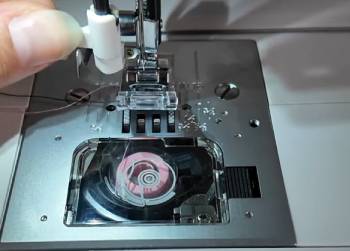
Every single week, you must remove the throat plate completely and use a can of compressed air or a soft-bristled brush to clean out the accumulated lint, fabric dust, and stabilizer debris that builds up around the bobbin case and the thread cutter knives.
A heavy accumulation of lint inside the cutting channel will prevent the automated blades from making clean cuts, leaving long, messy thread tails or causing the needle bars to jam mid-cycle.
Regularly check the upper tension discs for tiny fragments of broken thread or sticky residue left behind by adhesive-backed stabilizers; you can slide a clean piece of dental floss through the discs to clear out any hidden obstructions that might be skewing your tension values.
Always ensure that your machine is completely plugged into a high-quality, dedicated surge protector or voltage stabilizer, as sudden electrical fluctuations can corrupt the delicate digital mainboards inside the Institch control panel.
By dedicating just ten minutes a day to basic cleaning, oiling, and dust removal, you will extend the lifespan of your machine components dramatically and ensure that your stitch quality remains completely flawless from the first order to the last.
Pros and Cons of the BAI Embroidery Machine
Pros:
- The 15-needle setup provides phenomenal production efficiency, allowing you to keep all your primary colors loaded and drastically reducing manual setup time between jobs.
- It features a heavy-duty, cast-metal industrial build quality designed for up to ten years of consistent, daily business operations.
- The dual-speed performance delivers incredibly fast 1200 SPM on flats and a highly reliable, stable 850 SPM on structured caps.
- It comes bundled with a massive, highly generous selection of preset accessories, including multiple hoops and a complete cap station.
MaggieFrames - Exceptional customer support ecosystem backed by an expansive YouTube video tutorial library and an ultra-active 18k+ official Facebook community group.
MaggieFrames
Cons:
- The immense physical weight of the heavy metal frame requires at least two people for safe unboxing and initial assembly:
- The factory-applied packing grease is very heavy and requires a meticulous, thorough wipe-down before threading to prevent staining your initial test garments:
- The touchscreen interface requires a multi-step confirmation sequence for color mapping that feels slightly repetitive until you memorize the layout:
- The internal thread-break sensors can occasionally be overly sensitive when using low-quality, dusty generic threads, requiring precise tension disc adjustments.
BAI Embroidery Machine Vs. Other Brands
- BAI Embroidery Machine Vs Ricoma EM-1010

When you place the BAI Mirror side by side with the well-known Ricoma EM-1010, the most critical contrast you will notice lies within the total needle capacity and the overall value proposition per needle.
The Ricoma EM-1010 is restricted to a 10-needle setup, which means you are going to find yourself frequently unthreading and swapping out spools whenever a customer requests an intricate, highly colorful design or a specific corporate branding palette.
The BAI Mirror gives you fifteen needles right out of the gate, offering far greater flexibility for complex jobs and significantly reducing the human labor time spent prepping the machine between different client orders.
In terms of cost, the Ricoma carries a significant brand premium, often demanding a much higher financial investment for fewer needles and a slightly smaller embroidery field.
While Ricoma boasts an established network of formal corporate training, the massive, highly active community support system surrounding BAI via channels like BAIEmbroideryMachineTV provides real-time, peer-to-peer troubleshooting that is often faster and more practical for a self-starting entrepreneur who needs immediate answers during a late-night production crunch.
- BAI Embroidery Machine Vs. Brother PR680W
The Brother PR680W is a highly popular option in the premium craft and light commercial space, but it features a radically different design philosophy when compared to the industrial-first build of the BAI Mirror.
The Brother unit only offers six needles, which severely restricts your ability to run complex, multi-colored logos without constant manual intervention and programmatic pausing.
The Brother PR680W uses a lighter, more plastic-heavy chassis designed to be portable and quiet for home craft rooms, but this lack of mass means it cannot withstand the punishing, non-stop daily runtime that a true commercial business requires without experiencing accelerated wear on its internal gears.
The BAI Mirror is a heavy, cast-metal beast built for up to ten years of rigorous industrial production, running at significantly higher maximum speeds on flat items to ensure your shop can turn around large-volume wholesale orders on time.
While Brother excels at providing highly refined, incredibly polished consumer software and an effortless built-in needle threading mechanism, the BAI Mirror wins easily on raw physical durability, total needle count, and true industrial output capacity for serious business owners.
- BAI Embroidery Machine Vs. Janome MB-7
The Janome MB-7 is a compact, multi-needle machine that maxes out at seven needles, immediately placing it at a severe disadvantage for any business trying to scale up its custom apparel production.
The Janome machine is essentially a hybrid model that stretches a traditional home sewing machine architecture into a multi-needle frame, meaning its embroidery field size is highly restricted compared to the expansive flat workspace offered by the BAI Mirror.
If you are trying to embroider large jacket backs, expansive hoodies, or oversized decorative patches, the Janome’s small hoop limitations will force you to constantly re-hoop and split your designs, creating massive opportunities for misalignment errors.
The BAI Mirror includes industrial-grade stepper motors and a robust frame that handles large-scale hoops easily, allowing you to execute giant, continuous stitch patterns in a single, uninterrupted session.
Furthermore, the Janome lacks the specialized, heavy-duty cap system built into the BAI, making high-volume, professional hat embroidery incredibly difficult to achieve on the Janome frame.
For anyone looking to graduate from a dedicated hobby workflow into a legitimate, profit-generating production line, the BAI provides a true industrial platform that the Janome simply cannot match.
Frequently Asked Questions (FAQs)
The best brand depends entirely on your production scale and business model, with high-end luxury commercial brands like Tajima and Barudan leading the massive industrial factory market, while BAI stands out as the best overall brand for growing small businesses, Etsy sellers, and side hustles that require real multi-needle commercial power at an affordable, highly accessible price point.
The BAI embroidery machine operates on its proprietary built-in Institch OS5 touchscreen control software for machine management and wireless design transfers, and while it reads standard industrial .DST and .DSB files generated by any major external digitizing software, users typically pair the machine with professional design suites like Wilcom, Hatch, Chroma, or Embrilliance to create and digitize their custom artwork.
BAI is generally considered the better option for serious business owners because it possesses a significantly longer market track record, an established network of localized technical support, American parts warehouses, and an exceptionally large, active online user community that provides superior peer-to-peer troubleshooting compared to newer entry-level rebrands like Smartstitch.
BAI embroidery machines are engineered and manufactured by Jiangmen Baichuan Intelligent Technology Co., Ltd., a highly specialized, large-scale industrial sewing and embroidery equipment manufacturing corporation headquartered in Jiangmen City, Guangdong Province, China.
Final Thoughts
Stepping up to a commercial multi-needle embroidery system is the single most effective way to eliminate production bottlenecks, elevate your product quality, and unlock true wholesale profitability for your custom apparel shop.
The BAI Mirror 15-needle machine successfully delivers the raw physical durability, high-speed output, and multi-color automation of a high-end factory fixture without the prohibitive, six-figure financial barrier.
Throughout this analytical review, we have demonstrated how its heavy-duty cast metal frame, intuitive Institch OS5 system, and extensive preset accessories easily outperform restricted consumer models like the Brother PR680W and Janome MB-7.
If you are completely ready to stop turning away large client orders, minimize your manual labor hours, and scale your business to a position of serious commercial production, you should buy this product today to secure the long-term future and profitability of your brand.