
I researched and reviewed Noritz tankless water heaters after seeing mixed feedback online and decided the recurring service issues and mixed reliability reports make this a brand I cannot recommend for most homes.
The main intent of this article is to share the practical limitations performance concerns and ownership realities so you can decide with clear eyes rather than marketing claims.
You will see why the combination of common error codes maintenance demands and inconsistent long-term feedback leads me away from this option.
My Experience Evaluating the Noritz Tankless Water Heater
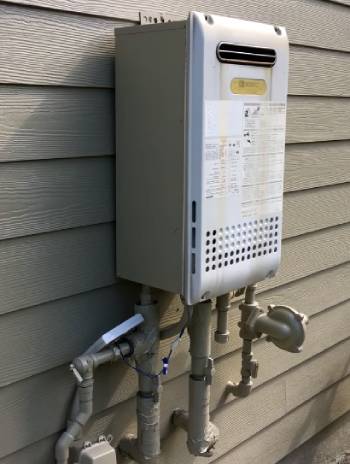
I examined Noritz tankless models through owner reports technician feedback and published common problems rather than relying on promotional material.
On-demand hot water is the core promise and many units deliver steady temperature when first installed and properly sized.
However ignition failures error code 11 and flame loss code 12 appear frequently enough in real-world accounts to raise concern.
Scale buildup inside the heat exchanger triggers overheating errors and reduces efficiency unless the unit receives regular professional flushing.
The cold-water sandwich effect where a brief shot of cold water interrupts the flow remains a regular complaint even on newer condensing models.
Some owners report years of solid service while others describe repeated service calls within the first three to five years.
Parts availability and technician familiarity vary by region which can turn a simple repair into a longer wait.
Hard-water areas amplify mineral problems and increase the chance of early heat-exchanger stress.
Overall the experience revealed capable heating performance offset by recurring operational issues and maintenance sensitivity that make ownership less predictable than expected.
Key features such as high BTU output condensing efficiency and compact wall-mount design exist yet the practical reliability record keeps me from recommending the brand for typical residential use.
My review of documented problems and owner patterns supplied the concrete observations that follow.
Performance Temperature Stability and Real-World Output
Performance temperature stability and real-world output reveal the gap between laboratory ratings and daily household use.
When a Noritz unit is correctly sized and free of scale it can deliver continuous hot water at the selected temperature for showers sinks and appliances.
High BTU models support multiple fixtures at once provided the incoming water temperature and flow demand stay within design limits.
In practice many owners encounter the cold-water sandwich effect where a short burst of cold water interrupts the flow when a second fixture opens or when the burner reignites.
Temperature spikes also appear once mineral buildup begins to insulate the heat exchanger and the unit overcompensates.
Flow rate drops noticeably during simultaneous use if the heater is undersized for the home’s peak demand.
Outdoor temperature and incoming groundwater temperature further affect how hard the unit must work and how stable the outlet temperature remains.
Condensing models improve efficiency yet still require clean heat-exchanger surfaces to maintain the rated output.
Real-world performance therefore depends heavily on water quality installation quality and ongoing maintenance rather than on the published GPM or UEF numbers alone.
Homes with hard water or infrequent professional flushing see the largest deviation from expected temperature stability.
These practical limitations reduce the reliability of the on-demand experience that tankless systems are meant to provide.
Reliability Error Codes and Service Reality
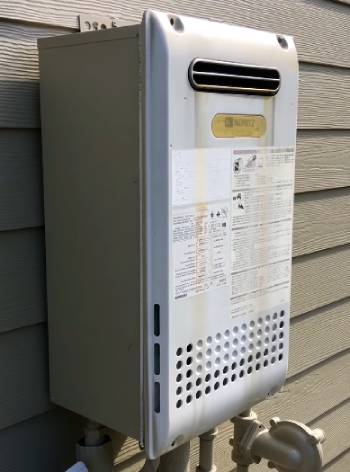
Reliability error codes and service reality shape long-term ownership more than initial heating performance.
Noritz units display diagnostic codes that help identify problems yet the frequency of certain codes creates repeated service needs.
Error code 11 for ignition failure and code 12 for flame loss appear regularly in owner and technician reports.
Scale-related overheating often triggers code 16 and forces the unit into a protective shutdown.
Condensing models add code 29 when the condensate drain line becomes restricted.
Each of these events can leave a household without hot water until a qualified technician arrives.
Parts availability and local technician familiarity with Noritz vary by region so wait times for repair can stretch longer than expected.
Some units run for years with only routine flushing while others generate multiple service calls within the first several years.
The diagnostic system itself is useful yet the underlying frequency of ignition flame and scale issues remains a practical concern.
Homeowners in hard-water areas face higher odds of early problems unless aggressive water treatment and annual descaling are maintained.
This pattern of error codes and variable service support reduces confidence in long-term reliability for typical residential installations.
Ownership Cost Lifespan and Overall Recommendation
Ownership cost lifespan and overall recommendation complete the practical assessment of a Noritz tankless system.
Upfront cost for the unit plus professional installation exceeds that of a conventional tank heater and often exceeds some competing tankless brands once venting gas-line upgrades and water treatment are included.
Expected lifespan reaches fifteen to twenty years under ideal conditions and diligent annual maintenance.
Real-world reports show a meaningful share of units requiring major component service or heat-exchanger attention earlier than the upper end of that range.
Ongoing expenses include yearly professional descaling possible water-softener operation and occasional diagnostic or repair visits.
Warranty coverage on the heat exchanger is relatively long yet labor coverage is limited and claims still require documented maintenance.
When the higher installation cost recurring maintenance demand and frequency of reported operational issues are weighed together the overall value proposition weakens.
Given the pattern of common error codes scale sensitivity and mixed long-term feedback I do not recommend Noritz tankless water heaters for most residential buyers.
Other established brands currently offer more predictable ownership experiences for the majority of homes.
Also Read: My Experience With The Battle Of Capacities
Maintenance Tips for Best Results
Regular professional care is essential for any tankless unit and becomes especially important with Noritz models given their documented sensitivity to scale and ignition issues.
Schedule a descaling flush at least once a year and more often in hard-water regions to protect the heat exchanger.
Install and maintain a whole-house sediment filter or water softener upstream of the heater.
Keep the air intake and exhaust vents clear of debris leaves or snow.
Check the condensate drain line on condensing models for clogs that trigger error codes.
Have a qualified technician verify gas pressure and combustion settings during annual service.
Monitor for unusual noises temperature swings or error codes and address them promptly.
Record every service visit to support warranty claims.
These steps reduce but do not eliminate the chance of common failures reported by owners.
Even diligent maintenance cannot guarantee the unit will avoid the ignition flame or scale-related problems that appear in a meaningful number of installations.
Pros and Cons Of Noritz Tankless Water Heater
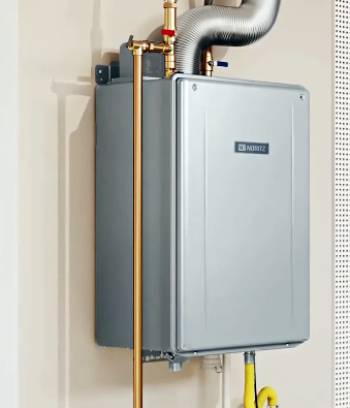
Pros Of Noritz Tankless Water Heater
- On-Demand Hot Water: Supplies continuous hot water without a storage tank once the unit is running correctly.
- High Efficiency Ratings: Condensing models reach strong UEF numbers that can lower energy use compared with older tank heaters.
- Compact Wall-Mount Design: Frees floor space and fits in utility closets or exterior locations.
- Strong BTU Output: Many residential units support simultaneous showers and fixtures when properly sized.
- Japanese Engineering Heritage: Designed and often manufactured with Japanese quality standards.
- Stainless Heat Exchanger Options: Some models use durable materials intended for longer service life.
- Modulating Burner: Adjusts flame size to match demand and improve efficiency.
- Digital Diagnostics: Error codes help technicians identify issues faster than older systems.
- Recirculation Compatibility: Select models support faster hot-water delivery at fixtures.
- Long Heat-Exchanger Warranty: Certain series advertise extended coverage on the primary heat exchanger.
The Analytical Cons Of Noritz Tankless Water Heater
- Ignition and Flame Failures: Error codes 11 and 12 appear regularly in owner and technician reports.
- Scale Sensitivity: Hard water quickly creates mineral buildup that triggers overheating and efficiency loss.
- Cold Water Sandwich: Brief cold bursts interrupt hot water flow during sequential draws.
- Maintenance Demand: Annual or semi-annual professional flushing is required to protect performance and warranty.
- Inconsistent Longevity Reports: Some units last many years while others need major service earlier than expected.
- Parts and Service Variability: Technician familiarity and parts stock differ by region and can delay repairs.
- Higher Upfront Cost: Installation and unit price exceed traditional tank heaters.
- Complex Installation Requirements: Proper gas sizing venting and water quality treatment are essential.
- Error Code Frequency: Multiple temperature and condensate-related codes surface in real-world use.
- Mixed Owner Satisfaction: Online feedback shows a noticeable share of frustration alongside positive experiences.
Noritz Vs. Other Brands
- Noritz Vs. Rinnai
Rinnai holds broader brand recognition and a larger service network in many regions.
I compared both and found Rinnai generally easier for technicians to support with faster parts access.
Noritz offers comparable efficiency and output yet shows more frequent reports of ignition and scale-related errors.
Rinnai also provides stronger smart-home integration on select models.
Most homeowners seeking wider service support and slightly more predictable ownership lean toward Rinnai over Noritz.
- Noritz Vs. Navien
Navien focuses on condensing technology and competitive pricing with strong residential adoption.
Side-by-side consideration showed Navien delivering similar on-demand performance with a different service and parts ecosystem.
Noritz carries Japanese manufacturing heritage while Navien emphasizes feature-rich condensing designs.
Navien often edges ahead in owner satisfaction scores for reliability in recent years.
Buyers focused on proven residential track records frequently choose Navien instead of Noritz.
- Noritz Vs. Rheem
Rheem offers both tank and tankless options with extensive North American distribution.
Direct comparison revealed Rheem providing easier local parts availability and technician familiarity in many markets.
Noritz delivers higher peak efficiency on some condensing models yet carries more reports of operational error codes.
Rheem remains a practical choice for homeowners who value service convenience.
Ownership simplicity often favors Rheem over Noritz for typical residential installs.
- Noritz Vs. Takagi
Takagi produces solid tankless units with a reputation for straightforward performance.
I found Takagi offering comparable heating capacity with fewer complex electronics in some models.
Noritz provides more advanced modulating and diagnostic features while Takagi focuses on durable basics.
Takagi sometimes records fewer electronic-related complaints.
Homeowners seeking simpler long-term operation often prefer Takagi to Noritz.
- Noritz Vs. Bosch
Bosch tankless heaters emphasize European engineering and compact designs.
Side-by-side reality showed Bosch delivering reliable temperature control with a different parts and service structure.
Noritz matches output and efficiency on paper yet shows more scale and ignition sensitivity in field reports.
Bosch maintains steady owner feedback for consistent daily performance.
Practical reliability frequently leads buyers toward Bosch rather than Noritz.
Also Read: My Experience With Reliance Hot Water Heater
Frequently Asked Questions (FAQs)
Rinnai generally receives stronger marks for service network and overall owner satisfaction while both brands offer similar efficiency.
With diligent annual maintenance many units reach fifteen to twenty years yet a portion experience major issues earlier.
Frequent reports include ignition failure flame loss scale-related overheating cold-water sandwich and condensate drain clogs.
Yes. Noritz is a Japanese company and many of its tankless units are engineered and manufactured in Japan.
Final Thoughts
I reviewed Noritz tankless water heaters and found capable on-demand performance overshadowed by recurring error codes scale sensitivity and mixed long-term reliability.
The main intent remains giving you clear observations on real-world problems and ownership demands so you can avoid unexpected service costs.
The pattern of common issues and inconsistent feedback leads me to advise looking at other established tankless brands instead.
You now have the detailed experience to weigh the risks and choose a more predictable hot-water solution.


