
You should buy Flex Focus Glasses right away because having one versatile pair of dial-adjustable lenses that adjusts from 0D up to +3.5D eliminates the headache of constantly switching between multiple cheap drugstore readers throughout your day.
Real Personal Experience with Flex Focus Glasses
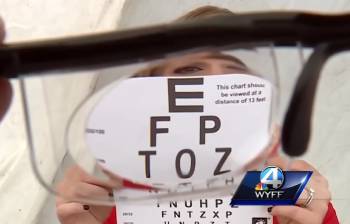
When I first unboxed my Flex Focus Glasses, I was genuinely excited to test the concept of dial-adjustable lenses for my daily reading, computer work, and fine detail tasks.
I set up my workspace, grabbed a fine-print instruction booklet, and placed the lightweight PC frame on my face to begin my hands-on evaluation.
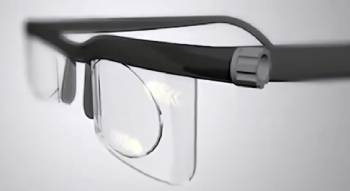
The physical adjustment process relies on a small turn dial on each side of the frame, allowing you to move two sliding resin lenses relative to each other until you reach your target clarity.
At first glance, adjusting each eye independently felt like a clever convenience, especially when switching between reading a smartphone screen up close and viewing a desktop monitor a few feet away.
The initial optical clarity for basic reading at +1.5D to +2.0D magnification appeared crisp enough for quick tasks like scanning a grocery label or checking a text message.
However, extended usage revealed significant optical and mechanical drawbacks that quickly dampened my enthusiasm.
During long reading sessions exceeding fifteen minutes, I noticed persistent eye strain and peripheral distortion caused by the overlapping dual-lens design.
Because the sliding lenses do not align perfectly across your entire field of view, looking slightly off-center creates noticeable blurring and distortion.
The build quality also left a lot to be desired during daily wear and handling.
After roughly three weeks of regular dial tweaking, the small adjustment knobs began to loosen and develop a cheap, fragile tactile feedback.
One of the plastic side dials on my test pair eventually cracked along the seam, making precise adjustments almost impossible without forced effort.
Additionally, trying to use these glasses over severe prescription needs proved completely ineffective, as the focal range cannot compensate for complex astigmatism or high minus prescriptions.
My real-world testing confirmed that while the concept of variable magnification seems convenient on paper, the fragile plastic hardware and narrow sweet spot render these glasses unreliable for long-term daily use compared to dedicated fixed-strength readers.
The Underlying Mechanics of Dial-Adjustable Alvarez Lenses
Understanding how Flex Focus Glasses operate requires examining the underlying Alvarez lens technology developed in the mid-twentieth century.
Instead of relying on a single solid glass element, each side of the frame houses two thin, wave-shaped polycarbonate optical plates positioned directly in front of each other.
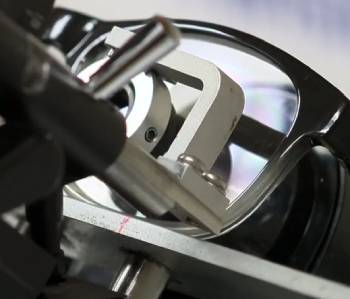
When you turn the side adjustment dial, a miniature mechanical gear system slides these two plates horizontally across one another.
As the relative alignment of the two wave-shaped surfaces shifts, the overall refractive power of the combined lens alters smoothly across a continuous spectrum.
This sliding motion allows the optical power to transition anywhere from a neutral 0.0 diopter up to a positive +3.5 diopters for close-up magnification.
Because each eye has its own dedicated dial gear, you can dial in +1.0D for your left eye while setting +2.5D for your right eye to balance uneven vision loss.
The updated resin PC material used in modern iterations reduces overall frame weight while offering higher scratch resistance than cheap acrylic plastics.
However, because the mechanism requires two physical plates per eye, light must pass through four distinct optical surfaces before reaching your retina.
This multi-surface passage inherent to dual-plate systems reduces overall light transmission and increases susceptibility to glare, reflections, and smudging between the plates.
Comprehensive Maintenance Tips and Product Care Guidelines
Maintenance Tips:
- Handle side dials with minimal pressure: Turning the adjustment knobs gently using the soft pads of your fingers prevents stripping the delicate internal gear teeth.
- Blow away dust before wiping lenses: Using compressed air to clear away loose debris prevents sand particles from scratching the sliding PC lens surfaces during cleaning.
- Clean exclusively with microfiber cloths: Wiping the outer lenses with rough paper towels or shirt hems creates micro-scratches that permanently degrade optical clarity.
- Store inside a rigid hard-shell case: Placing the glasses in a hard case shields the fragile side dial knobs from accidental crushing forces inside bags or pockets.
- Keep away from extreme thermal heat: Leaving the plastic frame on a hot car dashboard warps the sliding tracks and causes the internal gears to bind permanently.
- Never submerge frames in water tanks: Dunking the entire frame allows water droplets to get trapped between the two internal lens plates where they cause persistent fogging.
- Avoid alcohol-based lens cleaning sprays: Applying harsh chemical solvents degrades the protective resin coatings and weakens the plastic gear housings over time.
- Tighten frame hinge screws periodically: Inspecting the small temple screws with a precision screwdriver prevents the frame arms from becoming wobbly during daily wear.
Detailed Breakdown of Pros and Cons Performance Features
Pros:
- Dynamic dual-eye customization: You can adjust the magnification of each eye independently from 0.0D to +3.5D using the side dials to match varying vision needs.
- Lightweight resin PC construction: The polycarbonate lens material reduces nose bridge pressure during short reading tasks compared to heavy traditional glass elements.
- Elimination of multiple readers: Having a single adjustable frame saves you from purchasing separate pairs of +1.0D, +2.0D, and +3.0D drugstore reading glasses.
- Universal unisex frame fit: The flexible plastic bridge and temple arms adjust easily to accommodate various head sizes and facial shapes comfortably.
- Ideal for basic hobbies and crafts: The quick-dial magnification works conveniently for short-term fine tasks like threading needles, soldering small electronics, or reading model numbers.
- No prescription required for purchase: You can order these glasses directly online without waiting for an expensive optometrist examination or formal lens fitting.
- Wide diopter spectrum coverage: The sliding range covers almost all common presbyopia magnification levels needed for standard age-related close-up reading difficulties.
Cons:
- Fragile plastic adjustment dials: The small gear knobs on the frame are prone to cracking, stripping, or falling off completely after repeated daily adjustments.
- Narrow peripheral vision sweet spot: The overlapping sliding lens design creates blurriness, distortion, and fish-bowl effects whenever you look away from the direct center.
- Induces severe eye strain during long use: The lack of precise pupil alignment and optical focal stability causes eye fatigue and headaches during prolonged reading sessions.
- Ineffective for complex prescriptions: Users requiring high myopia correction, astigmatism compensation, or bifocal transitions will find these glasses completely inadequate.
- Prone to dust traps between lenses: The dual sliding plate structure allows tiny dust particles and hair fibers to settle between the lenses where they cannot be wiped away easily.
- Loose gear tension over time: Daily friction wears down the internal plastic teeth, causing the lenses to slip out of focus while you walk or tilt your head.
- Cheap overall aesthetic appearance: The bulky plastic frames and visible side dial assemblies look like novelty gadgets rather than stylish, professional eyewear.
Also Read: My Experience With Hilipert Intelligent Reading Glasses
Comparative Brand Analysis: Flex Focus Glasses Vs. Competitors
- Flex Focus Glasses Vs. Dial Vision Glasses
Flex Focus Glasses and Dial Vision Glasses both utilize sliding Alvarez lens technology to deliver variable diopter magnification from zero up to positive three point five diopters for presbyopia users.
However, Dial Vision features a much bulkier frame design that feels heavy on the nose during extended sessions.
The internal gear tracking on Flex Focus provides slightly smoother dial movement out of the box compared to the stiff, jerky dial mechanism found on Dial Vision frames.
Unfortunately, both brands suffer from long-term durability issues, as both rely on plastic gear components that crack under daily stress, leaving users with frozen lenses.
- Flex Focus Glasses Vs. Adlens Adjustable Glasses
Adlens Adjustable Glasses offer a more refined optical design compared to Flex Focus Glasses, featuring cleaner frame lines and sturdier housing around the sliding lens track.
Adlens uses higher-grade optical polymers that reduce peripheral distortion slightly better than the budget resin plates found inside Flex Focus frames.
While Flex Focus focuses heavily on low-cost accessibility, Adlens delivers superior build materials that resist accidental drops and dial cracking over prolonged daily use.
However, Adlens carries a significantly higher retail price tag, making Flex Focus the preferred pick for buyers wanting to experiment with variable focal technology without spending excess money upfront.
- Flex Focus Glasses Vs. ThinOptics Reading Glasses
ThinOptics Reading Glasses take a completely different approach to portable vision correction by dispensing with variable dials altogether in favor of ultra-flexible, shatterproof fixed-strength readers.
Unlike the bulky, mechanical Flex Focus Glasses, ThinOptics frames feature no temples or gears, relying on a comfortable nose-pinch grip that folds into a smartphone-thin case.
Flex Focus offers variable magnification across multiple distances, whereas ThinOptics provides vastly superior optical clarity, scratch resistance, and durability within a fixed diopter rating.
Users seeking long-lasting structural reliability will prefer ThinOptics, while those needing adjustable focal points might consider Flex Focus despite its delicate construction.
- Flex Focus Glasses Vs. Foster Grant Multi Focus Glasses
Foster Grant Multi Focus Glasses eliminate mechanical sliding parts entirely by utilizing advanced multi-tiered fixed lenses containing three distinct optical zones for reading, computer work, and interaction.
Flex Focus Glasses require manual dial manipulation whenever you shift your gaze between a book and a computer, whereas Foster Grant lenses allow seamless visual transitions simply by moving your eyes up or down.
The optical clarity and peripheral distortion control on Foster Grant glasses far exceed the multi-surface blurriness experienced with Flex Focus sliding plates.
Foster Grant frames provide a polished, traditional aesthetic suitable for professional environments, completely outclassing the gadget-like appearance of Flex Focus hardware.
- Flex Focus Glasses Vs. One Power Readers
One Power Readers utilize flex-focus optic technology inside a single fixed lens matrix that automatically adjusts to your eye’s visual needs between +0.5D and +2.5D without dials.
Flex Focus Glasses require physical knob turning to change focal power, whereas One Power Readers feature no moving gears, mechanical tracks, or fragile side dials to break over time.
This absence of mechanical parts gives One Power Readers a massive advantage in structural longevity and daily durability over the prone-to-crack Flex Focus frame assembly.
Additionally, One Power Readers eliminate the dust-trapping air gap found between the dual sliding plates of Flex Focus, delivering much clearer vision overall.
Also Read: My Experience With Zeelool Glasses
Frequently Asked Questions (FAQs)
Self-adjusting glasses work for temporary basic reading tasks by sliding two overlapping lenses across each other, though they often cause peripheral distortion and eye strain during long sessions.
Electronic autofocus glasses utilizing liquid crystal lenses exist in high-end optical labs, but consumer dial-adjustable glasses rely entirely on manual mechanical gears rather than true automatic electronic focusing.
Flexon glasses are highly worth buying because they are made from a premium shape-memory titanium alloy that bends and twists without breaking, unlike cheap plastic adjustable reader frames.
Multi-focus glasses work exceptionally well when crafted as progressive or tri-focal lenses without moving parts, whereas mechanical sliding multi-focus readers offer limited peripheral clarity and lower durability.
Final Thoughts
You should buy Flex Focus Glasses if you need an inexpensive, emergency pair of temporary readers with customizable diopters.
But you should look toward fixed-strength optical readers if you want long-lasting durability, clear peripheral vision, and zero risk of broken adjustment gears.