
I printed with both the Elegoo Centauri Carbon and the Bambu Lab P1S on the same bench using identical filaments and similar profiles.
The main intent of this article is to show the practical differences in print quality speed reliability and daily workflow so you can choose the enclosed CoreXY printer that best matches your needs.
My focus stays on real first-layer success material handling and long-term consistency rather than marketing claims alone.
You will see how the Centauri Carbon compares with the P1S.
| Feature | Elegoo Centauri Carbon | Bambu Lab P1S |
| Build Volume | 256 x 256 x 256 mm | 256 x 256 x 256 mm |
| Max Speed | 500 mm/s | 500 mm/s |
| Enclosure | Yes | Yes |
| Multi-Material | Optional system | AMS compatible |
| Best For | Value and carbon-ready prints | Refined ecosystem and reliability |
My Experience Testing Both Printers Side by Side

I started with the Bambu Lab P1S for several weeks of mixed PLA PETG and ABS prints.
The machine arrived nearly ready and completed auto-calibration quickly.
First layers stuck consistently and the enclosed chamber kept temperatures stable for engineering filaments.
Print speeds felt usable at higher values without major quality loss and the ecosystem made file transfer and monitoring simple.
I then switched to the Elegoo Centauri Carbon under the same jobs and filaments.
Setup took a bit more attention yet the CoreXY motion and enclosure delivered comparable speed and dimensional accuracy.
Carbon-fiber filled materials printed cleanly thanks to the higher temperature headroom on some configurations.
Both printers produced functional parts with good surface finish when profiles were dialed in.
Key features such as enclosed chambers automatic bed leveling and high-speed CoreXY kinematics shaped the similar modern experience while software maturity multi-material options and out-of-box reliability differences stood out clearly.
My extended side by side testing supplied the concrete quality speed and workflow notes that follow.
I paid attention to how each handled overnight prints failed filament runs and multi-day reliability.
Neither machine required constant babysitting once basic tuning was complete.
The choice came down to whether you prefer a more polished closed ecosystem or a lower-cost alternative with strong carbon-fiber capability.
Print Quality Speed and Motion System
Print quality and speed decide how useful the machine feels for daily projects.
Both printers use CoreXY kinematics rated around 500 mm/s with high acceleration.
The Bambu Lab P1S maintained excellent dimensional accuracy and surface finish even at elevated speeds.
Vibration compensation and refined motion control kept edges clean and layers consistent.
The Elegoo Centauri Carbon matched the speed claims and produced strong results with carbon-fiber filaments.
Slightly more tuning was sometimes needed to reach the same level of consistency across every material.
Analytical review of output quality places the P1S ahead for reliable high-speed results straight from the ecosystem.
The Centauri Carbon stays competitive especially when price is factored in.
Key features of the P1S include mature input shaping and polished factory profiles.
Key features of the Centauri Carbon focus on carbon-ready hotends and open adjustment potential.
Real side-by-side parts confirmed both can deliver functional high-speed prints once calibrated.
Enclosure Materials and Multi-Material Options
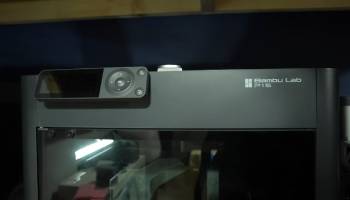
Enclosure performance and material support affect what you can print successfully.
Both machines are fully enclosed which helps with ABS ASA and other temperature-sensitive filaments.
The P1S pairs cleanly with the AMS for multi-color and multi-material jobs with minimal fuss.
Filament detection and automatic switching worked reliably in my tests.
The Centauri Carbon supports a wide range of materials including carbon-fiber composites and offers competitive chamber stability.
Multi-material options exist yet feel less seamless than the AMS ecosystem.
Analytical scoring of material versatility places the P1S ahead for easy multi-color work and the Centauri Carbon ahead for value-oriented carbon-fiber printing.
Key features of both include heated beds PEI-style surfaces and direct-drive extruders.
Real printing confirmed either enclosure keeps warping under control for common engineering filaments.
Software Reliability and Everyday Workflow
Software and day-to-day reliability decide how much time you spend managing the printer versus actually printing parts.
I ran both the Elegoo Centauri Carbon and the Bambu Lab P1S through multi-week schedules of mixed jobs to judge real workflow smoothness.
The Bambu Lab P1S felt closest to an appliance.
Bambu Studio sliced files quickly and sent them over the network with minimal steps.
The companion app showed live camera views progress estimates and clear error messages when something went wrong.
Automatic calibrations for bed leveling and vibration compensation reduced the number of failed first layers.
Overnight prints finished consistently and remote monitoring let me check status without walking to the bench.
The Elegoo Centauri Carbon provided the core network and touchscreen controls needed for daily use.
File transfer and basic monitoring worked yet profiles often needed more manual adjustment to reach the same consistency across different filaments.
The interface required extra clicks for some common tasks and the overall software ecosystem felt less polished.
Failure detection existed but alerts were sometimes less descriptive than those on the P1S.
Analytical review of workflow places the P1S ahead for beginners and users who want minimal tinkering.
The Centauri Carbon rewards owners who are comfortable tuning and prefer a lower entry price.
Key features of the P1S include tight hardware-software integration mature AMS support and reliable remote tools.
Key features of the Centauri Carbon focus on essential network connectivity open adjustment potential and competitive hardware cost.
Real multi-week ownership confirmed both machines can complete overnight jobs when basic maintenance is observed.
The better long-term choice depends on whether you value a refined set-and-forget experience or are willing to invest a little more time in exchange for lower upfront cost.
These software and reliability differences become clear after the first dozen prints and help match the right enclosed CoreXY printer to your patience level and daily schedule.
Also Read: Comparison Of Creality K1C Vs. K1 Max
Pros and Cons Of Elegoo Centauri Carbon
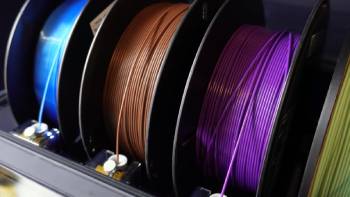
Pros Of Elegoo Centauri Carbon
- Lower Purchase Price: Delivers enclosed high-speed printing at a more accessible cost.
- Carbon-Fiber Ready: Handles filled filaments cleanly with appropriate hotend temperatures.
- Full Enclosure: Supports ABS ASA and other warping-prone materials effectively.
- CoreXY Speed: Reaches high travel and print speeds for faster job completion.
- Automatic Bed Leveling: Reduces first-layer failures when calibrated correctly.
- Direct-Drive Extruder: Improves control with flexible and abrasive filaments.
- Competitive Build Volume: Matches the common 256 mm class for most parts.
- Open Adjustment Potential: Allows more user tuning and third-party upgrades.
- Network Connectivity: Supports Wi-Fi monitoring and file transfer.
- Value-Oriented Package: Strong feature set relative to the asking price.
The Analytical Cons Of Elegoo Centauri Carbon
- Less Mature Ecosystem: Software and multi-material options trail the polished Bambu experience.
- More Tuning Required: Optimal results often need extra profile work compared with the P1S.
- Heavier Build: Takes more bench space and effort to move.
- Newer Platform: Fewer long-term user reports than the established P1S.
- Multi-Material Less Seamless: Optional systems lack the refinement of AMS.
- Support Network Varied: Community help exists yet official resources feel lighter.
- Quality Consistency: High-speed results can vary more across different filaments.
- Interface Learning: Touchscreen and menus take time to navigate efficiently.
- Parts Ecosystem Developing: Third-party upgrades are less abundant.
- Reliability Still Proving: Early units show promise yet lack years of field data.
Pros and Cons Of Bambu Lab P1S
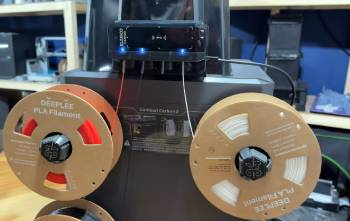
Pros Of Bambu Lab P1S
- Polished Out-of-Box Experience: Minimal setup and strong factory profiles deliver quick success.
- Excellent High-Speed Quality: Maintains clean surfaces and accuracy at elevated speeds.
- AMS Multi-Material Support: Enables reliable multi-color and multi-material printing.
- Mature Software Ecosystem: Bambu Studio and app make slicing monitoring and updates simple.
- Strong Reliability Track Record: Consistent performance across many user reports.
- Full Enclosure: Handles engineering filaments with stable chamber temperatures.
- Automatic Calibration Tools: Bed leveling and vibration compensation reduce failures.
- Quiet Efficient Operation: Refined motion system keeps noise manageable.
- Remote Monitoring: Camera and app features support overnight and away-from-bench jobs.
- Active Community and Support: Abundant guides profiles and parts availability.
The Analytical Cons Of Bambu Lab P1S
- Higher Purchase Price: Costs more than value-oriented enclosed alternatives.
- Closed Ecosystem Aspects: Proprietary elements limit some third-party flexibility.
- AMS Extra Cost: Full multi-material capability requires additional purchase.
- Proprietary Parts Focus: Certain components favor official replacements.
- Learning Proprietary Flow: Users coming from open systems need adjustment time.
- Fan and Filter Maintenance: Enclosed design requires periodic cleaning for best air quality.
- Build Volume Ceiling: 256 mm cube suits most parts yet limits very large models.
- Weight and Size: Still a substantial bench presence.
- Firmware Dependence: Updates and features stay tied to the official platform.
- Premium Positioning: Price can stretch budgets seeking pure value.
Also Read: Comparison Of Elegoo Mars 3 Vs. Saturn
Frequently Asked Questions (FAQs)
The Bambu Lab P1S is generally better for refined reliability and multi-material ease while the Centauri Carbon offers stronger value for the price.
Common early reports include the need for extra profile tuning occasional first-layer adjustments and a less mature software experience compared with established ecosystems.
Bambu Lab currently leads for polished workflow and consistency while Elegoo competes hard on price and specific material capability.
Bambu Lab printers often rank higher for out-of-box reliability and ecosystem maturity while Elegoo models deliver competitive performance at lower cost.
Final Thoughts
I compared the Elegoo Centauri Carbon and Bambu Lab P1S through real high-speed enclosed printing to highlight the differences in quality workflow and value.
The main intent remains giving you clear side by side observations on print consistency material handling and daily usability so you can select the CoreXY machine that fits your bench and budget.
The P1S leads for refined reliability and seamless multi-material use while the Centauri Carbon excels at lower cost and carbon-fiber readiness.
You now have the detailed experience to decide which printer belongs on your workbench.