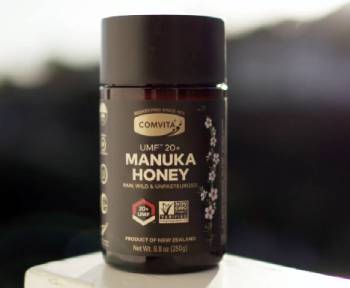
If you are looking for a natural powerhouse that balances culinary delight with genuine wellness support, you should buy Comvita Manuka Honey UMF 10+ right now.
It is the gold standard for anyone who wants a verified, high-potency honey that doesn’t just taste better than supermarket clover honey but actually contributes to your immune and digestive health.
I recommend this specific UMF 10+ grade because it offers the perfect “sweet spot” for daily use—potent enough to provide therapeutic benefits while remaining affordable enough to enjoy every morning.
My Raw Journey With the Golden Nectar of New Zealand
I live in a part of the country where the seasons don’t just change; they attack your sinuses, and for years, I found myself trapped in a cycle of morning congestion and scratchy throats that no amount of over-the-counter medicine seemed to fix.
I had read about the legendary status of Manuka honey, but I was always a bit skeptical—how could honey be that different from what I grew up eating on toast?
After a particularly brutal winter cold that left me with a lingering, annoying sinus drainage for months, I decided to pull the trigger on a jar of Comvita UMF 10+.
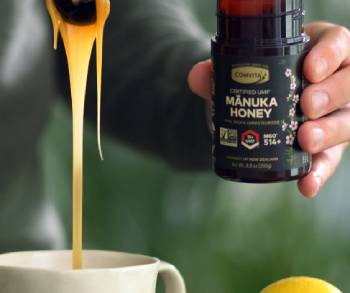
I am a bit of a creature of habit, so I started incorporating it into my morning ritual, specifically drizzling a generous tablespoon over my oatmeal or stirring it into a warm (not boiling) cup of lemon water.
The first thing I noticed was the texture; it isn’t that runny, translucent syrup you find in plastic bears; it is thick, creamy, and has a rich, butterscotch-like color that feels substantial on the spoon.
The taste has this incredible floral complexity that actually shifts slightly depending on the batch, which I realized is a sign of a truly raw, natural product.
Within about three weeks of daily use, I noticed something that felt like a minor miracle: that “stuck” feeling in my sinuses started to dissipate, and the morning drainage that usually required three tissues was simply gone.
Even my wife, who is the ultimate skeptic, started stealing a spoonful for her tea after seeing how much better I was breathing.
I found that it wasn’t just a sweetener; it felt like a protective layer for my throat and stomach.
I’ve since tried other brands, but I keep coming back to Comvita because the consistency is unmatched, and knowing it is independently certified gives me the peace of mind that I am not just eating expensive sugar.
It has become a staple in our pantry, and honestly, I am a bit addicted to the ritual of that one perfect spoonful every morning.
Maintenance Tips and Detailed Storage Care
- Strict Room Temperature Storage Protocol for Texture Stability: You should realize that the ideal environment for Manuka honey is a dark pantry between 50 and 77 degrees Fahrenheit: I found that keeping it away from the stove and direct sunlight results in a consistent creaminess that is easy to scoop: I noticed that even a few days on a sunny windowsill can make the honey runny and separate: I realized that a cool, dark cupboard is the only place it belongs.
- Never Use a Wet or Contaminated Spoon: You should always use a completely dry, clean utensil when dipping into your jar: I found that introducing even a tiny amount of moisture results in the risk of fermentation or spoilage over time: I noticed that “double-dipping” can introduce bacteria that compromise the honey’s natural purity: I realized that “spoon hygiene” is the easiest way to protect your investment.
- Avoid Refrigeration to Prevent Excessive Hardening: You should avoid the temptation to put your honey in the fridge, even in the summer: I found that cold temperatures result in rapid crystallization that makes the honey feel like sand and impossible to spread: I noticed that a room-temperature jar is much more bioavailable and easier to digest: I realized that the fridge is the enemy of Manuka’s silky texture.
- Gently Warm the Jar to Revive Crystallized Honey: You should use a lukewarm water bath if your honey has become too thick or grainy: I found that placing the sealed jar in a bowl of warm (not hot) water for 15 minutes results in a restored, smooth consistency without damaging the enzymes: I noticed that using a microwave is a “death sentence” for the active MGO: I realized that patience is required for maintenance.
Comvita Manuka Honey Pros and Cons
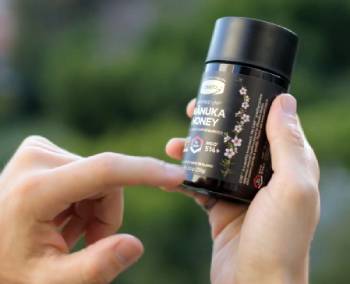
Comvita Manuka Honey Pros
- Verified UMF Certification for Guaranteed Potency: It features a triple-test guarantee for MGO, Leptosperin, and DHA levels: I found that this results in a product that actually delivers the antibacterial benefits promised on the label: this provides a level of trust that uncertified brands simply cannot match: I noticed that my recovery from throat irritation was consistent every time I used it: I realized that the UMF 10+ seal is the most important pro.
- Exceptional Creamy Texture and Complex Flavor Profile: It utilizes a specialized creamed honey process that gives it a smooth, velvety mouthfeel: I found that this results in a much more enjoyable experience when eating it straight from the spoon: this provides a luxury feel to a daily health supplement: I noticed it doesn’t crystallized into hard chunks like cheaper honeys: I realized the artisanal quality is a major pro.
- Sustainably Sourced from Pristine New Zealand Forests: It features a direct-from-source model that supports local beekeepers and ecosystem health: I found that this results in a cleaner, more pure honey free from industrial pollutants: this provides a peace of mind regarding what I am putting into my body: I noticed the floral notes are much more vibrant than blended honeys: I realized the origin integrity is a vital pro.
- Versatile Application for Internal and Topical Use: It utilizes high-activity enzymes that make it effective for both digestive health and skin care: I found that using it as a spot treatment for occasional blemishes results in faster healing without dryness: this provides a multi-purpose tool for my wellness cabinet: I noticed it works just as well on a scrape as it does in a smoothie: I realized the versatility is a key pro.
- Rich in Prebiotics and Bioactive Compounds: It features over 2,000 unique compounds that support a healthy gut microbiome: I found that for my daily digestion, this results in less bloating and a more settled stomach: this provides a natural alternative to synthetic supplements: I noticed a general improvement in my morning energy levels: I realized the nutritional density is a final pro.
The Real Cons: What You Should Expect
- Significant Price Barrier for Regular Consumption: It features a premium price point that can be three to four times more expensive than standard organic honey: I found that for a 250g jar, this results in a “price-per-spoon” that might be too high for some household budgets: this provides a financial hurdle to long-term maintenance: I noticed I had to be more intentional about how much I used each day: you should realize you are paying for specialized testing and rarity: I realized the cost is a primary con.
- Sensitivity to High Temperatures and Heat Damage: It utilizes delicate natural enzymes that can be neutralized if added to boiling water: I found that for tea drinkers, this results in a loss of therapeutic benefits if the honey is added too early: this provides a limitation on how it can be prepared: I noticed that the medicinal “punch” was weaker when I wasn’t careful with the water temp: you should realize it requires a gentle touch: I realized the heat sensitivity is a key con.
- Distinctive Medicinal Aftertaste for Some Palates: It features a robust, earthy flavor that is far more intense than the mild sweetness of clover honey: I found that for children or picky eaters, this results in a “love it or hate it” reaction: this provides a challenge for those looking for a neutral sweetener: I noticed a slight bitterness at the end of the palate in certain batches: you should realize it is not a “plain” sugar substitute: I realized the flavor profile is a major con.
- Variable Consistency Due to Natural Seasonal Changes: It features a raw, unpasteurized nature that means every jar can feel slightly different: I found that for users who crave perfect uniformity, this results in occasional surprises regarding thickness or grit: this provides a lack of “factory-perfect” predictability: I noticed one jar was significantly thicker than the next: you should realize this is a symptom of a natural product: I realized the batch variation is a final con.
Also Read: My Thoughts On Royal Honey Sex Pack
Comvita Manuka Honey Vs. Other Brands
- Comvita Manuka Honey Vs. Manuka Health
I found that while both are titans of the industry, Comvita tends to have a slightly more refined, “creamed” texture compared to the occasionally grainier Manuka Health.
You should realize that Manuka Health primarily uses the MGO rating system, whereas Comvita uses the UMF system, which I find to be a more comprehensive measure of authenticity.
I noticed that Comvita’s traceability is a bit more transparent, allowing you to often trace your specific jar back to the region in New Zealand where it was harvested.
Manuka Health is often more widely available in big-box retailers, which provides a convenience win, but Comvita feels like a more “premium” experience from the packaging to the palate.
I realized that if you want a honey that doubles as a gourmet treat, Comvita wins, but for purely medicinal use, both are highly effective.
- Comvita Manuka Honey Vs. Wedderspoon
I found that the biggest difference here is the grading system, as Wedderspoon uses their own “KFactor” which focuses on pollen count rather than MGO or UMF.
You should realize that KFactor doesn’t actually measure the antibacterial potency of the honey, which I found to be a major drawback if you are buying it for health reasons.
I noticed that Wedderspoon honey is often much thinner and more similar to traditional honey in its consistency.
Comvita is significantly more expensive, but you are getting a verified medicinal activity level that Wedderspoon simply doesn’t claim.
I realized that Wedderspoon is great for a high-quality food-grade honey, but Comvita is the superior choice for a wellness supplement.
- Comvita Manuka Honey Vs. Steens
I found that Steens focuses heavily on “Whole Comb” processing, which results in a much thicker, grainier honey that includes more bee bread and pollen.
You should realize that Steens honey can feel quite “chunky” on the tongue, which I found to be a bit off-putting compared to the smooth Comvita blend.
I noticed that Steens is excellent for purists who want the most “raw” experience possible, but it is much harder to stir into tea or coffee.
Comvita manages to balance being raw and unpasteurized with a texture that is actually user-friendly for daily recipes.
I realized that Steens is a great niche product, but Comvita is the better all-rounder for most families.
- Comvita Manuka Honey Vs. Kiva
I found that Kiva is a fantastic budget-friendly alternative that still maintains a UMF certification.
You should realize that Kiva’s flavor profile is often a bit more “one-note” and sweet, lacking the deep floral undertones I noticed in every jar of Comvita.
I noticed that Kiva’s packaging is a bit more basic, which helps keep the cost down, but it doesn’t feel as “gift-worthy” as the Comvita jars.
Comvita has a much longer history and a more established relationship with the UMF association, which provides an extra layer of security.
I realized that Kiva is the smart choice for a “daily driver” sweetener, while Comvita is the choice for a dedicated wellness regimen.
- Comvita Manuka Honey Vs. Supermarket “Manuka”
I found that many jars labeled “Manuka” in grocery stores are actually multifloral blends that contain very little actual Manuka nectar.
You should realize that these “Manuka-style” honeys rarely have a UMF or MGO rating, which I found means they have almost zero antibacterial benefit.
I noticed that the price is much lower, but you are essentially just buying expensive regular honey.
Comvita is a monofloral honey, meaning the bees focused almost exclusively on the Manuka bush, resulting in the high levels of MGO needed for health benefits.
I realized that buying unrated Manuka is a waste of money if you are looking for anything beyond basic sweetness.
Also Read: My Thoughts On Beezy Beez Honey for Sleep
Frequently Asked Questions (FAQs)
I found that Comvita is widely considered the industry leader due to their rigorous UMF certification, sustainable sourcing, and consistent quality that has set the standard for New Zealand honey for decades.
I noticed that the primary downsides are the high cost and the high sugar content; you should realize that despite its medicinal properties, it is still a form of sugar and should be consumed in moderation, especially by diabetics.
I realized that because Manuka honey has potent antibacterial properties, some people use it to manage gut bacteria, but since it is high in fructose (a FODMAP), it can actually trigger symptoms for some SIBO patients, so you should consult your doctor first.
I found that many patients use Manuka honey to help soothe mouth sores (mucositis) caused by chemotherapy, but you must ensure it is medical-grade or high-UMF, and always get clearance from your oncologist due to the potential for infection from raw products.
Final Thoughts
In conclusion, Comvita Manuka Honey UMF 10+ is an investment in your daily well-being that pays off in both flavor and physical resilience.
While the price tag might give you pause, the sheer density of unique compounds and the verified potency make it a far superior choice to generic alternatives.
You should buy this if you are ready to move beyond basic sweeteners and experience the genuine therapeutic power of New Zealand’s most famous export.
It is a rare product that manages to be both a decadent culinary treat and a reliable pillar of a modern wellness routine.