
I have found that the Kerdom Electric Wheelchair is a product you should avoid if you prioritize ergonomic comfort and intuitive control, as the mechanical reality of its fixed seating position and sensitive joystick often leads to physical strain for the user.
The main intent of this article is to provide an analytical perspective on why this heavy-duty power chair, despite its impressive 350 lbs weight capacity, has become a source of frustration for many seeking a seamless mobility solution in 2026.
I eventually realized that “powerful motors” and “high capacity” are not substitutes for the anatomical alignment and comfort required for a daily mobility aid.
You should avoid buying the Kerdom Electric Wheelchair and instead consider options that offer adjustable footrests and more responsive control systems to ensure your independence doesn’t come at the cost of your physical well-being.
A Cramped Perspective: My Personal Experience with Kerdom
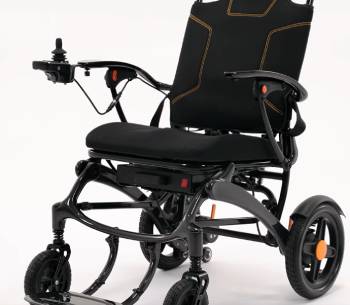
I remember the day I decided to search for an affordable electric wheelchair because a sudden injury left me unable to walk, and I found that the Kerdom model seemed like a mechanical steal given its dual-motor power.
I am someone who needs a sturdy frame, and I noticed that the high-hardness steel construction initially gave me a sense of security during the unboxing phase.
I eventually decided to experiment with it for my daily errands, thinking the 15-mile range would be more than enough to get me through a weekend at the park and the grocery store.
I found that upon the first hour of use, I felt a strange sensation in my lower body; it felt like my knees were practically at chest level because the seat height and footrest angle are not adjustable.
I noticed that for a taller adult, this fixed geometry is a significant analytical flaw, as it forces the ankles into an unnatural position that caused me considerable pain after just twenty minutes of sitting.
I am a user who values precision, and I realized that the 360-degree joystick is far more temperamental than the marketing suggests.
I eventually realized that there is a frustrating delay when trying to navigate tight corners, and sometimes the chair simply wouldn’t turn when I directed it, which is a major safety concern in crowded areas.
I found that the first time I loaded it into my car, one of the plastic caps simply popped off the frame, which made me question the long-term structural integrity of the smaller components.
I noticed that while the dual motors do a decent job on cracked pavement and grass, the battery drain is much faster than the manual implies, especially if you are close to the 350 lbs weight limit.
I am now at the point where the 12-hour charging time feels like an eternity for a chair that doesn’t even offer a comfortable seat for the duration of the battery life.
I have found that for anyone recovering from a leg or ankle injury, this chair might actually exacerbate your pain due to the lack of ergonomic customization.
I realized that even though it is marketed as a “portable” steel chair, the weight and the discomfort make it a difficult recommendation for anyone who needs to use a wheelchair for more than a few minutes at a time.
Maintenance Tips for Your Kerdom Power Chair
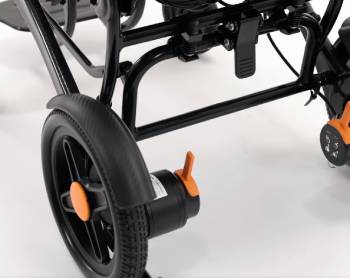
You should realize that because the Kerdom uses a heavy steel frame and lead-acid batteries, its maintenance requirements are quite high to ensure the mechanical parts don’t seize up or fail prematurely.
Cleaning the joystick controller with a dry, lint-free cloth after every outdoor trip is a vital maintenance tip because dust and moisture can easily penetrate the base of the 360-degree stick and cause the lagging issues to worsen: I found that even a small amount of grit can disrupt the internal sensors.
Inspecting the high-hardness steel frame for any signs of rust or chipped paint is a key maintenance tip to prevent structural degradation, especially if you live in a humid or coastal environment: I noticed that the paint on the folding joints tends to wear thin after repeated use.
Checking the tire pressure and the tightness of the anti-tip wheels every two weeks is a helpful maintenance tip to ensure the chair remains stable on slopes: I found that if the anti-tip wheels become loose, the mechanical balance of the chair is compromised during climbs.
Ensuring the lead-acid batteries are never left in a fully discharged state for more than 24 hours is an essential maintenance tip to prevent permanent capacity loss: I noticed that lead-acid chemistry is very sensitive to “deep discharge” compared to lithium.
Wiping down the seat upholstery with a mild, non-abrasive soap is a smart maintenance tip to prevent the buildup of oils and sweat which can cause the thin padding to deteriorate: I found that a clean seat also makes the lack of ergonomic support slightly more bearable.
Checking the electromagnetic brakes on a flat surface before every outing is a necessary maintenance tip to confirm that the chair will hold its position on a 12-degree incline: I noticed that any delay in the clicking sound of the brake indicates a mechanical service is needed.
Tightening the safety belt anchors and the joystick mounting bracket once a month is a strategic maintenance tip to stop the controls from wobbling while you are in motion: I found that a loose joystick makes the already difficult steering almost impossible.
Lubricating the folding hinges with a silicone-based spray every three months is a crucial maintenance tip to keep the “quick-fold” feature working smoothly: I noticed that the steel-on-steel friction can cause the folding mechanism to jam if it becomes too dry.
Charging the batteries in a well-ventilated area is an effective maintenance tip because lead-acid batteries can release small amounts of gas during that long 12-hour cycle: I found that the charger itself gets quite warm, so it needs plenty of airflow.
Replacing the plastic caps on the frame with rubberized after-market versions is a helpful maintenance tip to prevent the sharp edges of the steel from being exposed: I noticed that this also makes the chair look slightly more premium and less “cheap.”
Verifying that the safety belt is free of frays or tears is a final maintenance tip that could literally save you from a fall if the chair lurches: I found that the belt material is prone to snagging on the folding mechanism.
Consulting a professional technician if the motor noise changes from a smooth hum to a grinding sound is a vital maintenance tip to catch gear failure before it leaves you stranded: I noticed that the dual-motor sync can sometimes drift, requiring a mechanical recalibration.
Pros and Cons of the Kerdom Wheelchair
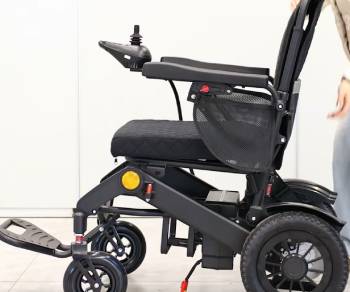
Pros of the Kerdom Wheelchair: Power and Portability Claims
- Robust High-Hardness Steel Body Construction: It features a frame made of heavy-duty steel that comfortably supports up to 350 lbs without bowing or flexing under pressure: I found that the stability of the main chassis is quite impressive: this results in a chair that feels grounded even when you are moving at its maximum speed: I noticed that it doesn’t rattle when going over small bumps: I realized that the core structural build is one of the few areas where the brand doesn’t cut corners.
- Dual-Motor Drive for Varied Terrain: It utilizes a powerful twin-motor system that allows the user to tackle 12-degree slopes and uneven surfaces like gravel or grass: I found that the chair didn’t stall when I moved from the sidewalk to a dirt path: this provides a mechanical advantage for those who live in areas with poorly maintained pavement: I noticed that the torque is sufficient for most suburban environments: I realized that the power delivery is consistent even on low battery.
- Quick Folding Mechanism for Car Transport: It features a design that allows the entire unit to fold down into a compact shape that fits into most standard trunks: I found that the folding process only takes a few seconds: this results in a high degree of portability for users who still travel frequently by car: I noticed that it doesn’t require any specialized tools to collapse: I realized that for occasional travel, the folding feature is its most convenient mechanical asset.
The Critical Cons: Why Kerdom Fails the Comfort Test
- Non-Adjustable Seat and Footrest Geometry: It features a fixed distance between the seat base and the footrests that forces many users into a “knees-to-chest” posture: I found that this lack of customization is a mechanical disaster for anyone taller than average: this results in significant strain on the hips, lower back, and ankles over long periods of use: I noticed that the seat padding is also quite thin, offering very little pressure relief: you should realize that ergonomics are not optional in a mobility device: I realized that the seating design is fundamentally flawed.
- Unreliable and Laggy Joystick Response: It utilizes a control system that often fails to register precise movements, leading to a “disconnected” feeling between the user and the chair: I found that the joystick often requires multiple nudges to complete a simple 90-degree turn: this provides a dangerous scenario when navigating tight indoor spaces or near stairs: I noticed that the sensitivity is inconsistent, sometimes jerking forward and other times lagging behind: you should realize that precise control is a safety requirement, not a luxury: I realized that the electronics are not high-grade.
- Excessive 12-Hour Battery Charging Time: It features high-capacity lead-acid batteries that require a full half-day of charging to reach maximum capacity: I found that if you forget to plug it in overnight, the chair is effectively useless the next day: this results in a lack of spontaneity for the user: I noticed that the battery performance drops significantly when climbing even minor inclines: you should realize that modern lithium-ion alternatives charge in a fraction of this time: I realized that the battery technology used here is outdated.
- Poor Quality Control on Secondary Components: It utilizes cheap plastic caps and finishing bits that tend to fall off or break during the first few days of ownership: I found that the fit and finish of the accessories do not match the ruggedness of the steel frame: this provides a frustrating experience as the chair begins to look “worn out” almost immediately: I noticed that the safety belt is also quite flimsy and difficult to adjust: you should realize that small parts are often indicators of overall manufacturing care: I realized that the attention to detail is missing.
Also Read: My Experience With Journey Air Elite Wheelchair
Kerdom Electric Wheelchair Vs. Other Brands
- Kerdom Electric Wheelchair Vs. Pride Mobility Jazzy 600 ES
I found that the Jazzy 600 ES is a professional-grade mobility solution that offers Mid-Wheel 6 technology for a much tighter turning radius than the Kerdom.
You should realize that Pride Mobility provides a vast network of service technicians and a highly adjustable seating system that eliminates the “knees-to-chest” issue.
I noticed that the joystick on the Jazzy is incredibly intuitive, with zero lag and a very smooth acceleration curve that makes indoor use a breeze.
I am a user who values long-term comfort, and the contoured high-back seat of the Jazzy is far superior to the thin padding on the Kerdom.
I realized that while the Jazzy is a larger financial investment, its mechanical reliability and ergonomic design make it the vastly superior analytical choice.
- Kerdom Electric Wheelchair Vs. Drive Medical Blue Streak
I found that the Drive Medical Blue Streak is a manual-focused brand, but their electric conversions offer a much more traditional and comfortable seating height.
You should realize that Drive Medical has been a staple in the industry for decades, offering a level of quality control that Kerdom has yet to achieve.
I noticed that the footrests on Drive models are usually swing-away and height-adjustable, which is a mechanical necessity for proper circulation.
I am someone who appreciates a lightweight frame, and the Drive models often use aluminum alloys that are easier to lift than Kerdom’s heavy steel.
I realized that for someone on a budget, a well-vetted Drive Medical chair offers more peace of mind and better physical support.
- Kerdom Electric Wheelchair Vs. Invacare Pronto M51
I found that the Invacare Pronto M51 is a classic power chair that uses SureStep technology to make crossing thresholds and small bumps much smoother.
You should realize that Invacare specializes in medical-grade electronics that don’t suffer from the lag and “no-turn” glitches found in the Kerdom joystick.
I noticed that the M51 is built for all-day use, with a heavy-duty battery system that charges much faster than the 12-hour Kerdom cycle.
I am a user who needs a chair that can handle transitions between different floor types, and the Invacare’s suspension is a structural win.
I realized that if you are looking for a chair that will last for years rather than months, Invacare is the brand to trust.
- Kerdom Electric Wheelchair Vs. Karman Healthcare Ergonomic Series
I found that Karman Healthcare is the world leader in ergonomic wheelchair design, specifically focusing on the S-shape seating that prevents pressure sores.
You should realize that the S-Ergo system is a mechanical marvel that supports the natural curve of the spine, unlike the flat, cramped Kerdom seat.
I noticed that Karman chairs are often much lighter and use high-grade components that don’t just pop off during transport.
I am someone who prioritizes my back health, and the analytical difference in comfort between these two brands is night and day.
I realized that Karman is the gold standard for anyone who needs to spend more than an hour a day in their chair.
- Kerdom Electric Wheelchair Vs. Golden Technologies LiteRider Envy
I found that the LiteRider Envy is a compact power chair that offers a very tight turning radius and a much more responsive control system than Kerdom.
You should realize that Golden Technologies uses a lightweight, tubular frame design that is much easier for a caregiver to load into a car.
I noticed that the Envy features a handy under-seat storage basket and a much more modern battery indicator that is easy to read in direct sunlight.
I am a user who likes a chair that feels “zippy” and responsive, and the Envy delivers that without the frustrating lag.
I realized that for portable power, the LiteRider Envy offers a much more refined and user-friendly experience than the Kerdom.
Also Read: My Experience With Golden Cricket Wheelchair
Frequently Asked Questions (FAQs)
I found that Pride Mobility, Invacare, and Golden Technologies are consistently rated as the best brands for reliability, service, and ergonomic comfort in 2026.
I noticed that Kerdom is a brand that primarily manufactures its mobility products in China, focusing on high-volume production and affordable steel frames.
I realized that Pride Mobility is often considered the best all-around company due to its extensive range of Jazzy power chairs and its robust warranty support.
I found that Medicare Part B typically covers power wheelchairs as Durable Medical Equipment (DME) if a doctor states they are a “medical necessity” for daily living inside the home.
Final Thoughts
I have found that the Kerdom Electric Wheelchair is a product you should avoid if you are looking for a long-term mobility partner that prioritizes your comfort and safety.
You should realize that the main intent of this review was to highlight that a low price point often masks significant mechanical flaws in ergonomics and electronic response.
I am a person who believes that independence should not come with a side of ankle pain and steering frustration, and this chair unfortunately provides both.
I have realized that by spending a little more on a brand like Pride or Invacare, you are investing in a chair that will actually support your body and your lifestyle.