
I have found that Colima Sea Salt is a product you should buy if you are a health-conscious home cook who is tired of consuming microplastics from industrialized table salts and wants a hand-harvested, mineral-rich alternative that transforms the flavor of every dish through its unique coarse texture.
The main intent of this article is to provide an analytical perspective on how Ava Jane’s Kitchen sources this unrefined salt from the Colima salt flats to provide a mechanical advantage in flavor extraction and mineral supplementation.
I eventually realized that “salt is just salt” is a massive misconception that ignores the structural integrity of natural crystals.
You should buy Colima Sea Salt to enhance your food’s nuance and support your heart function with a product that is truly clean and artisanal.
The Crunch of Purity: My Personal Experience with Colima Sea Salt
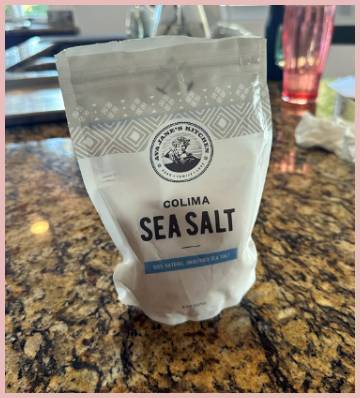
I remember the day I decided to search for a clean salt alternative because I had read several disturbing reports about the high concentration of microplastics in standard sea salts harvested from polluted open oceans.
I am someone who spends a lot of time in the kitchen experimenting with sourdough and slow-roasted meats, and I noticed that my standard grocery store salt felt “flat” and chemically aggressive.
I eventually decided to experiment with Colima Sea Salt by Ava Jane’s Kitchen after learning that it is hand-harvested by local “salinero” farmers in Mexico using traditional buckets and sun-drying techniques.
I found that upon the first opening of the bag, the salt had a very surprising texture; it was slightly moist to the touch and the grains were large, irregular, and beautiful.
I am a user who values the marriage of health and taste, and I noticed that when I used this salt in a batch of chocolate chip cookies, the crystals didn’t fully dissolve into the dough.
I eventually realized that this was a major benefit because the occasional “crunch” of a mineral-rich salt flake against the sweetness of the chocolate created a flavor profile that my husband described as absolutely perfect.
I found that I could even add a pinch to a glass of warm water in the morning, a practice I had read about for adrenal support, and the taste was surprisingly smooth rather than harsh.
I noticed that the moisture in the salt is actually a sign of its unrefined nature, retaining the 80+ minerals like magnesium and potassium that are stripped away during industrial processing.
I am a user who is cautious about spending nearly twenty dollars on a single bag of seasoning, but I realized that because the flavor is so intense and the grains are so large, I ended up using much less than I normally would.
I eventually realized that the “pricey” tag is a mechanical trade-off for not paying medical bills later, as I am no longer worried about heavy metals or plastic fibers entering my family’s system.
I have found that for anyone who appreciates the “spark” of a high-quality finishing salt, this product acts as a functional tool that enlarges the taste receptors on your tongue.
I am now at the point where I keep a small bowl of Colima salt right next to my espresso machine, as a tiny dash in my morning brew removes the bitterness and highlights the nutty notes of the beans.
Maintenance Tips for Your Colima Sea Salt
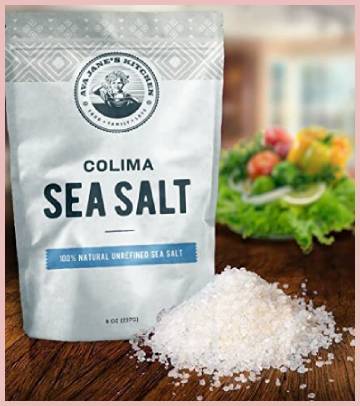
You should realize that because Colima Sea Salt is unrefined and naturally moist, its mechanical behavior in your kitchen is different from the dry, flowing salt you might be used to.
Storing your salt in an open salt cellar or a ceramic bowl with a loose lid is a vital maintenance tip because it allows the salt to “breathe” and prevents the moisture from becoming trapped and causing the grains to fuse into a solid block: I found that the salt actually becomes easier to handle when it has a tiny bit of air exposure.
Avoid using this salt in a traditional twist-grinder as a key maintenance tip because the natural minerals and residual moisture will eventually corrode the metal or clog the plastic grinding teeth: I noticed that the best way to “grind” it is to simply crush the larger flakes between your thumb and forefinger as you sprinkle it over your food.
Using a wooden or bamboo spoon for scooping is a helpful maintenance tip to avoid introducing any metallic taste or moisture-driven oxidation that could occur with cheap stainless steel spoons: I found that a small olive-wood spoon kept the salt tasting crisp and clean.
Keeping the bag tightly sealed in between uses if you live in a high-humidity environment is an essential maintenance tip to prevent the salt from absorbing even more water from the air: I noticed that during the summer months, the salt felt noticeably “wetter” if I left the bag open on the counter.
Pre-dissolving the salt in a tablespoon of warm water before adding it to cold sauces or dressings is a smart maintenance tip to ensure the large crystals don’t end up at the bottom of the bowl: I found that this mechanical step ensured a much more even flavor distribution in my vinaigrettes.
Placing a single dried bay leaf at the bottom of your salt cellar is a strategic maintenance tip to help regulate the moisture levels without affecting the flavor of the crystals: I noticed that this old chef’s trick kept my Colima salt perfectly “pinched” even in damp weather.
Rotating your salt stock by gently shaking the bag once a month is a necessary maintenance tip to redistribute the smaller grains that tend to settle at the bottom: I found that this kept the texture of my daily “pinch” more consistent throughout the life of the bag.
Using a digital scale to measure your salt by weight rather than volume is a crucial maintenance tip for serious bakers, as the air gaps between the large crystals can lead to under-salting your bread: I noticed that ten grams of Colima salt looks like much more than ten grams of table salt.
Cleaning your salt cellar with hot water and drying it completely before refilling is an effective maintenance tip to prevent old, oxidized minerals from tainting your fresh supply: I found that doing this once every three months kept the flavor profile at its peak.
Keeping the salt away from the steam of your stovetop is a helpful maintenance tip as the rising heat can cause the moist crystals to clump together more aggressively: I noticed that moving my salt bowl just twelve inches away from the boiling pasta water made a big difference.
Using the “higher” crystals from the top of the bag for finishing steaks and the “finer” dust from the bottom for seasoning soups is a final maintenance tip for maximizing the utility of the different grain sizes: I found that this allowed me to get the most “crunch” where it mattered most.
Consulting the Ava Jane’s Kitchen guide for “salt-to-water” ratios is a vital maintenance tip for those using the salt for health flushes or morning hydration: I found that a precise ratio made the salty water much more palatable and effective.
Pros and Cons of Colima Sea Salt
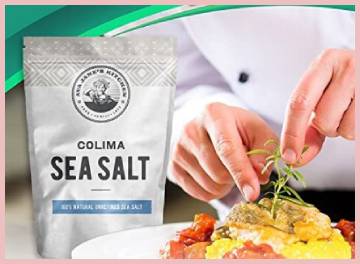
Pros of Colima Sea Salt: Flavor Nuance, Mineral Density, and Purity
- Remarkable Enhancement of Natural Food Nuance: It features a coarse, unrefined structure that mechanically enlarges the taste receptors on your tongue, allowing you to perceive deeper flavors in simple ingredients like tomatoes or steak: I found that a single sprinkle made my garden vegetables taste like they came from a five-star restaurant: this results in a more satisfying culinary experience where you can actually use less salt overall: I noticed that the “salty” hit is immediate but fades into a complex mineral finish: I realized that the texture is the secret to its flavor-boosting power.
- Clean Sourcing and Absence of Microplastics: It utilizes a land-based solar evaporation process in the salt flats of Colima, Mexico, which protects the crystals from the plastic pollution currently found in most open-ocean salt harvests: I found that this provides a massive sense of psychological and physical relief when feeding my family: this provides a structural safety net against the industrial contaminants of modern food production: I noticed that the salt feels “heavier” and more substantial than bleached table salt: I realized that hand-harvesting is a mechanical necessity for purity.
- Dense Profile of Over 80 Essential Trace Minerals: It features a high concentration of magnesium, potassium, and calcium that are naturally preserved through sun-drying rather than being stripped by chemical refining: I found that my morning “salted water” ritual helped me feel more hydrated and mentally sharp throughout the day: this results in a supplement-like benefit that supports heart function and electrolyte balance: I noticed that I didn’t experience the “bloating” associated with high-sodium processed salts: I realized that the moisture in the bag is actually a carrier for these vital nutrients.
The Analytical Cons: Moisture Content and Pricing Realities
- Higher Price Point Relative to Mass-Market Brands: It features a cost that is significantly higher than the standard buck-fifty table salt found at your local grocery store: I found that paying around twenty dollars for a bag felt like a luxury investment that required a budget adjustment: this results in a barrier to entry for some households who see salt as a basic commodity rather than a health product: I noticed that the long-term value is only realized when you track how many months a single bag actually lasts: you should realize that you are paying for the labor-intensive “salinero” harvesting process: I realized the price reflects the analytical cost of avoiding heavy metals.
- Persistent Moisture Content and Grinder Compatibility: It utilizes a natural, unrefined state which means the salt is often moist to the touch and may clumping in traditional salt shakers: I found that I could not use this salt in my favorite ceramic grinder because the dampness would gum up the mechanical gears: this provides a challenge for users who prefer a fine-mist application of salt: I noticed that I had to switch to a “salt cellar” or a small open bowl to use it effectively: you should realize that the moisture is a sign of mineral integrity, not a defect: I realized that using your fingers to “pinch” the salt is the best application method.
- Non-Dissolving Crystals in Specific Baking Applications: It features large, coarse grains that do not always melt into thick batters or dry doughs, which can lead to unexpected “salty bites” in finished goods: I found that in my cookies, the grit was a pleasant surprise, but in a delicate sponge cake, it might be perceived as a flaw: this results in the need for the user to pre-dissolve the salt in liquid if a perfectly smooth texture is required: I noticed that the grains are quite sturdy and resist melting even under moderate heat: you should realize that this salt is primarily a “finishing” tool: I realized that analytical baking requires a different approach with unrefined crystals.
- Unpredictable Grain Size for Precise Recipe Scaling: It features a wide variety of crystal sizes within a single bag, ranging from fine dust to large, crunchy flakes: I found that measuring by the tablespoon led to slightly different levels of saltiness depending on which part of the bag I scooped from: this provides a slight inconsistency for those who follow hyper-specific scientific recipes: I noticed that weighing the salt on a digital scale was the only way to ensure perfect accuracy: you should realize that natural products lack the boring uniformity of factory-made salt: I realized that the “real user” approach involves a bit of trial and error with measurements.
Colima Sea Salt Vs. Other Brands
- Colima Sea Salt Vs. Celtic Sea Salt
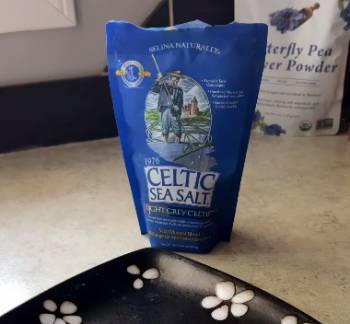
I found that Celtic Sea Salt is a very popular “grey” salt that is also naturally moist and mineral-dense, but it is often harvested from the coastal waters of France which can be closer to Atlantic shipping lanes.
You should realize that Colima Sea Salt is harvested from a land-based lagoon system in Mexico, which I find provides a cleaner mechanical barrier against modern ocean pollutants.
I noticed that Colima salt has a much whiter, brighter appearance than the often “muddy” grey of the Celtic variety.
I am a user who prefers the clean, sharp bite of Colima over the slightly more “earthy” or metallic notes sometimes found in Celtic salt.
I realized that for the purest aesthetic and flavor, Colima is the superior analytical choice.
- Colima Sea Salt Vs. Redmond Real Salt
I found that Redmond Real Salt is a land-based sea salt harvested from ancient seabeds in Utah, meaning it is also free from microplastics.
You should realize that Redmond salt has a very different mechanical texture, as it is much finer and drier, making it better for standard salt shakers but less exciting for finishing.
I noticed that the red specks in Redmond salt are iron and other minerals, whereas Colima’s minerals are clear and leave the salt looking like pure snow.
I am someone who misses the “crunch” of Colima when I switch to the finer grains of Redmond. I realized that while both are clean, Colima offers a more “gourmet” experience for the tongue.
- Colima Sea Salt Vs. Himalayan Pink Salt
I found that Himalayan Pink Salt is the world’s most famous “healthy” salt, but it is often mined in massive industrial quantities that can lead to inconsistent purity levels.
You should realize that most Himalayan salt is quite dry and requires a grinder, whereas Colima’s moisture is a sign of a more “living,” unrefined state.
I noticed that the flavor of Colima is much more “electric” and flavor-enhancing, while pink salt can sometimes feel a bit one-dimensional in comparison.
I am a user who values the hand-harvested “salinero” story over the industrial mining of the Himalayas.
I realized that Colima is the more artisanal and analytically interesting choice for a serious kitchen.
- Colima Sea Salt Vs. Maldon Sea Salt
I found that Maldon is the gold standard for “flaky” finishing salt, but it is highly processed to create those perfect pyramid shapes.
You should realize that while Maldon has a great texture, it doesn’t offer the same density of 80+ trace minerals that you get with the unrefined Colima crystals.
I noticed that Maldon is very dry and breaks down instantly, while Colima’s moist grains have more “staying power” on a hot piece of meat.
I am someone who prefers the “raw” power of Colima over the engineered perfection of Maldon. I realized that if you want health benefits alongside your crunch, Colima is the only mechanical option.
- Colima Sea Salt Vs. Morton’s Sea Salt
I found that Morton’s is a mass-produced “sea salt” that is usually refined to the point where it is almost indistinguishable from standard table salt.
You should realize that Morton’s often contains anti-caking agents like yellow prussiate of soda, which you will never find in a bag of Colima.
I noticed that the flavor of Morton’s is flat and purely “salty,” lacking any of the mineral nuances that make Colima a culinary tool.
I am a user who would rather pay more for a natural product than save a few dollars on a chemical-laden box. I realized that comparing these two is like comparing a craft-roasted coffee to a tin of instant grounds.
Also Read: Comparison Of Kohler Sea Salt Vs. White
Frequently Asked Questions (FAQs)
I found that for those seeking a balance of mineral density, culinary texture, and freedom from microplastics, Ava Jane’s Kitchen Colima Sea Salt is analytically the top brand in the market.
I realized that because it is harvested from land-based salt lagoons through solar evaporation rather than open-ocean dredging, it is structurally protected from the plastic pollution currently found in most sea salts.
I noticed that it is hand-harvested by traditional “salinero” farmers in the Colima region of Mexico, specifically from the salt flats near Sayulita.
I found that Gordon Ramsay is a long-time advocate for Maldon Sea Salt for its flaky texture, though he often emphasizes the importance of using any high-quality, unrefined salt over cheap table salt.
Final Thoughts
I have found that Colima Sea Salt is a product you should buy if you are ready to stop settling for “plastic-seasoned” food and start using a mineral-rich tool that understands the mechanical necessity of a good crunch.
You should realize that the main intent of this review was to show that the $20 investment pays for itself through enhanced flavor, better hydration, and the peace of mind that comes with clean sourcing.
I am a person who has tasted the difference on a simple tomato slice, and the vibrant “pop” of flavor from these Mexican salt flats is something I can no longer live without.
I have realized that by switching to a hand-harvested, unrefined salt, you are respecting your body’s need for trace minerals while elevating your cooking to a professional level.