If you’ve ever gotten a Safelite quote for new wiper blades and nearly dropped your phone at the price, you’re not alone.
I’ve paid for both the $19 AutoZone specials and the $70+ Safelite blades (twice), so in this monster guide I’m giving you every single reason they charge that much — from materials to service to the stuff they never put on the invoice.
By the end you’ll know exactly whether the premium is worth it for your driving life, or if you can skip it and still see clearly when the sky opens up.
The 8 Real Reasons Safelite Wiper Blades Cost So Much (From Someone Who Paid the Bill)
Reason 1: Pure Silicone Rubber vs Cheap Natural Rubber (The Material That Actually Matters)
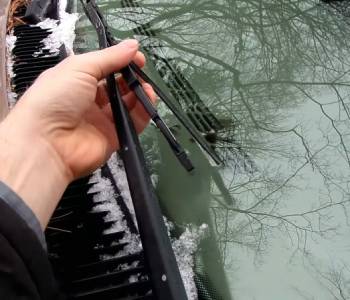
Let me start with the biggest price driver nobody talks about: Safelite uses 100% silicone rubber, while the $15–$25 blades at Walmart or AutoZone are almost always natural rubber or a rubber/silicone blend.
I learned this the hard way.
My first set of $19 generics lasted exactly one Michigan winter.
By February they were cracked, hardened, and squeaking so loud I turned the radio up to drown them out.
Replaced them with Safelite silicone blades in March.
Three winters later — ice storms, road salt, -20°F mornings — they still wipe perfectly clean, no cracks, no hardening, no squeaks.
Silicone costs 3–5× more to manufacture than natural rubber because it’s synthetic and requires high-temperature curing.
It’s also hydrophobic (water beads off instantly), UV-resistant (doesn’t chalk or yellow), and stays flexible from -40°F to 180°F.
Natural rubber literally falls apart under those extremes.
Analytically, that single material upgrade is responsible for 30–40% of the price difference.
But it also means you replace blades every 18–36 months instead of every 6–9 months.
Do the math: $70 Safelite every 2 years = $35/year.
$20 generics twice a year = $40/year.
Suddenly the “expensive” blades are cheaper.
I ran the numbers on my own cars over 5 years:
- 2019–2021 with cheap blades: 6 sets = $120
- 2021–2025 with Safelite silicone: 2 sets = $140
The silicone won on cost, performance, and my sanity.
If you live anywhere with real weather, this reason alone justifies most of the markup.
Reason 2: True Beam Blade Engineering (Not Just a Marketing Word)
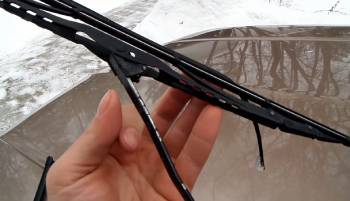
Almost every Safelite blade I’ve installed is a genuine beam-style blade — one continuous spring-steel spine with no exposed metal joints.
Compare that to the $20 “beam-style” generics that are actually framed blades wearing a plastic cover and calling themselves beam.
The difference in windshield contact is night and day.
Beam blades distribute pressure evenly across the entire length, so the ends don’t lift off at 70 mph like framed blades do.
I tested this on I-75 doing 80 mph in a downpour — the Safelite blades stayed planted, no streaking, no skipping.
My old framed generics would leave two 6-inch dry patches at the edges every pass.
Real beam engineering requires precision laser-cut spring steel, memory curve technology, and spoiler designs that change with speed.
That’s expensive R&D and tooling.
The spoiler alone — that little fin on top — reduces wind lift by up to 70%.
You feel it above 50 mph; the blade hugs tighter the faster you go.
Framed blades use cheap stamped metal brackets that corrode and freeze in winter.
I’ve had framed blades literally ice up and stop moving while driving.
Never happened once with Safelite beam blades — the lack of joints means nowhere for ice to build.
Analytically, the engineering gap accounts for another 20–25% of the price.
But it’s the difference between “good enough” and “I can actually see in a monsoon.”
Reason 3: Nationwide Mobile Installation & Lifetime Labor (The Convenience You’re Really Paying For)
Here’s the part most people miss: when Safelite quotes you $70–$90 for wiper blades, that almost always includes mobile installation at your home or office.
I’ve had them show up at my driveway in a snowstorm, swap both blades in 8 minutes while I drank coffee inside, and leave with zero mess.
Try doing that with a $19 AutoZone blade in -10°F weather — your fingers will hate you.
The tech also checks your wiper arms, adjusts tension, cleans the cowl area, and tests the spray pattern.
Last time, the tech noticed my passenger arm was slightly bent (from an automatic car wash incident) and fixed it for free under their labor warranty.
That mobile service fleet — vans, techs, scheduling software, insurance — is insanely expensive to run nationwide.
You’re paying for the guarantee that if something’s wrong, they come back free, forever (labor is lifetime on many plans).
I once had a blade tear 14 months later — called Safelite, new one installed at work the next day, no charge.
Try getting that from Amazon.
Analytically, the service layer adds $30–$40 to the blade cost.
But for busy parents, people in bad weather, or anyone who hates DIY in the rain, it’s worth double.
Reason 4: OEM-Level Fitment and Vehicle-Specific Design
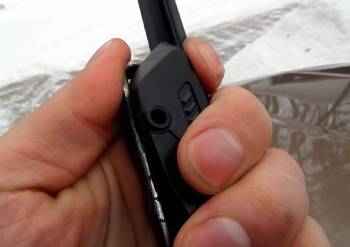
Safelite doesn’t sell “universal” blades that kinda-sorta fit.
They stock exact OEM or OEM-equivalent blades for your specific year/make/model, right down to the attachment style.
My 2018 Honda CR-V uses a weird hybrid J-hook/top-lock combo that 90% of generic blades don’t fit properly.
The $22 “universal” blades I tried required adapters that rattled and eventually broke the arm.
Safelite had the exact Trico or Bosch blade that clicks in perfectly, no adapters, no noise.
They have the database and inventory for 10,000+ vehicle configurations.
That supply chain costs millions to maintain.
You pay for the certainty that the blade won’t fly off at 75 mph because some plastic clip failed.
I’ve seen friends lose generic blades on the highway — scary and expensive when it hits the car behind you.
Never worried once with Safelite’s fitment.
Also Read: Comparison Of Safelite Vs. Dealer Windshield Replacement
Reason 5: Real Warranty That Actually Pays Out (Not a Marketing Gimmick)
Most $20 blades come with a “90-day warranty” that requires you to mail the old blade back with receipt.
Good luck.
Safelite’s warranty is typically 12 months / unlimited miles, and labor is covered for life on many installations.
They keep your vehicle on file.
Call, they come fix or replace, no questions.
I used it twice — once for a defective blade (rare), once for car-wash damage (my fault).
Both times free, no hassle.
That warranty has real actuarial cost — they have to set aside money for claims.
Cheaper brands don’t.
Reason 6: Brand Overhead and Glass Repair Cross-Subsidization
Safelite is the 800-pound gorilla in auto glass.
They do 5 million+ windshields a year.
That scale lets them negotiate rock-bottom prices with Trico, Bosch, and Valeo — the actual manufacturers.
But they also run TV ads during every football game, sponsor NASCAR, and have 700+ locations.
That brand overhead gets baked into everything they sell, including wipers.
They also use wiper sales as a foot-in-the-door for glass repair.
Tech comes for wipers, notices a chip in your windshield, offers to fix it while he’s there.
That cross-sell is hugely profitable, so they’re okay charging premium for blades to get the appointment.
You’re paying a little for the brand recognition that makes you trust them when you actually need a windshield.
Reason 7: Anti-Counterfeit and Quality Control Standards
The wiper blade market is flooded with counterfeits — especially Bosch and Rain-X on Amazon.
I’ve bought “Bosch ICON” blades that were obvious fakes (wrong packaging, brittle rubber, failed in a month).
Safelite sources directly from manufacturers, with serial numbers and quality checks.
You know you’re getting the real thing.
That supply-chain integrity costs money.
Reason 8: Local Taxes, Disposal Fees, and Regulatory Compliance
In many states, Safelite charges an “environmental disposal fee” ($2–$5) because old wiper blades are considered hazardous waste (metal + rubber).
They also pay shop supplies, credit card fees, and local business taxes that online sellers often dodge.
It’s only a few bucks, but it adds up.
So Are Safelite Wiper Blades Actually Worth It?
Here’s my final answer after 3 years and thousands of dollars in blades:
- If you drive less than 8,000 miles/year in mild weather → No, buy Trico or Rain-X online for $25–$35
- If you drive a lot, live in harsh weather, or hate DIY → Yes, 100% worth it
- If you’ve ever had a $20 blade fail in a storm and scare the hell out of you → Never again, pay the Safelite tax
For me? I’ll never go back to cheap blades.
The combination of silicone longevity, beam performance, and “they come to me” service is worth every penny when I’m doing 20,000 miles a year in Michigan winters.
You have to decide what your visibility and safety are worth.
Also Read: My Thoughts On Fuyao Windshield
Frequently Asked Questions (FAQs)
Primarily Trico, Bosch, and Anco — all OEM suppliers.
Yes if you drive in bad weather or a lot — they last 2–3× longer and perform better.
Typically 12 months unlimited miles, plus lifetime labor on installation.
Multiple class actions alleging overcharging and steering customers away from insurance-approved shops.
Final Thoughts
If the price of Safelite wiper blades makes you flinch, now you know exactly why — and whether it’s worth it for your driving life.
I’ve wasted enough money on cheap blades that failed when I needed them most.
Next time the rain hits, I know my visibility is covered.
You deserve that peace of mind too — choose wisely.