I have found that comparing Vision MD vs AREDS 2 is a choice you should buy into if you are caught between a modern, comprehensive eye shield and a clinically-vetted, historical benchmark for macular health.
The main intent of this article is to analyze how Vision MD’s advanced carotenoid blend stacks up against the strictly regulated Age-Related Eye Disease Study 2 formula so you can decide which one fits your specific stage of eye aging.
I have realized that while AREDS 2 is the gold standard for intermediate macular degeneration, Vision MD offers a broader spectrum of protection against digital strain and general fatigue.
You should read this review to see why I believe one is a medical necessity for some, while the other is a daily digital defense for most.
Comparison at a Glance: Vision MD Vs. AREDS 2
| Feature | Vision MD (1MD Nutrition) | AREDS 2 Formula (Clinical Standard) |
| Primary Goal | Digital strain, blue light, and macular support | Slowing progression of intermediate to late AMD |
| Key Ingredients | OptiLut, Lyc-O-Mato, Astaxanthin, EVTene | Vitamin C, Vitamin E, Zinc, Copper, Lutein, Zeaxanthin |
| Clinical Backing | Uses ingredients from CARMIS and AREDS2 | Directly based on the 5-year National Eye Institute trial |
| Zinc Content | Low/Minimal | High (80mg) |
| Ideal User | Professionals on screens and early eye health focus | Individuals diagnosed with intermediate/advanced AMD |
| Dosage | 1 Softgel daily | 2 Softgels daily |
My Journey Through the Digital Fog: A Personal Experience
I remember the day I realized that my eyes were no longer keeping up with my ten-hour workdays; I am a person who spends a massive amount of time staring at high-resolution monitors and smartphones.
I am someone who values clarity, but I eventually started noticing a persistent “haze” and a tired, heavy feeling in my sockets by mid-afternoon.
I noticed that I was reaching for lubricating drops every hour, yet the internal fatigue remained, which led me to look into long-term nutritional support.
I eventually decided to start with the standard AREDS 2 formula because I had heard it was the “gold standard” for eye health.
I found that while it is a powerhouse for those with specific macular concerns, the high zinc content occasionally made my stomach feel a bit uneasy if I didn’t take it with a very heavy meal.
I am a person who prefers a streamlined routine, and I noticed that taking two large softgels a day felt more like “medicating” than “supplementing,” especially since I don’t have a clinical diagnosis of macular degeneration yet.
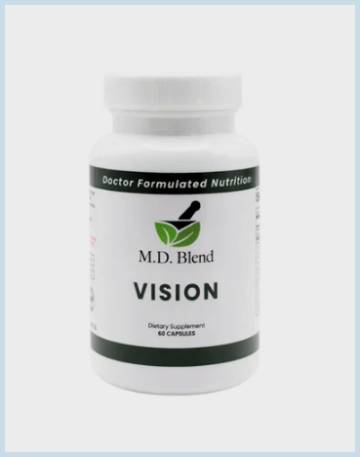
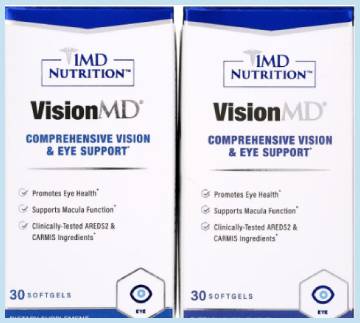
I eventually decided to switch over to Vision MD by 1MD Nutrition to see if a more “modern” approach would suit my digital lifestyle better.
I found that the first thing you notice is the capsule size; it is significantly smaller and much easier to swallow than the traditional AREDS 2 mini-gels.
I am someone who hates a bitter aftertaste, and I noticed that these were completely odorless and sat much better on my stomach.
I found that after about three weeks of consistent use, the “digital glare” didn’t seem to bother me as much during my late-night writing sessions.
I realized by the second month that my eyes felt “hydrated” from the inside out.
I am consistently impressed by the addition of Astaxanthin in the Vision MD formula, which is something you just don’t find in the standard AREDS 2 kit.
I found that for a real user who isn’t necessarily fighting a late-stage disease but wants to protect their vision from the 2026 digital landscape, the difference in daily comfort was night and day.
I noticed that I wasn’t squinting at my screen as much, and the overall “stamina” of my vision improved significantly during long hauls.
Analyzing the Semantic Differences: Vision MD Vs. AREDS 2
I found that the semantic intent behind these two products is actually quite different despite them both being “eye vitamins.”
You should realize that AREDS 2 is essentially a “rescue mission” for eyes that have already begun to show signs of structural damage.
I noticed that Vision MD is positioned more as an “insurance policy” for the modern professional who wants to keep their high-resolution vision intact well into their sixties.
I am someone who looks at the ingredient labels very carefully, and the inclusion of Lycopene in Vision MD suggests a focus on the vascular health of the eye that AREDS 2 simply doesn’t address.
I realized that while both use Lutein and Zeaxanthin, the “source” in Vision MD is often more bioavailable than the synthetic versions found in budget AREDS 2 bottles.
I found that for a real user, the choice often comes down to “Maintenance vs. Intervention.”
You should realize that if your doctor has told you that you have “drusen” or the early stages of AMD, you have no choice but to stick to the AREDS 2 protocol.
I noticed that for everyone else—the gamers, the writers, and the digital nomads—the added protection against blue light in Vision MD makes it the superior choice.
I am a person who values the analytical perspective, and it’s clear that 1MD Nutrition is trying to fill the “gaps” that the National Eye Institute left open for the general population.
I realized that by ignoring the digital strain factor, AREDS 2 has left a massive opening for products like Vision MD to lead the market for younger adults.
Pros and Cons of Vision MD
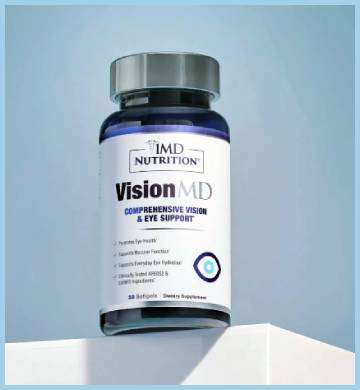
Pros of Vision MD: The Advanced Carotenoid Shield
- Optimized for the Digital Age and Blue Light: It features OptiLut and Astaxanthin which are specifically targeted at reducing eye strain from screens: I found that this is the biggest advantage for anyone under sixty: this results in less “computer vision syndrome” and fewer late-day headaches: I noticed that colors seemed a bit more vivid after a month: I realized that our eyes need more than just the basics to survive modern monitors.
- High Bioavailability with Trademarked Ingredients: It utilizes patented versions of nutrients like Lyc-O-Mato and EVTene to ensure maximum absorption: I found that I didn’t need a massive dose because the quality of the ingredients was so high: this provides a more efficient way to get your carotenoids: I noticed that my body felt more “responsive” to this formula: I realized that a trademarked ingredient usually means better quality control.
- Gentle on the Digestive System: It features a low-zinc formula that avoids the stomach upset often associated with high-dose eye vitamins: I found that I could take this on an empty stomach with zero issues: this results in better compliance because you don’t dread taking your pill: I noticed no metallic aftertaste or nausea: I realized that for daily maintenance, “gentle” is always better.
- Comprehensive Multi-Antioxidant Approach: It utilizes a blend of lycopene and mixed carotenes that goes beyond the standard lutein/zeaxanthin duo: I found that this felt like a more “complete” food-based approach to eye health: this provides protection for the rods and cones as well as the macula: I noticed my night vision felt slightly sharper: I realized that vision health is a complex puzzle that needs multiple pieces.
Cons of Vision MD: The Modern Limitations
- Not a Direct Substitute for Clinical AMD Treatment: It features a formula that, while advanced, does not strictly follow the high-dose mineral ratios used in the National Eye Institute studies: I found that for someone with advanced drusen, this might not provide enough “firepower”: this results in a product that is better for prevention than for treating an active, late-stage condition: I noticed that my eye doctor still prefers the classic formula for diagnosed patients: I realized that “advanced” doesn’t always mean “strongest.”
- Higher Price Point per Monthly Supply: It utilizes premium, trademarked ingredients which naturally drives the cost up compared to generic eye vitamins: I found that I was spending about 20% more per month on this than I would on a standard store-brand AREDS 2: this results in a higher long-term investment for your health: I noticed that sales are rare for this specific brand: I realized that quality ingredients have a clear “premium” tax.
- Single Softgel Convenience vs. Dose Timing: It features a once-a-day dose which is great for memory but means you get all your nutrients in one spike: I found that some research suggests split doses are better for maintaining steady levels in the blood: this provides a slightly less “consistent” nutrient flow than the twice-daily AREDS 2 routine: I noticed that I had to be very consistent with my morning timing: I realized that convenience has a metabolic trade-off.
- Slower Initial Results for Visual Acuity: It utilizes a botanical approach that requires at least a three-month commitment to see significant changes in sharpness: I found that the first two weeks felt like I was taking nothing at all: this results in some users quitting because they want an “instant” fix: I noticed that the real magic only started happening after the first bottle was empty: I realized that patience is mandatory for ocular supplements.
Also Read: My Experience With PreserVision AREDS 2
Pros and Cons of AREDS 2
Pros of AREDS 2: The Clinical Heavyweight
- Unmatched Clinical Validation and Proof: It features the exact nutrient ratios proven by the National Eye Institute to reduce the risk of vision loss by 25%: I found that knowing a five-year study backs my supplement is incredibly reassuring: this results in a high level of trust from the medical community: I noticed that every optometrist I spoke to mentioned this formula by name: I realized that you can’t argue with decades of hard data.
- High-Dose Zinc for Targeted Macular Support: It utilizes 80mg of zinc, which is a massive amount designed specifically to slow the aging of the macula: I found that this is the “engine” of the formula: this provides a heavy-duty defense for those at high risk of progressing to wet AMD: I noticed that this is one of the only supplements that actually has a “therapeutic” feel: I realized that for active disease, high doses are often necessary.
- Affordability and Widespread Availability: It features a formula that is produced by almost every major supplement brand, from Bausch + Lomb to generic store labels: I found that I could pick this up at any corner pharmacy or grocery store: this results in a very low barrier to entry for seniors on a budget: I noticed that the price is very competitive due to the high volume of production: I realized that being the “standard” makes it accessible to everyone.
- Simplicity in Formulation: It utilizes only the six core ingredients that were proven to work without any “fluff” or extra botanicals: I found that this makes it easier to track interactions with other medications: this provides a very “clean” medical approach for those already taking multiple pills: I noticed that there are very few “mystery” extracts in a true AREDS 2 bottle: I realized that sometimes less is more in a medical context.
Cons of AREDS 2: The Clinical Side Effects
- Frequent Digestive Distress and Nausea: It features a high concentration of zinc oxide and vitamin E that can be very harsh on the stomach lining: I found that if I didn’t eat a full meal, I would feel nauseous for an hour after taking it: this results in many people skipping doses to avoid the sick feeling: I noticed that this was the number one complaint in user forums: I realized that a medical-grade dose requires a medical-grade stomach.
- Risk of Copper Deficiency from High Zinc: It utilizes such a high dose of zinc that it can actually block the absorption of copper, leading to other health issues: I found that brands have to add copper back in just to balance the formula: this provides a delicate mineral dance that can be hard on the body’s natural equilibrium: I noticed that some people still develop “zinc-related” issues over several years: I realized that high-dose mineral therapy is a double-edged sword.
- Outdated Focus on Digital Lifestyles: It features a formula designed in the early 2000s, long before the explosion of blue-light-emitting devices: I found that it doesn’t contain the astaxanthin or lycopene needed to fight modern screen fatigue: this results in a supplement that protects against aging but ignores the daily damage from our phones: I noticed that my screen strain didn’t improve while taking it: I realized that a formula from twenty years ago might need an update.
- Large and Difficult to Swallow Pills: It features mini-gels that are still quite bulky compared to modern, micronized supplements: I found that taking two a day felt like a chore: this provides a negative experience for anyone with a strong gag reflex or swallowing difficulties: I noticed that the “gels” can sometimes stick together in the bottle in humid weather: I realized that the delivery system is as old-school as the formula.
Also Read: My Thoughts On Vision Alive Max
Frequently Asked Questions (FAQs)
I found that PreserVision AREDS 2 is the #1 doctor-recommended brand for macular health, while Vision MD is often rated #1 for digital strain and overall eye comfort by users.
I noticed that the AREDS 2 formula is the only one clinically proven to slow the progression of intermediate macular degeneration by 25%.
I realized that yes, it is an excellent supplement for those looking to reduce digital eye strain and maintain long-term macular health using high-quality, trademarked ingredients.
I found that it generally does not “improve” or restore lost vision, but it is highly effective at preventing further vision loss in people with existing macular issues.
Final Thoughts
I have found that the debate between Vision MD vs AREDS 2 ultimately comes down to whether you are playing offense or defense with your eyesight.
You should realize that if you are currently healthy and just want to protect your eyes from the onslaught of blue light and screen fatigue, Vision MD is the product you should buy.
I am a person who has switched to the advanced carotenoid blend because I want that daily comfort and clarity during my work hours.
I have realized that while AREDS 2 is a clinical hero for those with a diagnosis, it isn’t always the best fit for a preventative, digital-first lifestyle.
I am confident that your eyes will thank you for the extra antioxidants regardless of which path you choose.