When you are embarking on the journey of pregnancy, the sheer number of supplement choices can feel like a storm of confusion.
I have spent months analyzing ingredient labels and consulting clinical data to see which prenatals actually deliver on their promises.
My intent is to provide an analytical, first-person comparison of Thorne vs Ritual prenatal vitamins so you can choose the best support for your body and baby.
You should buy the formula that aligns with your specific dietary needs, digestive sensitivity, and transparency requirements for a healthy, vibrant pregnancy.
Comparison Table: Thorne Basic Prenatal Vs. Ritual Essential Prenatal
| Feature | Thorne Basic Prenatal | Ritual Essential Prenatal |
| Form | 3 Capsules Daily | 2 Capsules Daily |
| Folate Source | 1,700 mcg DFE (5-MTHF) | 1,000 mcg DFE (5-MTHF) |
| Iron Content | 45 mg (Iron Bisglycinate) | 18 mg (Iron Bisglycinate) |
| Choline | 110 mg | 55 mg |
| DHA (Omega-3) | None (Requires separate add-on) | 350 mg (Vegan Algal Oil) |
| Vitamin D3 | 1,000 IU | 2,000 IU |
| Flavor/Scent | Unflavored (Standard capsule) | Mint or Citrus Essenced |
| Certification | NSF Certified for Sport | USP Verified / Clean Label Project |
My personal experience with Thorne and Ritual prenatals
I remember the first morning I stared at my supplement cabinet, feeling that familiar wave of first-trimester nausea.
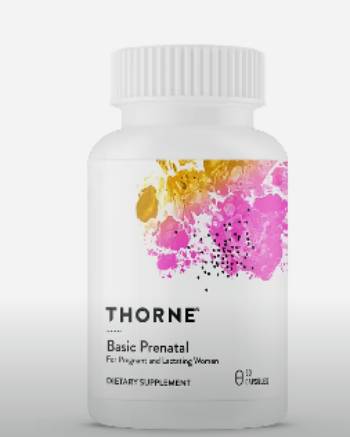
I started my journey with Thorne Basic Prenatal because my doctor emphasized the importance of high-potency nutrients, especially iron and folate.
Thorne has this reputation for being the “gold standard” in clinical settings, and it felt like I was giving my baby the most comprehensive insurance policy available.
However, I quickly realized that taking three capsules a day while struggling with morning sickness was a Herculean task.
The capsules are unflavored, but for someone with a heightened sense of smell, they had that distinct “vitamin” aroma that made my stomach turn if I didn’t take them with a heavy meal.
A few weeks later, I switched to Ritual to see if the “experience” of taking the vitamin was as good as the marketing claimed.
The difference was immediate; as soon as I opened the bottle, the scent of fresh mint hit me instead of the metallic tang of minerals.
Ritual uses a nested capsule design—a “capsule within a capsule”—and they include a small mint-scented tab in the bottle.
I found that I could actually take these on an empty stomach without the immediate urge to vomit, which was a massive win during those rough early weeks.
The two-capsule dose felt much more manageable than Thorne’s three, and the inclusion of DHA meant I didn’t have to swallow an extra fish oil pill.
Analytically, however, I noticed I felt “different” on each.
When I was on Thorne, my energy levels felt slightly more stable, likely due to the higher concentrations of B-vitamins and a more robust mineral profile.
But the constipation from Thorne’s 45mg of iron was a real struggle, despite it being a “gentle” form.
Ritual’s 18mg of iron was much kinder to my digestive system, but I worried if it was enough as my blood volume expanded in the second trimester.
Ultimately, Thorne felt like a professional medical tool, while Ritual felt like a high-end wellness product designed for modern life.
Maintenance and care for your supplements

If you want your prenatals to remain potent and safe throughout your pregnancy, you need to treat them like the delicate biological compounds they are.
- Store in a cool, dry place: Both Thorne and Ritual contain sensitive B-vitamins and oils. Avoid keeping them in the bathroom where steam from the shower can degrade the capsules and cause the contents to oxidize.
- Keep the “desiccant” packet inside: That little “do not eat” packet is there to absorb moisture. Never throw it away, as it prevents the capsules from sticking together or the minerals from breaking down.
- Watch for expiration dates: Prenatal vitamins have a shelf life. After the expiration date, the potency of the folate and Omega-3s drops significantly, which could leave you and your baby under-supported.
- Close the lid tight: Ritual capsules, in particular, rely on an aromatic tab for their scent. If you leave the lid loose, that minty scent will dissipate, and the DHA oil inside the capsules may start to smell stronger over time.
- Consistency is king: Set an alarm on your phone. The benefits of prenatals are cumulative; skipping days means your blood levels of folate and iron fluctuate, which isn’t ideal for fetal development.
Key features of Thorne Basic Prenatal
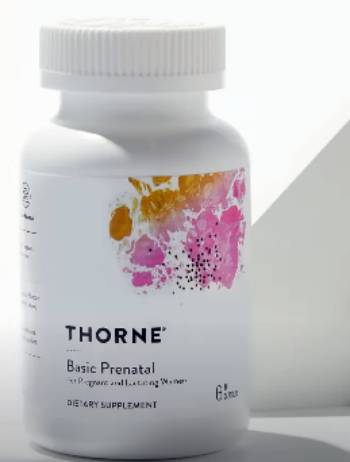
Thorne Basic Prenatal is built for the person who wants no-nonsense, high-potency nutrition.
The most prominent feature is the use of tissue-ready, methylated vitamins.
If you have the MTHFR gene mutation or simply want the most absorbable form of folate, Thorne uses 5-MTHF, which skips the conversion process your body usually has to perform.
It also contains a significant amount of Vitamin B12 as methylcobalamin, which is vital for nerve function and energy.
Another defining characteristic is the comprehensive mineral list.
Unlike many “boutique” vitamins that only include a handful of ingredients, Thorne includes everything from Boron to Selenium.
It features a whopping 45mg of iron bisglycinate, which is nearly double the daily value for pregnant women.
This makes it an analytical powerhouse for anyone who is prone to anemia or has a diet that is low in red meat.
The brand also collaborates with the Mayo Clinic, which adds a layer of institutional trust that few other supplement companies can claim.
Pros and Cons of Thorne Basic Prenatal
Pros of Thorne Basic Prenatal
- High Potency Iron: With 45mg of iron bisglycinate, it is one of the best options for preventing pregnancy-induced anemia without needing an additional iron supplement.
- Methylated Folate and B12: By using 5-MTHF and methylcobalamin, Thorne ensures that even those with genetic absorption issues get the nutrients they need for neural tube development.
- Comprehensive Mineral Profile: It includes trace minerals like zinc, selenium, and copper that are often missing from “stripped-back” prenatal formulas.
- NSF Certified for Sport: This certification is one of the strictest in the world, ensuring the product is free from hundreds of banned substances and contaminants.
- No Additives or Coatings: Thorne avoids the use of stearates, artificial colors, and unnecessary fillers that can sometimes cause allergic reactions or hinder absorption.
Cons of Thorne Basic Prenatal
- High Capsule Count: Taking three large capsules every single day can be a significant hurdle, especially during the first trimester when gag reflexes are sensitive.
- No DHA Included: This is a major omission: you will have to purchase a separate Omega-3 supplement to ensure your baby gets enough DHA for brain and eye development.
- Aggressive Iron Dose: While 45mg is great for some, it can be “too much” for others, leading to digestive backup and constipation if you already have high iron levels.
- Lack of Flavor/Scent Masking: The raw smell of the vitamins can be off-putting for those experiencing hyperosmia (heightened sense of smell) during pregnancy.
Key features of Ritual Essential Prenatal
Ritual Essential Prenatal is the poster child for “clean” and “traceable” supplementation.9
The standout feature is their “Made Traceable” promise, which allows you to see the exact source and manufacturer of every single ingredient on their website.
For example, you can see that their Vitamin D3 comes from lichen in the UK rather than sheep’s wool.
This transparency is an analytical dream for the consumer who wants to know exactly what is entering their bloodstream.
The design of the capsule itself is a technological feat.
It uses a “delayed-release” mechanism designed to dissolve in the small intestine rather than the stomach, which is why it is much gentler on people with morning sickness.
Unlike Thorne, Ritual includes 350mg of vegan-friendly Algal oil (DHA).
This makes it a true “all-in-one” solution for those who want to minimize the number of bottles in their cabinet.
The dosage is also lower, focusing on the “essential” nutrients that are most commonly missing from a standard diet, rather than trying to provide 100% of everything.
Also Read: Comparison Of One A Day Prenatal Vs. Nature Made Prenatal
Pros and Cons of Ritual Essential Prenatal
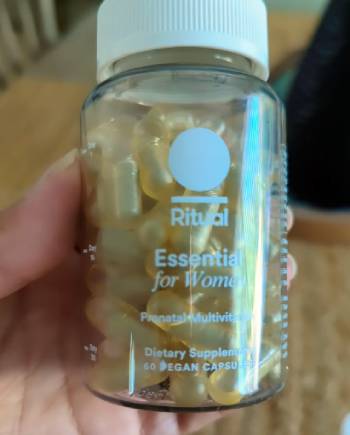
Pros of Ritual Essential Prenatal
- Integrated Vegan DHA: By including 350mg of Omega-3 DHA from algae, Ritual eliminates the need for a separate fish oil pill and avoids the “fishy burps” associated with low-quality oils.
- Stomach-Friendly Design: The delayed-release capsule and the addition of mint or citrus essence make it arguably the easiest prenatal to take during the “nausea phase.”
- Ingredient Traceability: You can verify the sustainability and purity of every nutrient, giving you peace of mind regarding the environmental and ethical impact of your vitamins.
- Vegan and Non-GMO: The formula is entirely plant-based, making it the superior choice for vegetarians or vegans who want to avoid the gelatin often found in other capsules.
- Monthly Subscription Convenience: The brand is built on a subscription model that ensures you never run out of vitamins during your nine-month journey.
Cons of Ritual Essential Prenatal
- Lower Nutrient Diversity: Ritual purposefully excludes several vitamins and minerals that they believe you can get from food, such as Vitamin C and certain trace minerals: you must have a very balanced diet to fill these gaps.
- Lower Iron Levels: At 18mg, it might not be enough for women who are entering pregnancy with low iron stores or those in their third trimester when demand spikes.
- Polarizing Flavor: While most love the mint, some users find the herbal scent to be just as triggering for nausea as a standard vitamin smell.
- Subscription Hurdles: If you prefer to buy your vitamins at a local pharmacy or in bulk, the “direct-to-consumer” model can be an annoying barrier to entry.
Also Read: Comparison Of Needed Vs. Ritual
Frequently Asked Questions (FAQs)
Thorne is better for those needing high-potency, medically-comprehensive nutrition, while Ritual is better for those struggling with nausea who want a gentle, traceable, all-in-one vegan option.
Many clinicians consider it the “best” for its rigorous testing and high bioavailability, but the “best” vitamin is ultimately the one you can consistently swallow without vomiting.
Thorne uses “bio-identical” nutrients that are synthesized in a lab to match the exact form your body uses, ensuring they are “tissue-ready” and highly absorbable.
No, Ritual is Clean Label Project Certified and undergoes third-party testing to ensure they meet strict safety standards for heavy metals and contaminants.
Final Thoughts
In the final analysis of Thorne vs Ritual, the right choice depends on your body’s unique signals.
If you are someone who needs a heavy-duty mineral boost and isn’t bothered by a three-capsule dose, you should buy Thorne Basic Prenatal for its unmatched clinical depth.
However, if your stomach is sensitive and you want a streamlined, minty experience with built-in DHA, you should buy Ritual to make your daily routine a breeze.
You should buy the formula that gives you the most confidence, because when you feel supported, your baby does too.