When you look in the mirror and see straw-looking ends or hair that feels like gum when it is wet, you should buy a professional bond builder to save your strands from total disaster.
I have spent the last few months analyzing how chemical treatments and heat styling can compromise your hair’s structure, and my intent is to provide an analytical comparison of Redken Acidic Bonding vs Olaplex.
You should buy these products if you want to stop breakage and restore the healthy, bouncy texture of your virgin hair.
Comparison Table: Redken Acidic Bonding Vs. Olaplex
| Feature | Redken Acidic Bonding Concentrate | Olaplex (Specifically No. 3) |
| Primary Technology | Citric Acid & pH Balancing | Bis-Aminopropyl Diglycol Dimaleate |
| Bond Type Target | Hydrogen & Salt Bonds | Disulfide Bonds (Internal) |
| Main Benefit | Instant softness, shine, and pH repair | Deep structural repair from within |
| Best For | Porous, frizzy, and color-faded hair | Bleached, chemically fried hair |
| Application Type | In-shower Shampoo/Conditioner system | Pre-shampoo treatment |
| Immediate Feel | Silky, lightweight, and manageable | Stronger, but can feel dry without mask |
| pH Level | Acidic (4.5–5.5) | Neutral (~6.0–6.5) |
My experience with Redken and Olaplex
I remember the first time I bleached my hair to a level ten platinum; it looked amazing for a week, but then the “crunch” set in.
I am someone who has tried every drugstore “miracle” mask, but nothing seemed to penetrate the hair shaft until I started using professional bond builders.
The Olaplex No. 3 experience was my first foray into high-end repair.
I applied it to damp hair and let it sit for forty-five minutes while I did chores around the house.
When I rinsed it out, my hair didn’t feel “soft” in the traditional sense, but it felt significantly more substantial—like the hollowed-out parts of my hair had been filled back in.
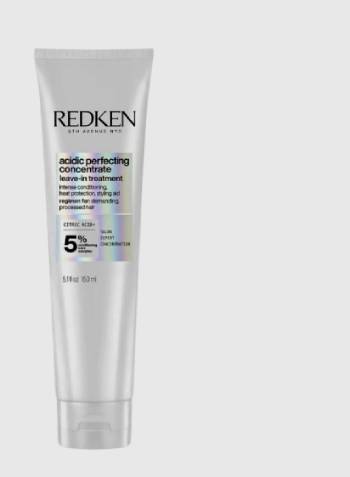
However, when I discovered the Redken Acidic Bonding Concentrate (ABC) line, my daily routine changed.
I found that while Olaplex gave me internal strength, it didn’t always give me that “slip” and shine I wanted for styling.
The Redken experience was much more satisfying for my morning routine because it replaces your standard shampoo and conditioner.
The scent is citrusy and fresh, and the texture of the conditioner is thick and luxurious.
After just one wash with the Redken trio, my hair was so soft that I didn’t even need to use a detangling spray before blow-drying.
Analytically, I’ve noticed that Olaplex is the “surgery” for your hair, while Redken is the “daily therapy.”
When I used Olaplex, I had to be careful to follow up with a heavy moisture mask, or my fine hair would feel a bit stiff.
With Redken, the pH-balancing formula smoothed down my cuticles instantly, which made my color look much more vibrant.
I started using both in tandem—Olaplex once a week for deep repair and Redken for my regular washes—and that was the magic combination that finally stopped my ends from snapping off every time I brushed them.
It’s a powerful duo for anyone who refuses to give up the bleach or the flat iron.
Maintenance and tips for bond-repaired hair

To get the most out of these expensive treatments, you need to change how you handle your hair between washes.
- The “Wet Hair” rule: Never, ever brush your hair while it is soaking wet without a leave-in conditioner. Wet hair is at its most elastic and vulnerable state. Use the Redken Acidic Bonding Leave-in on towel-dried hair first to provide a “shield” before you even think about a comb.
- Cool water rinse: When you are finishing your shower after using the Redken conditioner, turn the water temperature down. Cold water helps the acidic formula lock the cuticle even tighter, resulting in a mirror-like shine that stays until your next wash.
- Don’t overdo the treatment: If you are using Olaplex No. 3, once a week is usually plenty for maintenance. Over-treating healthy hair can sometimes make it feel less “bouncy.” Listen to your hair—if it feels strong but dry, switch to a moisture mask like Redken All Soft for a week.
- Section your application: When applying Olaplex, don’t just dump it on the top of your head. Section your hair into four parts and ensure every strand is saturated from root to tip. The product can’t fix bonds it doesn’t touch.
- Avoid “Towel Rubbing”: Instead of vigorously rubbing your hair with a standard towel, use a microfiber wrap or an old cotton T-shirt. This prevents the mechanical friction that breaks those newly repaired bonds before they can fully settle.
Pros and Cons of using Redken Acidic Bonding Concentrate Vs. Olaplex
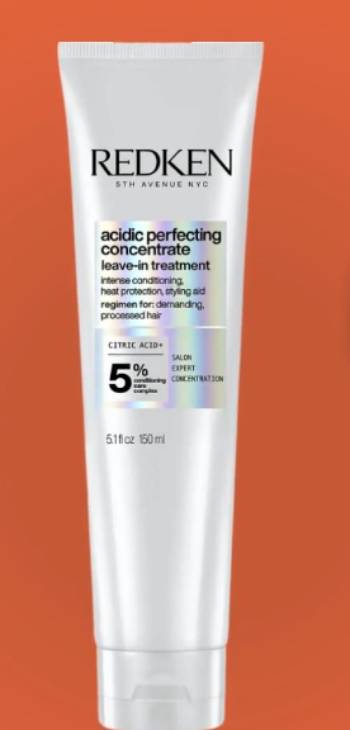
Pros of using Redken Acidic Bonding Concentrate
- The most immediate benefit is the intense pH balancing: hair that has been chemically treated often has a high, alkaline pH which causes the cuticle to stay open and vulnerable.
- Redken’s acidic formula (pH 4.5) seals that cuticle shut, leading to 14x smoother hair after just one use.
- It provides incredible color protection: by sealing the hair’s surface, it prevents color molecules from washing down the drain, which is a major win for those of us who spend a fortune on salon toners.
- The formula includes citric acid and a concentrated bonding complex: this doesn’t just work on the surface but also reinforces weakened bonds to increase hair resilience.
- It is exceptionally lightweight for fine hair: unlike some repair masks that can leave thin hair looking greasy by noon, the ABC line adds volume and shine without the weight.
- The multi-step system is very easy to use: you don’t have to wait thirty minutes before your shower; you just swap out your regular products for these.
- Finally, the heat protection in the leave-in treatment is top-tier: it protects up to 450 degrees, which is essential if you use a blow-dryer or curling iron daily.
Pros of using Olaplex
- Olaplex features a truly unique, patented chemistry: the active ingredient, Bis-Aminopropyl Diglycol Dimaleate, is the only one that can permanently relink broken disulfide bonds.
- It offers the deepest structural repair available for at-home use: while other products focus on the cuticle (the outside), Olaplex works inside the cortex to fix damage from bleach and heat.4
- It is a universal product for all hair types: from coily 4C textures to pin-straight fine hair, Olaplex improves the integrity of the hair without using heavy proteins that can cause brittleness.5
- The No. 3 Hair Perfector is a proven cult classic: it has thousands of five-star reviews for a reason—it actually stops breakage in its tracks for people with severe chemical damage.
- It is free of silicones and oils that mask damage: Olaplex isn’t just “coating” your hair to make it feel better; it is actually changing the physical health of the strand.
- It is safe for frequent use: you can use the treatments up to three times a week for severely compromised hair to rapidly rebuild strength before your next salon visit.
Cons of Redken Acidic Bonding vs Olaplex: The honest comparison:
- Price point barriers for both brands: neither of these are budget-friendly, and you will likely spend over sixty dollars to get the full system: this can be a hurdle if you are used to drugstore prices.
- Redken can be too “slippery” for some: if you have very thick, coarse hair that needs “grip” for styling, you might find that Redken makes your hair so smooth that it won’t hold a curl as well as before.
- Olaplex requires a time commitment: the No. 3 treatment needs to sit on damp hair for at least ten to twenty minutes to be effective: if you are a “wash and go” person, this extra step can feel like a chore.
- Olaplex can leave hair feeling dry if used alone: because it is a bond builder and not a traditional conditioner, many users find they MUST use a moisture mask afterward to avoid a “stiff” feeling.
- Redken’s dependence on citric acid: while great for pH, some users with extremely sensitive scalps may find the high acidity slightly irritating if they have existing skin conditions like psoriasis.
- Olaplex marketing can be confusing: with numbers from 0 to 9, it is often hard for you to know exactly which product you need without a guide: this can lead to buying the wrong product for your specific damage type.
- Potential for “over-protein” feel: although neither is a pure protein treatment, the Redken ABC system is very strengthening: if your hair is already healthy and you use it every day, you might find it starts to feel slightly brittle over time.
Also Read: Comparison Of Redken All Soft Vs. Acidic Bonding
Redken Acidic Bonding Vs. Other Brands
- Redken Acidic Bonding Vs. Olaplex No. 3
When you compare these two head-to-head as treatments, the main difference is the “wait time.”
Olaplex No. 3 is a pre-shampoo treatment that requires you to get your hair damp, apply product, wait, and then shower.
Redken Acidic Bonding Concentrate has a “Pre-Treatment” that only takes five to ten minutes and is followed immediately by the shampoo.6
I have found that for a busy lifestyle, Redken is much easier to stick with.
However, if I have a “self-care Sunday” and my hair is falling apart from a fresh highlight, Olaplex No. 3 is the only thing that gives me that deep, structural confidence.
Analytically, Olaplex is the better “repairman,” but Redken is the better “beautifier.”
- Redken Acidic Bonding Vs. K18
While this article focuses on Redken and Olaplex, it is worth mentioning K18 because it is Olaplex’s biggest rival in the “bonding” space.
K18 uses a peptide that mimics the hair’s natural DNA, and it only takes four minutes to work.
However, K18 can be incredibly drying and is very expensive for the amount of product you get.
I have found that Redken Acidic Bonding is a much more “luxurious” experience for those who want their hair to feel soft and hydrated immediately.
K18 is for the person who wants clinical results with zero effort; Redken is for the person who wants their shower to feel like a high-end salon experience.
Also Read: My Experience With Kerastase Genesis
Frequently Asked Questions (FAQs)
Olaplex is best for deep, internal structural repair of severely bleached hair, while Redken is best for immediate smoothing, shine, and pH balance for frizzy or color-treated hair.
It is designed for all hair types and textures that are “processed,” meaning hair that has been damaged by color, bleach, heat styling, or environmental factors.
Olaplex’s biggest competitors in the bond-building space are K18, Redken (with the Acidic Bonding line), and Kérastase.
Yes, and many stylists recommend it: use Olaplex No. 3 as a weekly deep treatment to rebuild internal bonds, then use the Redken ABC shampoo and conditioner for your regular washes to maintain external softness and pH balance.
Final Thoughts
The health of your hair is a long-term investment that requires the right tools for the job.
I have found that the debate between Redken Acidic Bonding vs Olaplex isn’t necessarily about which one is “better,” but which one fits your specific hair damage and your schedule.
You should buy Olaplex if your hair is breaking off in chunks and you need a molecular miracle; you should buy Redken if you want your hair to look and feel like silk every single day.
I believe that the best hair of your life is possible when you stop guessing and start using science-backed formulas.
You deserve to have hair that is strong, shiny, and resilient enough to handle whatever style you choose next.