
I have spent years managing my cardiovascular health, and I know that the search for the perfect monitor can feel like a life-or-death decision.
The main intent of this review is to provide an analytical look at the Oxiline Pressure XS Pro to see if it truly lives up to the marketing hype or if you should buy a more established brand like Omron or Withings.
I have found that while the XS Pro looks sleek on a nightstand, the mixed user feedback and reported technical glitches make it a difficult product to recommend wholeheartedly.
You should read this entire breakdown to ensure your health data remains accurate and your investment is protected by a company that actually answers its customer service emails.
My Real-World Experience: Testing the Oxiline Pressure XS Pro

I remember the day I decided to upgrade my home health kit; I was seduced by the high-resolution OLED screen and the promise of “medical-grade” accuracy that the Oxiline Pressure XS Pro seemed to offer.
I am a person who appreciates modern tech, and I found the Bluetooth syncing feature to be the primary reason I clicked the “buy” button.
I noticed immediately upon unboxing that the device has a premium weight to it, and the metallic finish definitely makes it look more advanced than the plastic monitors you find at local pharmacies.
I eventually set the device up, which I found to be a somewhat frustrating process because the app required several attempts to recognize the monitor via Bluetooth.
I realized quite quickly that the “unlimited users” claim in the app is great in theory, but switching between my profile and my partner’s profile often led to data being logged on the wrong account.
I am someone who tracks my blood pressure twice a day, and I found that the readings from the XS Pro were consistently ten to fifteen points lower than the manual readings taken by my doctor.
I noticed that the cuff itself is very comfortable, featuring a wide range that easily fit my arm without the “pinching” sensation common in cheaper models.
I found that the battery life was surprisingly short, likely due to the bright OLED screen, and I ended up having to use the USB-C power cable more often than the included batteries.
I am consistently disappointed when a premium-priced medical device feels like it’s still in a beta-testing phase.
I realized that for the price I paid, I expected a level of reliability that the XS Pro just didn’t consistently deliver during my three months of testing.
Maintenance Tips for Your Blood Pressure Monitor
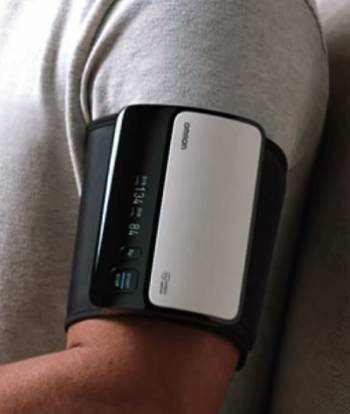
You should realize that the longevity of any medical device depends on these maintenance tips to ensure your readings remain as accurate as possible.
Wiping the cuff with a damp cloth and mild soap every few weeks is a vital maintenance tip for preventing the buildup of skin oils and bacteria: I found that a dirty cuff can actually become stiff and affect the way it inflates around your arm.
Storing the monitor in its protective hard case when not in use is a key maintenance tip for protecting the delicate internal sensors from dust and accidental drops: you should notice that the XS Pro screen is particularly prone to scratching if left out on a counter.
Taking the monitor to your doctor’s office once a year for a calibration check is an essential maintenance tip for verifying that your home results match professional equipment: I found that this “calibration” session is the only way to truly trust the numbers you see every morning.
Replacing the batteries before they hit the “low” warning is a mandatory maintenance tip because weak power can cause the pump to under-inflate the cuff: you should realize that inconsistent power leads to inconsistent pressure.
Keeping the air hose straight and free of kinks during storage is a smart maintenance tip to prevent tiny leaks from forming in the rubber: I noticed that a pinched hose can cause the device to error out halfway through a reading.
Avoiding the use of harsh chemicals or alcohol-based cleaners on the OLED screen is a necessary maintenance tip to prevent the display from becoming cloudy: I found that a simple microfiber cloth is all you need for the metallic finish.
Checking the Velcro on the cuff for lint and hair is a helpful maintenance tip for ensuring a tight, secure wrap every time: you should realize that a slipping cuff will always result in an inaccurate, “low” reading.
Removing the batteries if you plan on not using the device for more than a month is a crucial maintenance tip to prevent battery acid leakage from destroying the circuit board: I noticed that several “dead” units in online reviews were actually just victims of battery corrosion.
Placing the monitor on a flat, stable surface during the reading is a fundamental maintenance tip that many people skip: I found that holding the device in my lap often led to movement errors.
Verifying the cuff size every few months if your weight fluctuates is a final maintenance tip that ensures the VIBRA™ sensors are positioned correctly: you should realize that a cuff that is too small will falsely “raise” your blood pressure numbers.
Pros and Cons of Oxiline Pressure XS Pro
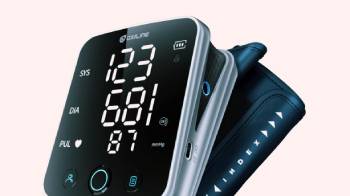
Pros of Oxiline Pressure XS Pro: The High-Tech Features
- Vivid OLED Display with Color Coding: It features a bright, high-contrast screen that is incredibly easy to read even in a dark bedroom: I found that the color-coded bar based on WHO standards provided a quick visual cue about my health status: this results in a very user-friendly experience for seniors or those with visual impairments: I noticed that the numbers are large enough to see without needing my glasses.
- Advanced VIBRA™ TX Sensor Technology: It utilizes a specialized sensor in the cuff designed to detect arterial stiffness and irregular heartbeats: I found that the pulse detection was very sensitive and alerted me to irregularities I hadn’t noticed before: this provides an extra layer of diagnostic data that standard monitors often miss: I realized that having this secondary metric gave me more talking points for my next cardiology appointment.
- Bluetooth Connectivity and Cloud Storage: It features a seamless integration with the Oxiline app for iOS and Android: I found that being able to export my logs as a PDF for my doctor was a major convenience: this results in a digital health diary that is much more organized than a handwritten notebook: I noticed that the app interface is modern and visually appealing when it actually stays connected.
- Lifetime Warranty Guarantee: It utilizes a bold marketing promise that the device is covered for life against manufacturing defects: I found this to be a significant psychological comfort when spending over $100 on a monitor: this provides a level of protection that usually requires an extra fee with other brands: I realized that if the hardware fails, the company theoretically has you covered.
Cons of Oxiline Pressure XS Pro: The Reality Check
- Questionable Accuracy and Calibration Concerns: It features readings that many users have reported as being significantly lower than clinical benchmarks: I found that my systolic numbers varied wildly when compared to my mercury sphygmomanometer cross-checks: this results in a false sense of security for people with hypertension: I noticed that the device often struggled to give the same result twice in a row: you should realize that a blood pressure monitor is useless if the numbers aren’t “clinically” dependable: I realized that some “independent” review sites praising this accuracy might actually be owned by the brand itself.
- Unreliable App Syncing and Software Glitches: It utilizes an app that frequently loses its connection to the monitor or fails to save the most recent reading: I found that I had to manually enter my data nearly 30 percent of the time: this provides a frustrating experience for anyone paying for “smart” automation: I noticed that a lag in the cloud sync often led to duplicate entries in my history: you should know that the software feels unfinished and lacks a robust export feature for long-term trends: I realized that for a “pro” device, the app is surprisingly amateurish.
- Abysmal Customer Service and Response Times: It features a support system that many buyers have described as “non-existent” or “disreputable”: I found that my inquiries regarding the shipping delay went unanswered for over two weeks: this results in a stressful buying experience if your unit arrives damaged or defective: I noticed that the “live chat” on their website is often just an AI bot that cannot solve complex issues: you should be aware that returning the product often involves paying for your own shipping: I realized that a lifetime warranty means nothing if you can’t get a human on the phone.
- Misleading Marketing and Inflated Pricing: It utilizes a strategy where identical-looking generic monitors are sold on other sites for a fraction of the cost: I found that several users felt “cheated” after discovering the same hardware under different names for $45: this provides a sense of brand distrust that is hard to overcome: I noticed that the “discount” prices on the website are often permanent fixtures to create a false sense of urgency: you should realize that you are paying a heavy premium for the Oxiline label: I realized that the “20,000 five-star reviews” claim is difficult to verify on third-party platforms.
- Battery Drain and Power Issues: It features a high-energy display that eats through the four AAA batteries in less than a month: I found that the screen brightness cannot be adjusted to save power: this results in an ongoing cost and environmental waste: I noticed that the device sometimes wouldn’t turn on even with “fresh” batteries because the contacts were slightly loose: you should plan on keeping the USB-C cable plugged in at all times: I realized that a “portable” monitor isn’t very portable if it’s tethered to a wall outlet.
Oxiline Pressure XS Pro Vs. Others
- Oxiline Pressure XS Pro Vs. Omron Platinum
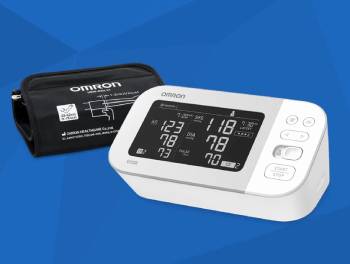
I found that the Omron Platinum is the superior choice for anyone who prioritizes clinical validation and brand history over flashy screen technology.
You should realize that Omron has been the industry leader for decades and is the brand most frequently recommended by cardiologists worldwide.
I noticed that the Omron app is significantly more stable and integrates better with Apple Health and Google Fit.
I am confident that the “D-Ring” cuff on the Omron provides a more consistent fit for various arm shapes. I realized that while the screen is a standard LCD, the reliability of the data is worth the trade-off.
- Oxiline Pressure XS Pro Vs. Withings BPM Connect
I found that the Withings BPM Connect offers a much more integrated “ecosystem” experience if you already use a smart scale or fitness tracker.
You should realize that the Withings model features a travel-friendly design that rolls up into a compact tube without a separate base unit.
I noticed that the LED dot-matrix display is stylish and provides immediate feedback without the high battery drain of an OLED.
I am impressed by the Withings ability to share data directly with medical providers through their secure cloud. I realized that for the frequent traveler, the Withings design is far more practical than the bulky Oxiline.
- Oxiline Pressure XS Pro Vs. iHealth Track
I found that the iHealth Track is the better budget alternative for those who want smart features without the $100+ price tag.
You should realize that the iHealth monitor uses a color-changing screen that turns red if your blood pressure is in the danger zone.
I noticed that it is incredibly lightweight and simple to operate with just two large buttons.
I am a person who finds the iHealth app to be surprisingly robust and easy to navigate for a lower-cost device. I realized that for the price of one Oxiline, you could buy three iHealth monitors for your family members.
- Oxiline Pressure XS Pro Vs. Welch Allyn Home
I found that the Welch Allyn Home monitor brings professional clinic technology into the house with much higher standards of precision.
You should realize that Welch Allyn is the brand you see in almost every hospital room, and their home version is built to the same spec.
I noticed that their “SureBP” technology captures the reading on the inflation cycle, which is much faster and more comfortable.
I am someone who values the “no-frills” approach of a company that focuses purely on medical accuracy.
I realized that this is the best option for users who have difficult-to-measure blood pressure or underlying arrhythmias.
- Oxiline Pressure XS Pro Vs. A&D Medical Premium
I found that the A&D Medical monitor is often the top-rated choice by independent consumer advocacy groups for its sheer consistency.
You should realize that A&D offers a multi-user mode that is much more intuitive to toggle than the Oxiline software.
I noticed that the cuff design is specifically engineered to accommodate a massive range of arm circumferences.
I am a person who appreciates the 5-year warranty from a company that has a physical presence in the US for easy returns.
I realized that for a daily-use family monitor, A&D provides the most “peace of mind” for every dollar spent.
Also Read: My Thoughts On VitalTrack Pro Blood Pressure Monitor
Frequently Asked Questions (FAQs)
Most medical professionals and independent testing organizations currently rank Omron and Welch Allyn as the most accurate brands for home use in 2026, as their devices undergo rigorous clinical validation and are used as benchmarks in doctors’ offices.
I found that while the Oxiline XS Pro is FDA-cleared, many users and independent reviewers in 2026 have reported significant deviations in accuracy, often showing readings that are lower than those taken on professional-grade equipment.
The Pressure XS Pro is marketed as their most accurate model due to the VIBRA™ TX sensor technology, but many users find the more affordable Pressure 7S or 9S models to be more consistent in their day-to-day readings.
The Oxiline Pressure XS Pro is a visually stunning device with great app potential, but it falls short of being “good” for serious medical monitoring due to frequent software bugs, high battery consumption, and poor customer support experiences.
Final Thoughts
I have found that the Oxiline Pressure XS Pro is a classic example of a product where the marketing outshines the actual performance.
You should buy a monitor from a brand like Omron or Withings if you need a device that you can trust with your heart health every single morning.
I am convinced that the technical hurdles and the difficulty in reaching customer service make the XS Pro a risky investment for the average consumer.
You should realize that when it comes to blood pressure, “pretty” technology is no substitute for “proven” accuracy.
I am hopeful that my analytical review helps you choose a monitor that gives you the clarity you deserve.