I have found that the debate between Ocuvite Vs. AREDS 2 is a choice you should buy into if you are deciding between a proactive daily eye multivitamin and a medically-backed intervention for diagnosed macular conditions.
The main intent of this article is to analyze how the general eye health support of Ocuvite compares to the high-dose clinical standards of the AREDS 2 formula so you can choose the right protective layer for your vision.
I have realized that while AREDS 2 is a specific “rescue” formula for those with intermediate to advanced AMD, Ocuvite serves as a vital nutrient replenisher for the average aging adult.
You should read this review to see why I believe your current eye health stage determines which bottle belongs in your cabinet.
Comparison at a Glance: Ocuvite Vs. AREDS 2
| Feature | Ocuvite (Adult 50+) | AREDS 2 Formula (PreserVision) |
| Primary Goal | Daily maintenance and digital eye support | Slowing progression of existing AMD |
| Key Nutrients | Lutein, Zeaxanthin, Omega-3, Vitamin D | High-dose Vit C, E, Zinc, Lutein, Zeaxanthin |
| Zinc Content | Low (approx. 9mg) | High (approx. 80mg) |
| Ideal User | Adults 50+ looking for general eye protection | Individuals diagnosed with intermediate/late AMD |
| Clinical Status | General supplement | Directly based on NEI clinical trials |
| Dosage | 1 Softgel daily | 2 Softgels daily (split dose) |
My Journey to Clearer Sight: A Real User Perspective
I remember the day I found myself squinting at the fine print on a restaurant menu; I am a person who has always prided myself on having “eagle eyes.”
I am someone who values long-term health, but I eventually realized that aging eyes need more than just a carrot here and there.
I noticed that my evening vision was becoming slightly grainy, and my eyes felt perpetually dry after a day of work, which led me to look into the world of ocular supplements.
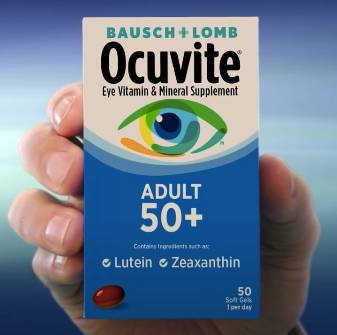
I eventually decided to start with Ocuvite Adult 50+ because I didn’t have a formal diagnosis of any eye disease.
I found that the single softgel was incredibly easy to add to my morning coffee routine.
I am a person who prefers simplicity, and I noticed that the addition of Omega-3 in the Ocuvite blend really helped with that “scratchy” feeling I used to get by 3:00 PM.
I am someone who is very active, and I found that Ocuvite felt like a natural extension of my daily multivitamin rather than a heavy-duty medical treatment.
I eventually decided to research the AREDS 2 formula when my optometrist mentioned I had a few “drusen”—those tiny yellow spots that can be early signs of macular issues.
I found that the transition to an AREDS 2 supplement like PreserVision felt much more intense.
I am a person who has a sensitive stomach, and I noticed that the high zinc levels in the AREDS 2 formula required me to eat a much larger breakfast to avoid nausea.
I found that taking two pills a day was a bit more of a commitment, but I realized that the “intensity” was the point—it’s a targeted formula designed to do a specific job.
I realized by the third month that my choice depended entirely on what I was trying to “fix.”
I am consistently impressed by how Ocuvite handles the daily “wear and tear” of blue light and aging.
I found that for a real user who is just starting to notice age-related changes, Ocuvite is a fantastic starting point.
I noticed that once you cross into the territory of clinical risk, however, the “heavier” AREDS 2 formula becomes the clear winner for peace of mind.
I am someone who believes in the power of prevention, and I found that alternating between these concepts helped me understand that eye health isn’t one-size-fits-all.
Maintenance Tips for Your Vision Routine
You should realize that taking the pill is only half the battle; maintaining your eyes requires a holistic approach to your environment and habits.
Cleaning your sunglasses with a microfiber cloth every single morning is a vital maintenance tip because smudge-free lenses reduce the micro-strain your eyes feel when trying to focus: I found that clearer lenses meant less squinting during my morning walk.
Wearing a wide-brimmed hat in addition to your UV-protected glasses is a key maintenance tip to block the “top-down” sunlight that can bypass your lenses: you should notice that your eyes feel much cooler and less irritated after a day outdoors.
Adjusting your computer screen’s “Night Shift” or “Blue Light Filter” to be active 24/7 is a helpful maintenance tip to reduce the high-energy light hitting your retina: I noticed that my evening eye fatigue dropped significantly once I warmed up my screen colors.
Practicing the 20-20-20 rule—looking at something 20 feet away for 20 seconds every 20 minutes—is an essential maintenance tip to keep your eye muscles flexible: I found that setting a small timer on my desk helped me stay consistent.
Replacing your eye makeup or contact lens cases every three months is a smart maintenance tip to prevent bacterial buildup that can cause chronic inflammation: you should realize that surface infections can detract from the benefits of your internal supplements.
Drinking at least eight glasses of water a day is a crucial maintenance tip to support the aqueous humor and tear film of your eyes: I noticed that my supplements worked better when I was properly hydrated.
Scheduling a dilated eye exam once a year is a necessary maintenance tip to catch changes in your macula before they become visible symptoms: I found that peace of mind is the best supplement of all.
Eating a bowl of kale or spinach with a healthy fat like olive oil is a strategic maintenance tip to help your body absorb the lutein in your pills: I noticed that my digestion felt smoother when I combined my vitamins with real greens.
Keeping your workspace well-lit with “warm” bulbs rather than harsh overhead fluorescents is a final maintenance tip to prevent contrast-related strain: I found that a small desk lamp made a world of difference for my late-night reading sessions.
Pros and Cons of Ocuvite
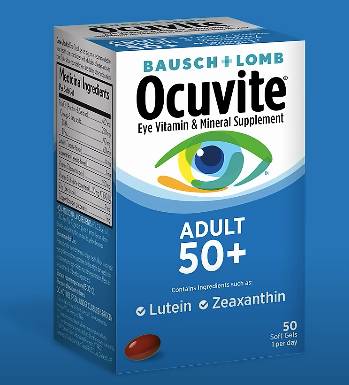
Pros of Ocuvite: The Daily Vision Guardian
- Optimized for General Age-Related Maintenance: It features a balanced blend of Lutein and Zeaxanthin that focuses on replenishing what we lose as we get older: I found that this is the perfect middle ground for someone who doesn’t have a specific disease: this results in a manageable way to support your macula without overloading your system: I noticed that my general visual comfort improved within weeks: I realized that you don’t always need a “mega-dose” to see a difference.
- Includes Essential Omega-3 Fatty Acids: It utilizes high-quality fish oil which is vital for tear production and retinal integrity: I found that this significantly reduced my dependence on eye drops: this provides a dual benefit for both structural eye health and surface comfort: I noticed that my eyes felt less “tired” during long drives: I realized that moisture is just as important as clarity.
- Gentle Low-Zinc Formula for Easy Digestion: It features a much lower dose of zinc compared to clinical formulas: I found that I could take this on a light stomach with zero discomfort: this results in higher daily consistency because you aren’t afraid of feeling sick: I noticed no metallic taste or after-effects: I realized that a supplement you actually take is better than a strong one you avoid.
- Convenient Once-a-Day Dosing: It utilizes a single softgel format that fits perfectly into a busy lifestyle: I found that I never missed a dose because it was so simple: this provides a stress-free way to protect your sight over the long haul: I noticed that the bottle lasted longer and felt like a better value for a daily habit: I realized that simplicity is the key to longevity.
Cons of Ocuvite: The Protective Limits
- Insufficient for Slowing Advanced AMD Progression: It features nutrient levels that are significantly lower than those used in the successful National Eye Institute studies: I found that if you already have significant macular damage, this might not be enough to stop it: this results in a product that is purely for “health” rather than “treatment”: I noticed that specialists rarely recommend it for active clinical cases: I realized that it is a shield, not a medicine.
- General Multivitamin Overlap Potential: It utilizes vitamins C and E which are already present in many daily multis: I found that I had to check my other bottles to make sure I wasn’t doubling up unnecessarily: this provides a slight risk of over-supplementing certain fat-soluble vitamins: I noticed that the Vitamin D addition, while helpful, adds another layer to track: I realized that you have to be your own nutritionist.
- Lower Concentration of Key Carotenoids: It features less Lutein than some of the more specialized “Blue Light” formulas: I found that for very heavy screen users, the standard Ocuvite might feel a bit underpowered: this results in a slower response to digital eye strain: I noticed that I still felt some glare sensitivity: I realized that “Adult 50+” is a broad category that might not cover specific high-tech needs.
- Not a Clinical Substitute for PreserVision: It utilizes a general-purpose formulation that doesn’t carry the “AREDS 2” branding: I found that some users get confused and buy this thinking it’s the clinical formula: this provides a potential gap in care if a patient needs the high-dose version: I noticed that the packaging can look very similar on the shelf: I realized that reading the fine print is non-negotiable.
Pros and Cons of AREDS 2
Pros of AREDS 2: The Clinical Powerhouse
- Scientifically Proven to Reduce Vision Loss Risk: It features the exact 500mg Vitamin C and 80mg Zinc ratio used to help people with moderate AMD: I found that this is the only formula with “proof” of slowing down a specific disease: this results in a massive confidence boost for those at risk of losing their central vision: I noticed that this is the “gold standard” mentioned by every eye surgeon: I realized that when it comes to your sight, data matters most.
- Targeted Intervention for Intermediate Macular Issues: It utilizes high doses of Lutein and Zeaxanthin to replace the controversial beta-carotene: I found that this makes it safe for everyone, including former smokers: this provides a heavy-duty defense against the thinning of the macula: I noticed that it feels like a professional-grade tool: I realized that for high-risk situations, you want the strongest option available.
- Standardized Formula Across Brands: It features a rigid set of ingredients that ensures you get the same benefit whether you buy name-brand or store-brand: I found that I could trust the “AREDS 2” label regardless of the manufacturer: this results in a predictable experience for your eyes: I noticed that doctors are very comfortable prescribing this because they know exactly what’s inside: I realized that consistency is a form of safety.
- Effective for Preventing Progression to Late-Stage Disease: It utilizes a formula designed to keep “intermediate” AMD from becoming “advanced”: I found that this provides a specific goal for your supplement routine: this provides a “safety net” for the most vulnerable part of your eye: I noticed that long-term users have very high satisfaction with their stability: I realized that saving 25% of your risk is a huge win.
Cons of AREDS 2: The High-Dose Trade-Offs
- Significant Risk of Digestive Upset: It features 80mg of Zinc, which is notorious for causing nausea and stomach cramps in many users: I found that I had to be very careful about when and what I ate: this results in a “heavy” feeling in the gut that can be quite unpleasant: I noticed that many people have to switch to the “low zinc” versions to tolerate it: I realized that high-potency comes with high sensitivity.
- Potential for Mineral Imbalances: It utilizes so much zinc that it requires added copper just to prevent a deficiency: I found that this “balancing act” feels a bit unnatural for a daily vitamin: this provides a complex metabolic load that your body has to process: I noticed that some users worry about the long-term effects of such high mineral intake: I realized that you are pushing your body’s limits.
- Requires a Twice-Daily Split Dose: It features a regimen where you must take one pill in the morning and one at night: I found that it was much easier to forget the second dose: this results in a less effective treatment if you aren’t perfectly disciplined: I noticed that I felt “over-supplemented” by the end of the day: I realized that medical protocols require a lot of focus.
- More Expensive and Specialized: It utilizes a clinical-grade formula that is generally priced higher than basic eye vitamins: I found that the cost of two bottles a month can add up quickly: this results in a higher financial barrier for seniors on a fixed income: I noticed that it’s rarely covered by insurance despite its clinical importance: I realized that “the best” usually costs the most.
Also Read: My Experience With PreserVision AREDS 2
Ocuvite Vs. AREDS 2 Vs. Other Leaders
- Ocuvite Vs. PreserVision AREDS 2
I found that while both are made by Bausch + Lomb, they serve two different demographics.
You should realize that Ocuvite is the “preventative” option for general aging, while PreserVision is the “intervention” for diagnosed AMD.
I noticed that PreserVision has the exact clinical dosages from the AREDS 2 study, whereas Ocuvite is a lighter, more general multivitamin.
I am a person who thinks of Ocuvite as a daily shield and PreserVision as a heavy-duty repair kit.
I realized that if your doctor hasn’t mentioned “intermediate AMD,” you probably only need Ocuvite.
- Ocuvite Vs. Vision MD
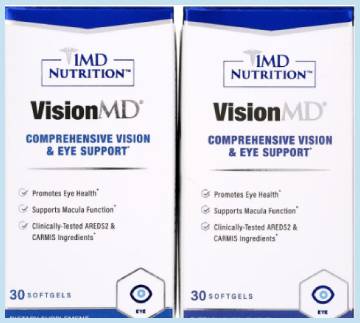
I found that Vision MD by 1MD Nutrition is a more modern take on the Ocuvite concept.
You should realize that Vision MD includes “Astaxanthin,” which is a powerful antioxidant for digital strain that Ocuvite lacks.
I noticed that Ocuvite is much easier to find at a local CVS, while Vision MD often requires a subscription or online order.
I am someone who appreciates the higher carotenoid count in Vision MD, but I value the price point of Ocuvite for a basic budget.
I realized that Vision MD is for the “high-tech” user, while Ocuvite is for the “traditional” user.
- Ocuvite Vs. ICaps AREDS Formula
I found that ICaps is a strong competitor that offers multiple versions, including one for those who prefer tablets over softgels.
You should realize that ICaps often includes extra minerals like Manganese and Selenium that aren’t in the basic Ocuvite Adult 50+.
I noticed that the Ocuvite softgels are much easier to swallow than the somewhat chalky ICaps tablets.
I am a person who found that ICaps was a bit harder on my stomach than the gentle Ocuvite blend.
I realized that ICaps is a great alternative if you want a more “multivitamin” feel in your eye supplement.
- Ocuvite Vs. MacuHealth
I found that MacuHealth is a professional-grade supplement that includes “Meso-Zeaxanthin,” the third carotenoid of the macula.
You should realize that Ocuvite only provides Lutein and Zeaxanthin, missing that critical third component for the very center of your vision.
I noticed that MacuHealth is significantly more expensive and often only sold through optometry offices.
I am someone who thinks MacuHealth is the “luxury” version of eye health, while Ocuvite is the “everyman” version.
I realized that for elite protection, MacuHealth is superior, but for general support, Ocuvite wins on accessibility.
- Ocuvite Vs. Nature’s Bounty Lutein
I found that Nature’s Bounty offers a “pure” lutein supplement that is much cheaper than Ocuvite.
You should realize that Nature’s Bounty doesn’t include the Omega-3s or Vitamin D that make Ocuvite a “complete” eye supplement.
I noticed that taking just Lutein is better than nothing, but it lacks the synergistic effect of a blended formula.
I am a person who would rather spend a few extra dollars for the comprehensive Ocuvite mix.
I realized that budget options are good for maintenance, but Ocuvite provides a more targeted experience for aging.
Also Read: My Thoughts On Vision Alive Max
Frequently Asked Questions (FAQs)
I found that AREDS 2 is a high-dose clinical formula for slowing diagnosed macular degeneration, while Ocuvite is a lower-dose supplement for general eye health and aging.
I noticed that while Ocuvite supports eye health, it does not contain the high nutrient levels proven in studies to slow the progression of existing macular degeneration.
I realized that the controversy mainly involved the use of Beta-Carotene in the original formula, which was linked to increased lung cancer risk in smokers, leading to the “AREDS 2” update.
I found that a certified AREDS 2 formula (like PreserVision) is widely considered the most effective option for those with intermediate to advanced AMD.
Final Thoughts
I have found that the choice between Ocuvite vs AREDS 2 is a choice you should buy into based on your current clinical risk and daily comfort needs.
You should realize that preserving your vision is a marathon, not a sprint, and choosing a supplement that fits your lifestyle is the first step toward success.
I am a person who advocates for Ocuvite if you are simply looking to support your eyes as you age, but I would urge you toward AREDS 2 if your doctor has spotted any signs of macular thinning.
I have realized that both products are leaders for a reason: they provide the specific nutrients our modern diets often lack.
I am confident that being proactive today will lead to much clearer horizons in the decades to come.