
When you are embarking on a journey to find the perfect foundation for your practice, you often find yourself caught between two giants: Manduka and lululemon.
I have spent years flowing on both of these surfaces to help you decide which investment truly aligns with your specific yoga style and durability needs.
My intent with this article is to provide an analytical comparison of Manduka vs lululemon mats so you can stop guessing and start practicing with confidence.
You should buy the Manduka if you want a lifetime companion, but choose lululemon if you need instant, high-intensity grip.
Manduka Vs. lululemon: At a Glance Comparison
| Feature | Manduka PRO Series | lululemon The Mat (5mm) |
| Material | Closed-cell PVC (OEKO-TEX certified) | Natural rubber base with PU top layer |
| Primary Grip Type | Dry grip (requires break-in) | Ultra-sticky wet/dry grip |
| Durability | Lifetime Guarantee (10+ years) | 1–3 years (depends on use) |
| Cushioning | 6mm (Dense, firm support) | 5mm (Pliable, squishy support) |
| Weight | 7.5 lbs (Standard) – 9.5 lbs (Long) | ~5.2 lbs |
| Sustainability | Emissions-free manufacturing | Sustainably sourced natural rubber |
| Cleaning | Easy wipe (Closed-cell) | Deep clean needed (Open-cell) |
My personal experience with Manduka and lululemon mats
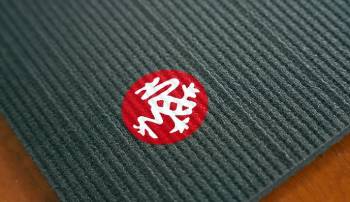
I remember the first time I unrolled a Manduka PRO; it felt less like a yoga mat and more like a structural piece of gym equipment.
I am someone who appreciates longevity, and the sheer density of the Manduka immediately gave me the impression that I would never need to buy another mat again.
I started using it in a traditional Hatha class, and I noticed that the 6mm of padding was an absolute dream for my sensitive knees during long-held poses like pigeon or low lunge.
However, I found that the legendary “break-in” period is very real.
I noticed that during my first few sessions, my hands were sliding in Downward Dog like I was on a slip-and-slide, which was frustrating until I performed the recommended salt scrub.
I think it is vital for you to know that this mat evolves with you; the more I used it, the stickier the texture became, eventually reaching a “sweet spot” where the grip felt secure but not restrictive.
Switching over to the lululemon 5mm mat was a completely different sensory experience.
I found that the polyurethane top layer felt almost like a magnet for my skin from the very first breath.
I am a frequent visitor to hot yoga studios, and I noticed that while other mats became dangerously slick with sweat, the lululemon mat actually seemed to get grippier as I got wetter.
I didn’t need to carry a separate yoga towel anymore, which I found to be a massive convenience.
However, I also noticed the trade-offs that come with such high-performance grip.
I found that the lululemon mat has a distinct “rubber” smell that lingered in my apartment for a good week after I bought it.
I also noticed that because the top layer is absorbent, it started to show “sweat shadows” and scuff marks much faster than the Manduka ever did.
I began to view the lululemon as a high-performance sports car—amazing handling, but requires more maintenance—while the Manduka felt like a reliable luxury truck.
By the end of my testing, I realized that my choice depended entirely on whether I was doing a slow, restorative flow or a high-intensity, sweaty Vinyasa.
Maintenance and tips for your yoga mats
- Perform a Sea Salt Scrub on your Manduka PRO: You should cover the surface of your new Manduka mat with a thin layer of sea salt and let it sit for 24 hours. Then, scrub it off with a damp cloth to remove the factory film. This is the most analytical way to accelerate the break-in process and unlock the mat’s true grip, which is the best maintenance tip for new owners.
- Wipe the lululemon Mat with a 1:20 Vinegar Solution: You should avoid using heavy soaps or essential oils on your lululemon mat as they can clog the pores of the polyurethane. A very dilute mixture of water and white vinegar is the smartest way to cut through body oils without damaging the grip, which is an analytical choice for longevity.
- Never Leave Your Mat in a Hot Car: You should always store your yoga mat in a cool, shaded place. High heat can cause the natural rubber in the lululemon mat to become brittle and “crusty,” while it can cause the Manduka to warp or off-gas, so proper temperature control is the best way to maintain structural integrity.
- Air Dry Your lululemon Mat Completely Before Rolling: You should hang your mat over a chair or a drying rack after a sweaty session. If you roll it up while it is still damp, you are trapping moisture inside the open-cell foam, which can lead to permanent odors, which is the best maintenance tip for hygiene-conscious yogis.
- Use a Botanical Disinfectant for Manduka: You should use a non-toxic spray that won’t leave a residue on the closed-cell surface. Since the Manduka doesn’t absorb the spray, you only need a tiny amount to kill surface bacteria, which is the most analytical way to keep your practice space clean without wasting product.
- Rotate Your Mat Usage Direction: You should try to switch which end is the “top” and which is the “bottom” every few weeks. This prevents “wear spots” from forming in the exact same place where your hands always land in Downward Dog, which is the best way to ensure the entire surface wears down evenly over the years.
Pros and Cons of Manduka mats
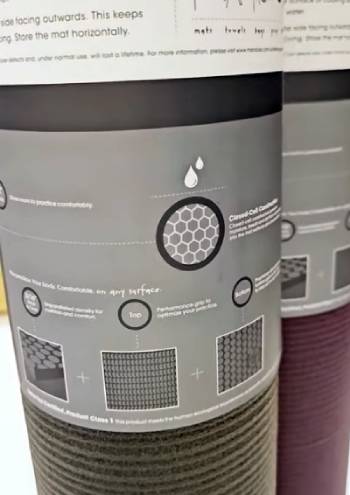
Pros of Manduka mats
- Unrivaled Durability and Lifetime Guarantee: The Manduka PRO series is engineered to last a lifetime: the company literally guarantees it will not peel, flake, or fade: this makes it the most cost-effective choice over a decade of practice: you are making a one-time investment rather than a recurring purchase.
- Superior Joint Protection with High-Density Foam: The 6mm thickness provides a firm, stable base that doesn’t “bottom out”: it protects your knees and elbows from hard studio floors: this results in a much more comfortable experience during Yin or restorative yoga sessions.
- Hygienic Closed-Cell Surface Construction: The material is designed to seal out moisture and sweat: this prevents bacteria and mold from growing inside the mat: this ensures your mat stays fresh and is incredibly easy to sanitize with a quick wipe-down.
- Large and Spacious Dimensions: Manduka offers “Long” and “Wide” versions that exceed the standard mat size: this is a blessing for taller practitioners who are tired of their hands or feet hanging off the edge: this provides a greater sense of freedom during expansive movements.
- Eco-Friendly Manufacturing Process: These mats are produced in an emissions-free facility in Germany: they are certified safe for human contact by OEKO-TEX: this gives you peace of mind that you aren’t breathing in toxic chemicals during your Savasana.
- Solid Floor Stability: Because the mat is heavy and dense, it stays perfectly flat on the ground: it won’t bunch up or slide around during jump-backs or dynamic transitions: this provides a reliable and safe foundation for advanced inversions.
- Texture That Improves Over Time: The fabric-like finish actually gets better with age: as you wear down the initial film, the mat develops a personalized grip: this creates a unique “broken-in” feel that many long-term yogis swear by.
Cons of Manduka mats: An analytical look at the limitations:
- Extremely slippery before the break-in period: the factory film can be a major safety hazard for beginners: it requires a salt scrub and weeks of consistent use to become grippy: this can be a huge deterrent for someone who wants a perfect mat on day one: this is an analytical point for those who lack patience.
- Substantial weight makes it difficult to transport: at 7.5 to 9.5 lbs: this is not a mat you want to carry on a long commute or a flight: it is best suited as a “home base” mat: this requires you to invest in a very sturdy mat carrier if you take it to a studio.
- High upfront cost compared to budget alternatives: priced at the top of the market: it can feel like a “sticker shock” moment for new practitioners: you are paying for the longevity and the guarantee: this is a consideration for those who aren’t sure if they will stick with yoga long-term.
- PVC material is not biodegradable: while it is high-quality and non-toxic: it is still a plastic-based product that will remain in a landfill if you ever do toss it: this is a drawback for those seeking a 100% natural, earth-returning material: this is a point for the eco-purists.
- Firmness might be too hard for some preferences: if you like a “squishy” or “cloud-like” feel: the Manduka PRO might feel too much like a floor: it is designed for stability rather than plushness: this can be a negative for those with very bony joints.
- Requires specific cleaning products for warranty maintenance: using the wrong cleaner can technically void your lifetime guarantee: you are encouraged to buy Manduka’s proprietary botanical cleaners: this adds an extra recurring cost to the ownership experience.
- Limited grip in high-humidity environments without a towel: despite the break-in: if you are a heavy sweater in a 105-degree room: you will still likely need a yoga towel to prevent slipping: this is an analytical reality of closed-cell mats compared to PU mats.
Pros and Cons of lululemon mats

Pros of lululemon mats
- Instant and Aggressive Non-Slip Grip: The polyurethane top layer provides incredible traction from the second you unroll it: it works exceptionally well for both dry and sweaty hands: this allows you to focus on your alignment instead of worrying about sliding out of a pose.
- Excellent Moisture Absorption for Hot Yoga: The open-cell top layer pulls moisture away from the surface: it stays grippy even when you are literally dripping with sweat: this eliminates the need to lug a bulky yoga towel to every Vinyasa class.
- Antimicrobial Treatment to Prevent Odor: The mat is infused with an antimicrobial additive: this helps to inhibit the growth of mold and mildew in the absorbent top layer: this is a vital feature for a mat that is designed to soak up perspiration.
- Perfect Balance of Cushion and Ground Feel: The 5mm thickness provides enough “squish” to protect joints while still feeling connected to the floor: it feels softer and more pliable than the Manduka PRO: this makes it very comfortable for floor-based floor work and pilates.
- Reversible Design for Different Practices: One side is smooth polyurethane for maximum grip: the other side is a textured natural rubber for traditional practices: this gives you two mats in one depending on your mood and the class style.
- Sleek and Modern Aesthetic Options: lululemon is known for beautiful marbled patterns and seasonal colors: the mat looks like a premium fashion accessory: this appeals to the user who wants their gear to reflect their personal style.
- Manageable Weight for Daily Commuting: At roughly 5 pounds: it is significantly easier to carry through an airport or on a subway than a Manduka: it strikes a good balance between “sturdy” and “portable” for the urban yogi.
Cons of lululemon mats: An analytical look at the limitations:
- Limited lifespan of the polyurethane top layer: unlike the Manduka: the lululemon mat will eventually lose its “stickiness” as the pores get clogged with oils and dirt: most daily users find they need a replacement every 1 to 3 years: this is an analytical factor for long-term value.
- Strong and lingering natural rubber odor: when brand new: the mat has a powerful scent that can be distracting during deep breathing: it can take weeks of airing out to fully dissipate: this is a common complaint for sensitive noses.
- Prone to showing permanent scuffs and stains: the smooth surface easily picks up body oils: light-colored mats can develop “dark spots” where your hands and feet go most often: this can make a premium mat look “dirty” even when it is technically clean.
- Open-cell construction is harder to deep clean: because moisture goes into the mat: you can’t just wipe it down: it requires a more involved cleaning process to ensure sweat doesn’t stay trapped in the core: this is a point for those who value low-maintenance gear.
- Can be irritating for those with latex allergies: the base is made of natural rubber: if you have a sensitive allergy: this mat is not a safe option for you: this requires you to opt for a synthetic alternative like the Manduka PRO.
- Edges can sometimes curl over time: because the mat is more pliable: the corners may not stay perfectly flush with the floor after months of being tightly rolled: this can be a minor tripping hazard or just an aesthetic annoyance.
- Tends to attract dust and pet hair: the high-tack surface is a magnet for anything on your floor: if you have a dog or cat: you will likely find yourself wiping off hair before every single practice: this is a drawback for home-based practitioners.
Also Read: My Experience With Gaiam Yoga Mat
Comparison Between Manduka Vs. lululemon
- Manduka Vs. lululemon: Hot Yoga Performance
If you are a hot yoga enthusiast, the choice becomes much clearer.
I have found that the lululemon mat is the undisputed king of the hot room because its polyurethane surface thrives on moisture.
Analytically, the lululemon mat acts like a sponge, whereas the Manduka acts like a shield.
On a Manduka, your sweat will pool on top, creating a slippery surface that requires a towel for safety.
Choose lululemon if you want a “one-and-done” solution for the sauna-like conditions of Bikram or Power Yoga.
- Manduka Vs. lululemon: Travel and Portability
When you are on the go, the weight of your gear becomes your biggest enemy.
I have noticed that the Manduka PRO is almost impossible to travel with comfortably unless you have a dedicated suitcase for it.
Analytically, lululemon offers more versatile options, including the 3mm and 5mm versions that fold or roll much tighter.
If you are a digital nomad or someone who practices at a studio after work, the lululemon mat’s lighter profile will save your shoulders.
Choose lululemon for the commute, but keep the Manduka for your dedicated home sanctuary.
- Manduka Vs. lululemon: Long-Term Value
If we look at the financials of this comparison, the Manduka PRO wins by a landslide.
I have found that while you might spend more upfront, the fact that you will likely never replace it makes the cost per use pennies over time.
Analytically, the lululemon mat is a “consumable” item that will need replacing every few years.
If you are a “buy it for life” person, the Manduka is the only logical choice.
Choose Manduka for the ultimate investment, but choose lululemon if you are okay with a “subscription-style” replacement cycle in exchange for elite grip.
Also Read: Comparison Of Manduka PRO Vs. PROlite
Frequently Asked Questions (FAQs)
Manduka is better for durability and joint support, while lululemon is better for immediate grip and hot yoga performance.
The Manduka PRO and lululemon The Mat 5mm consistently tie for the highest ratings in fitness and yoga publications.
Yes, it is excellent for those who prioritize a non-slip surface and practice in sweaty or high-intensity environments.
Manduka is the best for long-term investment; lululemon is the best for “out-of-the-box” performance and aesthetic appeal.
Final Thoughts
When you are deciding between these two industry titans, you should buy the mat that matches your primary environment because the wrong choice can lead to a slippery and frustrating practice.
I have found that the Manduka PRO is the ultimate choice for the dedicated student who wants a firm, lifelong partner for their journey.
You should choose the lululemon mat if your heart belongs to the hot room and you demand a grip that never quits, no matter how much you sweat.
I believe that both mats are exceptional in their own right, and your decision should be an analytical one based on your specific physical needs and travel habits.
You deserve a surface that supports your growth, and whether you choose the indestructible Manduka or the high-performance lululemon, your practice will thank you.