When you are staring at a long-term investment in your wellness, you should buy a Manduka mat because it is likely the last yoga mat you will ever need to purchase.
I have spent countless hours transitioning between high-intensity Vinyasa and restorative Yin sessions to give you a definitive perspective on the Manduka PRO vs PROlite debate.
My intent is to provide a grounded, analytical comparison so you can decide if the heavy-duty stability of the PRO or the agile portability of the PROlite fits your lifestyle.
You should choose the model that aligns with whether you practice primarily at home or commute to a studio.
Manduka PRO Vs. PROlite: The Quick Comparison
| Feature | Manduka PRO | Manduka PROlite |
| Thickness | 6 mm | 4.7 mm |
| Weight | ~7.5 lbs (3.4 kg) | ~4 lbs (1.8 kg) |
| Dimensions (Standard) | 71″ x 26″ | 71″ x 24″ |
| Cushioning Level | Maximum / High Density | Medium / Performance Density |
| Portability | Low (Best for home use) | High (Great for commuting) |
| Material | OEKO-TEX Certified PVC | OEKO-TEX Certified PVC |
| Guarantee | Lifetime Guarantee | Lifetime Guarantee |
My personal experience with the Manduka PRO series
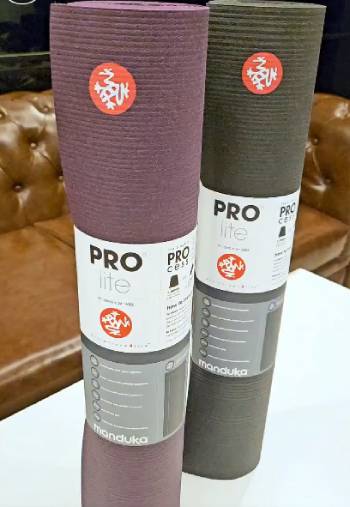
I remember the first time I unrolled a Manduka PRO; it felt less like a piece of fitness equipment and more like a permanent piece of furniture for my floor.
I am someone who used to suffer from significant knee discomfort during lunges and Camel pose, so the 6mm thickness was an immediate game-changer for my physical comfort.
I started my journey with the standard PRO, and while the support was unmatched, I quickly realized that carrying it to my downtown studio was essentially a weightlifting workout in itself.
However, when I switched to the PROlite for my travel and studio days, I noticed a very different sensation under my palms.
I found that the PROlite offered a much more “connected” feel to the floor, which actually helped me with balance poses like Half Moon where I needed to feel the grounding of the hardwood beneath me.
I am an analytical user, so I spent weeks comparing the grip levels between the two, only to find that they share the exact same closed-cell surface.
I noticed that both mats arrived with a slightly slick factory film that required a bit of patience to wear down.
You will likely find that the choice between these two isn’t about quality—since they are both indestructible—but about your tolerance for weight.
I found that the PRO version stayed perfectly flat and never “bunched up” during mountain climbers or jump-throughs, which is a common annoyance with lighter mats.
I began to feel more confident in my inversions on the thicker PRO, knowing there was a dense barrier between my head and the floor.
By the end of my testing period, I realized that the PRO is the ultimate “sanctuary” mat for home practice, while the PROlite is the “commuter’s” dream for those who want professional quality on the go.
Maintenance and tips for Manduka PRO series mats
- Perform a Sea Salt Scrub to Accelerate the Break-In: You should sprinkle a generous amount of coarse sea salt over the surface of your new mat. This acts as a mild abrasive to wear down the factory film, which is the most analytical way to gain grip quickly; let it sit for 24 hours before scrubbing it off with a damp cloth.
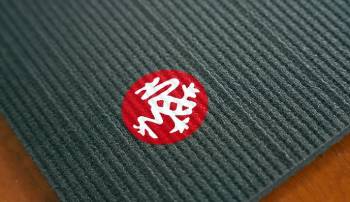
- Always Roll Your Mat with the Top Surface Facing Out: You should ensure that the “frog” logo side is on the outside when you roll it up. This ensures that the mat will lay perfectly flat the next time you unroll it for practice, preventing those annoying curled edges that can trip you up during a balance sequence.
- Use a Specialized Manduka Mat Wash: You should avoid using harsh household chemicals or dish soaps. These can leave a film that actually increases slipperiness; using a vinegar-based or botanical mat wash is the smartest way to keep the surface clean without damaging the high-performance PVC.
- Wipe Down After Every Session to Prevent Salt Build-up: You should give the mat a quick once-over with a damp cloth even if you didn’t sweat much. Body oils and ambient dust can accumulate on the closed-cell surface, which is the best maintenance tip for keeping the texture consistent and preventing the “slick” feeling over time.
- Never Put Your Manduka Mat in the Washing Machine: You should realize that these mats are too dense and heavy for a mechanical wash. The agitation can damage both your machine and the mat’s structural integrity; a simple manual wipe-down is all that is required for a lifetime of hygiene.
- Store Your Mat in a Cool, Dry Place Out of Sunlight: You should avoid leaving your mat in a hot car or in direct sun for long periods. UV rays can eventually break down the pigments and the material, so keeping it in a temperate environment is the analytical choice for maximizing the “lifetime” part of the guarantee.
Pros and Cons of the Manduka PRO
Pros of the Manduka PRO
- Unmatched cushioning and joint support: The 6mm high-density foam provides a professional-grade buffer for your joints: this is particularly beneficial for practitioners with sensitive knees or wrists: this allows you to hold poses longer without distracting physical pain.
- Superior stability on any surface: Because the mat weighs over seven pounds: it acts as an anchor on the floor: this prevents the edges from curling up or the mat from sliding during vigorous movements like sun salutations.
- Wider surface area for more room to move: The PRO is two inches wider than the standard PROlite: this gives you extra space for wide-legged folds and prevents you from constantly stepping off the mat: this creates a more immersive and less restricted practice experience.
- Lifetime guarantee ensures a one-time purchase: Manduka stands behind the durability of the PRO series for the life of the product: this means that if the surface wears out from regular use: the company will replace it: this makes the high initial cost a smart long-term investment.
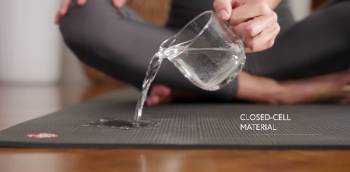
- Closed-cell surface for maximum hygiene: The material does not absorb sweat or moisture: this prevents bacteria and odors from seeping into the core of the mat: this makes it incredibly easy to clean with a simple wipe-down after a session.
- Eco-friendly manufacturing process: The mats are produced in Germany with a focus on sustainability: they are OEKO-TEX certified to be free of harmful chemicals: this ensures that your practice is safe for your skin and the environment.
- Grip that improves with age: Unlike cheap mats that lose their texture: the PRO series actually gets “stickier” the more you use it: this rewards consistent practice with a personalized, high-performance surface.
Cons of the Manduka PRO: An analytical look at the drawbacks:
- Extremely heavy for commuting: at 7.5 pounds, it can feel like a chore to transport: this is a significant deterrent for those who don’t drive to their studio: this often leads to the mat staying rolled up in a corner rather than being used.
- Significant break-in period required: the surface can feel quite slippery right out of the box: this is due to a protective film from the manufacturing process: this requires you to perform a “salt scrub” or practice for weeks before the grip is reliable.
- Higher price point than most competitors: it is a luxury item with a price tag to match: this can be a barrier for beginners who aren’t sure if they will stick with the practice: this makes the purchase feel more like a major financial commitment.
- Requires a dedicated, heavy-duty carrying strap: standard thin straps can dig into your shoulder due to the mat’s weight: this might require an additional purchase of a specialized bag or padded sling: this adds to the total cost of ownership.
- Takes up significant storage space: even when rolled up, the PRO is quite bulky: this can be an issue in small apartments or shared living spaces: this makes it harder to tuck away out of sight.
- Closed-cell surface requires a towel for hot yoga: if you are a heavy sweater: the moisture will sit on top of the mat and create a slick surface: this means you must use a performance towel like a Yogitoes to maintain safety: this is an extra layer of gear to manage.
- The density can feel “too hard” for some: if you prefer a squishy, foam-like feel: the PRO might feel like practicing on a piece of rubberized wood: this is a matter of personal preference that might not suit everyone’s comfort style.
Also Read: My Experience With Yoga-Go Weight Loss
Pros and Cons of the Manduka PROlite
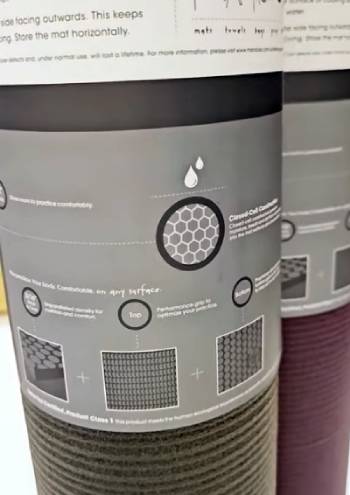
Pros of the Manduka PROlite
- Lightweight and highly portable: At nearly half the weight of the PRO: the PROlite is designed specifically for the yogi on the move: this makes it effortless to carry on a subway, bike, or walk to the local studio: this reduces shoulder strain during your commute.
- Exceptional floor feedback for balance: The 4.7mm thickness is the “Goldilocks” of mat padding: it provides enough cushion to protect your joints: but remains thin enough that you can feel the floor: this is vital for stability in advanced standing balances.
- Same high-quality material as the “Big Brother”: You aren’t sacrificing durability for weight: the PROlite uses the same industrial-strength PVC as the PRO: this ensures that your travel mat will last just as long as a stationary home mat.
- More affordable entry point: The PROlite is generally priced lower than the full PRO version: this makes it a more accessible choice for intermediate students: this allows you to get professional performance without the top-tier price tag.
- Fits in standard yoga mat bags: Because it is thinner and narrower: it rolls up into a much more compact cylinder: this allows you to use a wider variety of carrying cases and gym lockers: this adds a layer of convenience to your daily routine.
- Available in a massive range of colors: The PROlite often features more frequent “limited edition” color drops: this allows you to express your personality through your gear: this makes your practice feel more customized and vibrant.
- Versatile enough for different floor types: Whether you are on carpet, wood, or even grass: the PROlite maintains its structural integrity: it doesn’t “stretch” or deform under pressure: this makes it a reliable companion for outdoor yoga festivals or retreats.
Cons of the Manduka PROlite: An analytical look at the drawbacks:
- Less cushioning for sensitive joints: at 4.7mm, you might still feel the floor during kneeling poses: this may require you to double-fold the mat or use a knee pad: this can be a distraction during a meditative flow.
- Narrower width can feel restrictive: if you have broad shoulders or a large frame: you might find your hands or feet slipping off the edges during wider poses: this limits your freedom of movement compared to the standard PRO.
- Can still be slightly slippery when new: just like the PRO, it has a factory coating: this means you still have to deal with the break-in frustration: this can be discouraging for those expecting “instant grip.”
- Less “grounding” feel due to lower weight: it doesn’t stay quite as flat as the PRO if the floor is uneven: this can lead to slight movement of the mat during high-impact transitions: this might affect your focus during a fast-paced class.
- More prone to curling at the ends: because it is lighter: the tightly rolled ends may take longer to lay flat once unrolled: this can be a tripping hazard or just an aesthetic annoyance during your practice.
- May not be thick enough for Pilates or floor exercises: if you use your mat for more than just yoga: you might find the PROlite lacking in the support needed for spine-heavy movements: this makes it a less “universal” piece of equipment.
- Still requires a towel for high-sweat sessions: being closed-cell, it has the same moisture management issues as the PRO: this means the “lightweight” benefit is somewhat offset by the need to carry a towel: this is an analytical point for hot yoga enthusiasts to consider.
Also Read: My Experience With Gaiam Yoga Mat
Frequently Asked Questions (FAQs)
The PRO is 6mm thick and weighs 7.5 lbs, making it ideal for home support, while the PROlite is 4.7mm thick and weighs 4 lbs, making it better for travel and commuting.
The Manduka PRO is consistently rated as the #1 yoga mat by experts for its durability, dense cushioning, and lifetime guarantee, often topping “Best Overall” lists for years.
Yes, the PROlite is part of the PRO series and is covered by the same Manduka lifetime guarantee against manufacturing defects and wearing out from regular use.
New Manduka mats have a thin protective film from the factory; it requires a “break-in” period of regular use or a salt scrub to reveal the high-traction surface beneath.
Final Thoughts
When you are deciding between the Manduka PRO and the PROlite, you should buy the PRO if you want a “forever home” for your practice with maximum cushion, or choose the PROlite if you need a professional-grade surface that can travel with you to every class.
I have found that the longevity of these mats makes the choice more about your physical lifestyle than the price, as both will serve you for decades to come.
You should choose the thickness that your joints will thank you for after a long, challenging session on a hard floor.
I believe that the right gear should disappear beneath you, leaving only your breath and your movement, and Manduka provides exactly that level of reliability.
You deserve a mat that works as hard as you do, and whether you go for the heavy-duty PRO or the agile PROlite, you are making an analytical investment in your long-term health.