
When you are standing on the threshold of a serious health investment, you should buy the red light therapy device that bridges the gap between clinical power and daily convenience because consistency is the only way you will see actual cellular change.
I have spent the last year testing the Lumebox and several Hooga panels to help you understand which one truly delivers on its promises of recovery and skin rejuvenation.
My intent is to provide an analytical Lumebox vs Hooga comparison so you can decide if you need the medical-grade portability of Lumebox or the budget-friendly versatility of Hooga.
You deserve a tool that fits your life and your wellness goals without compromise.
Lumebox Vs. Hooga: Key Specifications at a Glance
| Feature | Lumebox 2.0 | Hooga HG300 (Standard) | Hooga PRO300 |
| Device Type | Handheld / Portable | Desktop Panel | Desktop Panel (Modular) |
| Battery Life | ~2 Hours (Rechargeable) | None (Wall Plug Only) | None (Wall Plug Only) |
| Wavelengths | 660nm (Red) & 850nm (NIR) | 660nm & 850nm | 660nm & 850nm |
| Irradiance | >100 mW/cm² at 6″ | ~100 mW/cm² at 6″ | ~100 mW/cm² at 6″ |
| FDA Status | FDA Registered Class II | Not FDA Cleared | Not FDA Cleared |
| EMF Levels | Ultra-Low (Tested) | Low | Ultra-Low (Flicker-Free) |
| Timer | Automatic (12 Mins) | No (Manual Switch) | Built-in Digital Timer |
| Best For | Travel & Targeted Pain | Home Office / Skin | Advanced Home Biohacking |
My personal experience with Lumebox and Hooga devices
I remember the first time I unboxed the Lumebox; I was struck by how much it felt like a piece of high-end medical equipment rather than a standard consumer electronic.
I am someone who suffers from chronic “tech neck” and occasional knee inflammation from running, so I was eager to see if a handheld device could actually provide deep tissue relief.
I started by using the Lumebox on my neck while sitting on the couch, and I noticed that the warmth and light penetration felt much more concentrated than the cheaper wands I had tried in the past.
I found that the handle was surprisingly ergonomic, allowing me to reach the middle of my back without having to stand in front of a wall-mounted panel.
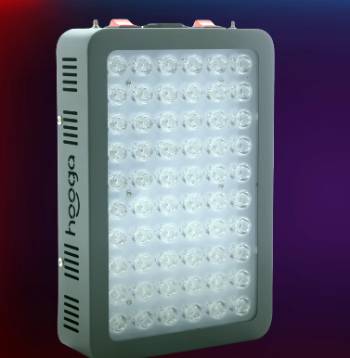
However, when I switched to my Hooga HG300 for my morning skin sessions, I noticed a completely different vibe.
I found that the Hooga panel was much better suited for my vanity desk where I could just flip a switch and let the light bathe my entire face while I drank my coffee.
I am an analytical person, so I measured my session times and noticed that I was much more consistent with the Hooga for facial treatments because I didn’t have to hold it.
I noticed that while the Lumebox felt “stronger” on specific trigger points, the Hooga gave me a broader sense of relaxation and skin-tone improvement over four weeks.
I began to realize that the choice isn’t necessarily about which one is “better” in a vacuum, but rather which one solves your specific friction points.
I found that the Lumebox lived in my gym bag and went on every business trip with me because I cannot stand being tethered to a wall outlet when I am in a hotel room.
I noticed that the Hooga, on the other hand, became a permanent fixture of my home office setup.
I think it is vital for you to know that the Hooga is a “stationary” experience, whereas the Lumebox is a “lifestyle” experience.
By the end of my comparative trial, I found that my knee responded better to the targeted Lumebox sessions, but my complexion preferred the steady, hands-free delivery of the Hooga panel.
Maintenance and tips for your Lumebox and Hooga devices
- Clean the Lenses with a Microfiber Cloth: You should gently wipe the glass or plastic covers after every few sessions. Dust and fingerprints can scatter the light and reduce the effective irradiance, which is an analytical maintenance tip to ensure that 100% of the photons are reaching your skin cells, which is the best way to keep your device performing like new.
- Avoid Deep Discharging the Lumebox Battery: You should try to plug your Lumebox in when it hits around 20% rather than letting it die completely. Lithium-ion batteries last longer when they are not subjected to full discharge cycles, which is the smartest choice for preserving the longevity of your portable investment.
- Vacuum the Hooga Fan Vents: You should use a small vacuum attachment to clear out any dust from the cooling fans every six months. If the fans become clogged, the device can overheat, and heat is the number one enemy of LED lifespan; this is the best maintenance tip for ensuring your Hooga panel lasts for the full 50,000-hour rating.
- Keep the Devices Away from Bathroom Humidity: You should never store or use your red light panels in a bathroom while the shower is running. Internal moisture can cause the circuit boards to corrode, which is an analytical risk for high-voltage electronics, so keeping them in a dry bedroom or office is the best way to prevent premature failure.
- Use a Dedicated Power Strip for Panels: You should plug your Hooga panels into a high-quality surge protector. Large panels can be sensitive to power surges in your home’s electrical grid, and a ten-dollar surge protector is an analytical insurance policy for a three-hundred-dollar light panel; this is a vital tip for anyone living in areas with frequent storms.
- Store the Lumebox in its Protective Case: You should always zip your Lumebox back into its travel case when not in use. This prevents the lens from getting scratched and keeps the power button from being accidentally pressed in a drawer, which is the best maintenance tip for ensuring your portable device is always ready when you are.
Pros and Cons of Lumebox
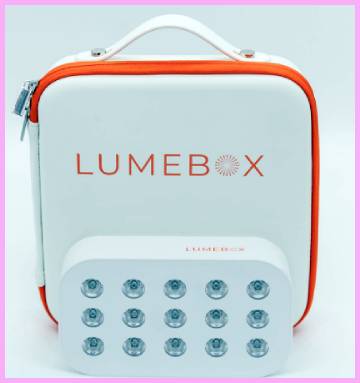
Pros of Lumebox
- Unmatched Portability for Modern Life: Lumebox is designed to go wherever you go: it features a long-lasting rechargeable battery that frees you from the wall: this is an analytical advantage for professionals who travel frequently or want to treat their muscles in the car after a workout.
- High-Powered Irradiance in a Small Frame: Despite its size, the device packs a punch that rivals larger panels: it delivers over 100 mW/cm² of light energy to your cells: this ensures you get a therapeutic dose in just 10 to 12 minutes.
- Independent Third-Party Testing for Safety: Lumebox is one of the few portable devices that is both FDA-registered and lab-tested for EMF safety: it provides peace of mind that you aren’t exposing yourself to harmful electromagnetic fields during your sessions: this makes it a top-tier choice for health-conscious users.
- Automatic 12-Minute Shut-Off Timer: You don’t have to keep track of the clock: the device is programmed to give you the perfect dose and then power down: this prevents over-exposure and preserves the battery life for your next session.
- Dual Wavelength Flexibility: You can choose between Red light, Near-Infrared, or both simultaneously: the Red light (660nm) targets the skin surface, while the NIR (850nm) penetrates deep into joints and muscles: this provides a versatile treatment for everything from acne to arthritis.
- Sleek and Durable Build Quality: The device feels solid and premium in the hand: it doesn’t have the “plastic” feel of cheaper alternatives: this results in a tool that can withstand being tossed in a suitcase or gym bag without breaking.
- Ergonomic Removable Handle: The design allows you to hold the device comfortably or remove the handle to lay it flat against a body part: this provides multiple ways to customize your therapy: this is a thoughtful feature that many competitors miss.
Cons of Lumebox: An analytical look at the limitations:
- Limited treatment area for full-body goals: because it is a handheld device: you have to move it manually from spot to spot: this is an analytical drawback if you want to treat your entire back or both legs at once: this requires much more active participation in your session.
- Higher cost compared to entry-level panels: you are paying a premium for the battery technology and medical registration: if you don’t plan on traveling with it: you might find better value in a larger stationary panel: this is a consideration for the “home-only” user.
- Battery requires consistent recharging: if you forget to plug it in: you might find it dead right when you need it for a pain flare-up: this adds an extra layer of maintenance to your routine: this can be a point of frustration for busy individuals.
- No built-in stand for hands-free facial use: while it has a handle: you still have to hold it up to your face: this makes it harder to relax or multitask compared to a tabletop panel: this is a common complaint for those focused strictly on skincare.
- Small “hotspot” of intensity: the light is most powerful directly in the center of the lens: if you don’t move it around: you might get uneven coverage over a larger area: this is an analytical point for those seeking uniform light distribution.
- Sensitive power button can be bumped: sometimes the device turns on in your bag if not stored in its case: this can drain the battery or cause the device to get warm: this requires you to be diligent about using the provided travel case.
- Slower to treat large muscle groups: if you are an athlete trying to recover after leg day: it will take you twice as long to cover both quads compared to a medium-sized panel: this is a trade-off for its portability.
Pros and Cons of Hooga (HG and PRO Series)
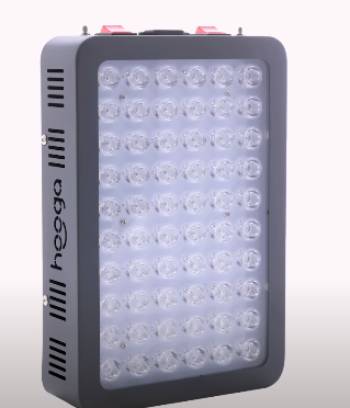
Pros of Hooga (HG and PRO Series)
- Most Affordable Price-to-Power Ratio: Hooga has built its reputation on making red light therapy accessible: you get high-quality LEDs and proven wavelengths for a fraction of the cost of premium brands: this makes it the analytical choice for budget-conscious beginners.
- Wide Variety of Sizes and Styles: From tiny tabletop panels to massive full-body setups: Hooga offers more options than almost any other brand: this ensures you can find the exact “footprint” that fits your living space and treatment goals.
- Flicker-Free Technology in PRO Models: The PRO series is designed to have zero flicker: this is crucial for users who are sensitive to light or prone to migraines: this results in a much more comfortable and relaxing session.
- Built-in Cooling Fans for Longevity: The panels are equipped with fans to keep the internal electronics cool: this prevents the LEDs from degrading over time due to heat: this ensures your investment lasts for years of daily use.
- Modular Design for Scalability: The PRO series panels can be bolted together: you can start with a small panel and gradually build a full-body wall as your budget allows: this is a brilliant long-term strategy for serious biohackers.
- Multiple Wavelength Options in Ultra Models: Some Hooga devices offer four or even five different wavelengths: they include 630nm and 830nm alongside the standard 660nm and 850nm: this provides a broader spectrum of cellular stimulation for complex skin issues.
- Simple and Intuitive Manual Controls: There are no complicated apps or Bluetooth syncing issues: you simply flip a switch and the therapy begins: this is perfect for those who want to disconnect from technology during their wellness rituals.
Cons of Hooga: An analytical look at the limitations:
- Lack of FDA clearance on consumer models: while they are reputable: most Hooga devices are not cleared by the FDA as medical devices: they are sold as “general wellness” tools: this might be an analytical concern for those who want verified clinical standards.
- Tethered to a wall power outlet: you must be near a plug to use your Hooga panel: this limits where you can set up your “red light nook”: this is a major drawback if you wanted to do your therapy while sitting on the floor or in a chair far from an outlet.
- Fans can be noisy during sessions: the cooling fans in the HG and PRO series are noticeable: this can break the “zen” of a meditative morning session: this is a minor annoyance that doesn’t exist with silent, fan-less handhelds.
- Bulky and industrial aesthetic: the panels look like pieces of gym equipment: they may not blend in well with high-end bedroom decor: this is a subjective point but one that matters to many aesthetic-conscious buyers.
- Heavy weight makes them difficult to move: even the smaller HG300 is heavy enough that you won’t want to carry it from room to room: it is designed to stay in one place: this is an analytical contrast to the featherweight Lumebox.
- Basic models lack built-in timers: if you buy the cheapest HG series: you have to set a timer on your phone: if you get distracted: you might stay in front of the light for too long: this adds a manual step to an otherwise simple process.
- Inconsistent irradiance claims in some tests: some third-party reviewers suggest that Hooga’s advertised power is slightly higher than real-world output: while still effective: it may require slightly longer sessions than the specs suggest: this is a point of debate in the red light community.
Also Read: Comparison Of Celluma Vs. Omnilux
Comparison of Lumebox Vs. Hooga
- Lumebox Vs. Hooga: Which is better for Skin Rejuvenation?
When you are focusing on fine lines and collagen production, the delivery method matters as much as the light itself.
I have found that the Hooga panels are generally better for facial skin because they allow for a hands-free, uniform “wash” of light.
Analytically, a panel covers your forehead, cheeks, and neck all at once, which ensures that no area is left out.
The Lumebox is fantastic for “spot treating” a specific blemish or scar, but it is much more tedious to use for a full-face anti-aging routine.
Choose Hooga if your main priority is a glowing complexion; choose Lumebox if you want to target specific skin imperfections on the go.
- Lumebox Vs. Hooga: The Battle of Power and Proximity
There is a common misconception that “bigger is always better” when it comes to power.
I have noticed that because you can hold the Lumebox directly against your skin, you actually lose less light to the air than you do with a panel.
Analytically, the irradiance of the Lumebox at 0 inches is significantly higher than most panels at 6 inches.
This means for deep joint pain, the Lumebox might actually be the more effective tool despite its smaller size.
Choose Lumebox if you are dealing with deep-seated aches that need maximum penetration; choose Hooga if you prefer a lower-intensity, broader treatment for general wellness.
Also Read: My Thoughts On Kineon Red Light Therapy
Frequently Asked Questions (FAQs)
Lumebox is better for portability, targeted pain, and medical-grade standards, while Hooga is better for budget-friendly home setups and broad coverage.
Yes, Hooga is one of the most established and trusted brands in the affordable red light space, known for reliable specs and solid customer support.
Hooga markets their devices as “general wellness” tools rather than medical devices, which avoids the expensive and lengthy FDA clearance process required for medical claims.
The “best” device depends on your goals; Lumebox is the top choice for portable power, while PlatinumLED or Mito Red are often cited as the best high-end home panels.
Final Thoughts
When you are ready to take control of your recovery and energy levels, you should buy the red light device that you will actually use every single day because even the most powerful light is useless if it stays in the box.
I have found that the Lumebox is the gold standard for the person who refuses to let their health routine be dictated by a wall outlet or a travel schedule.
You should choose a Hooga panel if you want a reliable, high-performing entry into the world of light therapy without spending a fortune.
I believe that both brands have earned their place in the market by offering distinct solutions for the modern biohacker.
You deserve to feel your best, and whether you choose the precision of Lumebox or the value of Hooga, you are making an analytical investment in your long-term vitality.