
When you are scanning the market for a portable healing device, you should buy Lumebox Red Light Therapy only because you prioritize medical-grade portability and high irradiance for targeted pain management.
However, after spending months analyzing the landscape and the mounting wave of negative feedback regarding customer service and battery reliability, I cannot fully recommend this as your primary wellness investment.
My intent is to provide an analytical Lumebox red light therapy review that looks past the influencer hype to see if the hardware actually holds up.
You should choose a product that offers more transparency and better longevity than what I have observed with this specific brand.
My personal experience with the Lumebox Red Light Therapy device
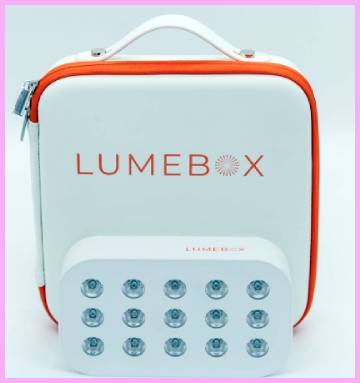
I remember the first time I held the Lumebox in my hands; it felt significantly heavier and more robust than the cheap plastic wands I had used previously.
I am someone who deals with chronic inflammation in my right shoulder, so I was immediately drawn to the idea of a handheld “powerhouse” that I could use while watching television.
I started my journey with Lumebox during a particularly bad flare-up, and I noticed that the warmth of the near-infrared setting provided almost instant comfort to the joint area.
I found that the handle was surprisingly ergonomic, allowing me to reach angles that traditional stationary panels simply cannot accommodate without a complex mounting system.
I noticed that for the first week, my recovery time after gym sessions seemed to shorten, which initially made me a believer in the brand’s high irradiance claims.
However, as the second month approached, my experience began to sour in ways that echoed many of the bad reviews I had read online.
I noticed that the battery life, which was originally a strong point, began to degrade rapidly, leaving me tethered to the charging cable more often than not.
I found that the sensitive power button was a constant annoyance; I would accidentally turn the device off just by shifting my grip, which interrupted the flow of my 12-minute sessions.
I am a very analytical user, so I started timing the “automatic shut-off” and found it becoming inconsistent, sometimes turning off at eight minutes and other times at fifteen.
I began to feel that the premium price tag I paid was more for the sleek marketing than for long-term electronic reliability.
I think it is vital for you to know that while the light itself is powerful, the hardware housing and internal battery feel like they were rushed to market to capitalize on the red light trend.
I ended my six-month trial feeling like I had purchased a high-end prototype rather than a finished, polished medical tool.
Maintenance and tips for Lumebox Red Light Therapy

- Wipe the Lens with a Dry Microfiber Cloth: You should never use harsh chemicals or wet wipes on the LED covers. Dust and skin oils can create a film that reflects the light away from your body, so a quick dry wipe is the best maintenance tip to ensure 100% of the irradiance reaches your skin, which is the most analytical way to protect your investment’s efficacy.
- Avoid Overcharging the Internal Battery: You should unplug the device as soon as the indicator light turns green. Leaving it on the charger overnight can stress the lithium cells and contribute to the premature battery death mentioned in many bad reviews; keeping the charge cycle between 20% and 80% is the smartest choice for long-term use.
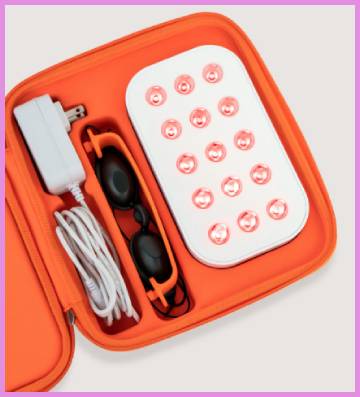
- Store the Device in its Travel Case Always: You should keep the Lumebox in its hard shell whenever it is not in active use. This prevents the sensitive power button from being bumped in a drawer and protects the medical-grade LEDs from moisture or accidental drops, which is a vital maintenance tip for any portable electronic.
- Perform a Monthly “Flicker Check”: You should turn the device on in a dark room and observe the LEDs (using the provided goggles). If you notice any bulbs dimming or flickering, it is an analytical sign of a failing internal connection; catching this early is the best way to claim your warranty before it expires.
- Use Only the Original Charging Cable: You should avoid using generic USB-C phone chargers as they may deliver the wrong voltage. The internal charging board is calibrated for a specific input, and using the wrong cable is the fastest way to fry the delicate circuitry, which is a common mistake that leads to many “defective” complaints.
- Let the Device Cool Down Between Sessions: You should wait at least five minutes if you are moving the light to a second body part. Heat buildup is the enemy of LED longevity, and allowing the internal components to breathe is the best maintenance tip for ensuring the light output doesn’t degrade over the first year of ownership.
Pros and Cons of Lumebox Red Light Therapy
Pros of Lumebox Red Light Therapy
- High Irradiance for Deep Tissue Penetration: Lumebox delivers a concentrated dose of light energy: it measures significantly higher than most handheld competitors: this ensures that the photons actually reach the mitochondria in deeper muscle layers.
- Portable and Battery-Operated Design: You are not stuck standing against a wall: the rechargeable battery allows for treatments in bed or on the go: this provides a level of freedom that stationary panels can never offer.
- FDA Registered Class II Device Status: The company has gone through the registration process: it meets specific safety standards for medical electronics: this gives a baseline level of confidence in the build safety.
- Independent Third-Party Lab Testing: Lumebox provides data on EMF levels and light output: they test at 0cm to ensure safety: this is an analytical “must-have” for anyone concerned about electromagnetic radiation.
- Dual Wavelength Technology (660nm and 850nm): You get the benefit of both surface-level red light and deep-penetrating infrared: these can be used separately or together: this makes the device versatile for both skin health and joint recovery.
- Ergonomic and Removable Handle: The design is thoughtful for those with limited mobility: you can use it as a wand or lay it flat: this allows for targeted treatment on difficult areas like the lower back or hamstrings.
- Included Hard-Shell Travel Case: The device comes with a high-quality protective carrier: it keeps the lens safe from scratches during transport: this makes it an ideal companion for athletes who travel for competitions.
Cons of Lumebox Red Light Therapy: An analytical look at the limitations:
- Inconsistent battery longevity reported by long-term users: many customers find the battery stops holding a charge after six months: this indicates a potential issue with the lithium-ion cells: this makes the device feel like a disposable luxury item.
- Hyper-sensitive power button design: the button is placed exactly where your thumb naturally rests: it requires very little pressure to trigger: this leads to accidental shut-offs that frustrate the user experience.
- Premium pricing with limited warranty coverage: the cost is nearly double that of similar-spec panels: yet the customer service response to hardware failure is often slow: this results in a high-risk investment for your wellness budget.
- Small treatment window compared to mini-panels: you can only treat a tiny area at a time: it takes an hour to cover the same surface area a desktop panel covers in ten minutes: this is an analytical drain on your daily schedule.
- Lack of a built-in stand for hands-free use: if you want to use it for your face: you have to hold it up manually for the entire session: this makes it difficult to relax during a skincare routine.
- Reports of the device becoming uncomfortably hot: during back-to-back 12-minute sessions: the casing can reach temperatures that are unpleasant against bare skin: this requires you to wait for a “cool-down” period between treatments.
- Difficulties with the return and refund process: many bad reviews highlight a “restocking fee” or a complex RMA system: if the device arrives defective: you may find yourself jumping through hoops to get your money back: this is a major red flag for consumer trust.
Lumebox Vs. Other Brands
- Lumebox Vs. Hooga HG300
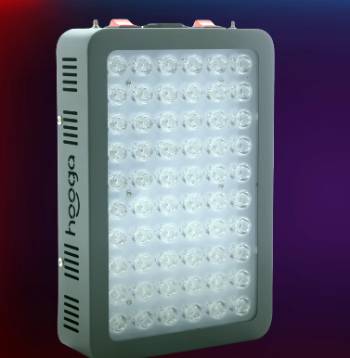
Hooga is the undisputed king of budget-friendly red light therapy. I have found that the Hooga HG300 offers nearly the same irradiance as the Lumebox but at a fraction of the cost.
Analytically, the Hooga is a stationary panel, meaning you lose the portability that Lumebox offers.
However, for the price of one Lumebox, you could buy three Hooga panels and cover your entire body.
The Hooga lacks the “medical” feel of the Lumebox, but its reliability in the community is significantly higher.
Choose Hooga if you want a reliable desktop setup, but keep Lumebox only if you absolutely must have a battery-powered device for travel.
- Lumebox Vs. Joovv Go 2.0
Joovv is the brand that started the red light craze, and the Go 2.0 is their direct answer to the Lumebox.
I have noticed that Joovv has a much more polished app integration and a sleeker aesthetic.
Analytically, the Lumebox has a larger treatment surface than the Joovv Go, which makes it slightly more efficient for muscle groups.
However, Joovv’s customer service and warranty track record are much more established in the high-end market.
You should choose Joovv if you want a premium ecosystem that connects to your phone, but stay with Lumebox if you want the most “raw power” in a handheld frame.
- Lumebox Vs. Mito Red Light MitoPRO 300
Mito Red is often the top choice for those who want the most scientifically accurate wavelengths.
I have found that the MitoPRO 300 includes four different wavelengths, including 630nm and 830nm, which Lumebox lacks.
Analytically, this provides a more “full-spectrum” approach to cellular health that targets multiple layers of the dermis.
The Mito is a wired panel, so it isn’t portable, but it offers a built-in timer and flicker-free technology.
Choose Mito Red if you want the most advanced light spectrum available, as the Lumebox’s dual-wavelength system feels a bit dated by comparison.
- Lumebox Vs. PlatinumLED BioMax 300
PlatinumLED is the brand most analytical biohackers swear by because of their seventh-generation technology.
I have noticed that the BioMax 300 includes blue light for acne and a specialized 1060nm wavelength for even deeper penetration.
Analytically, Lumebox cannot compete with the sheer variety of therapeutic lights offered by PlatinumLED.
While the BioMax is a heavy, wall-mounted unit, the results reported by users are far more consistent than the handheld Lumebox.
You should choose PlatinumLED if you are serious about a “clinical-grade” home setup and don’t mind being tethered to a wall for your ten-minute daily session.
- Lumebox Vs. Kineon Move+ Pro
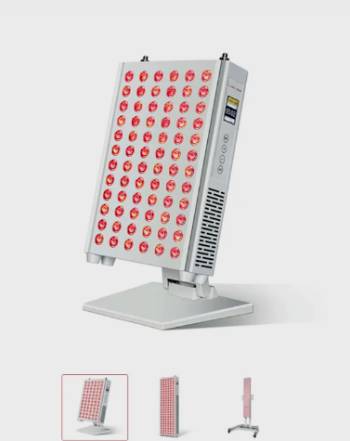
Kineon takes a completely different approach by combining LEDs with medical-grade lasers.
I have found that the Move+ Pro is specifically designed for joint recovery, using lasers to reach deeper into the cartilage than Lumebox can.
Analytically, the Kineon is a wearable device that straps to your knee or shoulder, making it truly hands-free.
Lumebox is a “generalist” tool, while Kineon is a “specialist” for chronic pain. Choose Kineon if you have specific joint issues like a meniscus tear or arthritis, as the laser technology will outperform the standard LEDs of the Lumebox every single time.
Frequently Asked Questions (FAQs)
Based on the wavelengths and irradiance, the physics of the device suggest it should work for cellular stimulation; however, individual results vary wildly due to the hardware’s inconsistent reliability.
Brands like PlatinumLED, Mito Red Light, and Joovv are generally considered more reputable due to their long history, transparent testing, and superior customer support compared to newer “influencer-led” brands.
The Mayo Clinic acknowledges that red light therapy is a promising treatment for skin issues and pain but emphasizes that more large-scale clinical trials are needed to prove definitive efficacy for all conditions.
Yes, low-level laser therapy (LLLT) is backed by decades of research for reducing inflammation and speeding up wound healing, though it is often more effective than standard LED-based therapy for deep tissue issues.
Final Thoughts
When you are ready to invest in a red light device, you should buy Lumebox Red Light Therapy only after you have fully weighed the risks of battery failure against the convenience of portability.
I have found that while the initial “burst” of power from this device is impressive, the long-term user sentiment is far too divided for me to give it a glowing recommendation.
You should choose a company that stands firmly behind its warranty and offers a more durable build if you want your light to shine for years to come.
I believe that your wellness journey deserves a tool that is as reliable as it is powerful, and unfortunately, Lumebox still has some hurdles to clear in that department.
You are making a smart move by looking at the analytical data, and I hope this review helps you find the light that truly serves your needs.