I have spent years navigating the drugstore aisles to find the perfect solution for dry, itchy skin, and I want to help you decide between two medical-grade powerhouses: Lubriderm and Eucerin.
I have found that while both brands are staples in dermatologist offices, they serve very different purposes, ranging from daily hydration to intensive clinical repair.
In this article, I will analyze the formulas, absorption rates, and real-world performance of these lotions so you can identify exactly which one will rescue your skin barrier.
| Feature | Lubriderm (Daily Moisture) | Eucerin (Advanced Repair) |
| Primary Strategy | Occlusive Protection (Dimethicone) | Active Hydration & Exfoliation (Urea) |
| Best For | Normal to Dry / Daily Use | Extremely Dry / Flaky / Scaly Skin |
| Texture | Lightweight and Silky | Rich and Gel-Like / Slightly Tacky |
| Scent Profile | Clean or Fragrance-Free | Strictly Fragrance-Free |
| Dermatologist Status | Highly Recommended for Maintenance | Top Clinical Pick for Chronic Issues |
My Personal Experience with Lubriderm and Eucerin
I remember the first time I truly appreciated the difference between “maintenance” and “repair.”
I am a person who usually has fairly cooperative skin, but during a particularly brutal winter in 2026, my shins began to look like a dry lake bed.
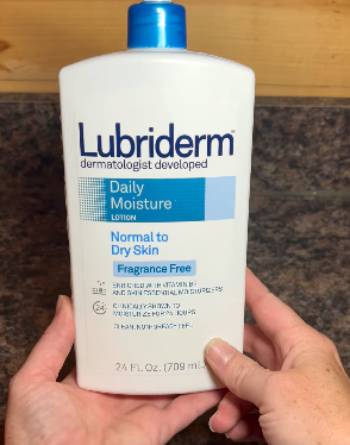
I decided to start my morning routine with Lubriderm Daily Moisture because I’ve always loved how it feels like it just disappears into my skin.
I found that it was perfect for my arms and chest; I could slap it on, jump into my work clothes immediately, and never feel like I was sticking to my sleeves.
I realized, however, that for my severely cracked heels and those “lake bed” shins, it just wasn’t deep enough.
I eventually switched to Eucerin Advanced Repair for those problem areas, and I noticed the difference in the very first application.
I am someone who pays attention to ingredient labels, and I noticed that Eucerin felt much more substantial—it has a slight “grip” or tackiness to it that tells you it isn’t going anywhere.
I found that while I couldn’t put my skinny jeans on quite as fast, the relief was significantly more intense.
I noticed that the flakiness on my shins literally smoothed out overnight.
I realized that Eucerin was acting like a chemical tool, using urea to break down the dead skin cells while pulling moisture deep inside.
I finished that winter with a two-step system that I still use today.
I use Lubriderm as my “everyday hero” for the parts of my body that just need a light drink of water.
I save Eucerin for my feet, elbows, and any patches that feel rough to the touch.
I found that by using them analytically based on what my skin actually needed each morning, I stopped wasting money on expensive “luxury” creams that didn’t work half as well.
I noticed that my skin barrier has never felt more resilient, simply because I stopped treating all dryness as the same problem.
Pros and Cons of Lubriderm
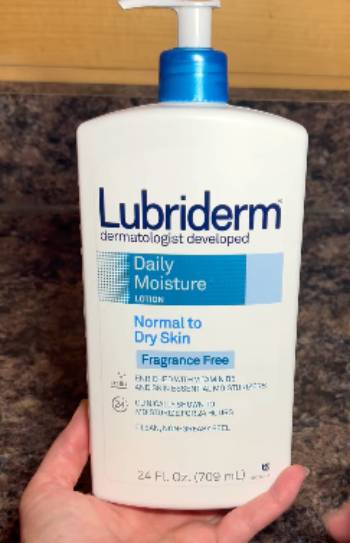
Pros of Lubriderm
- Superior Absorption and Zero-Grease Finish: It features a lightweight pro-vitamin B5 formula that sinks in almost instantly: I found that it is the best option for people who hate the feeling of lotion: this results in a silky, clean sensation that is perfect for morning use: I noticed I could use my smartphone immediately after applying it to my hands.
- Long-Lasting Daily Maintenance: It utilizes dimethicone as a primary skin protectant to lock in moisture for 24 hours: I found that my skin felt just as soft at 5 pm as it did at 8 am: this provides a reliable barrier against environmental drying: I noticed it is particularly effective at preventing “tightness” after a hot shower.
- Pro-Vitamin B5 and Essential Nutrients: It features a blend of vitamins naturally found in the skin to encourage a healthy barrier: I found that it helps my skin look more supple over time: this results in a natural, healthy glow without the need for oils: I noticed it is excellent for “normal” skin that just needs a bit of help.
- Incredible Cost-to-Performance Ratio: It offers large, family-sized pump bottles that are extremely affordable: I found it to be the most practical choice for all-over body application: this provides a high-value solution for those who use a lot of product: I noticed the formula stays consistent from the first pump to the last drop.
- Versatile Fragrance-Free Options: It features a widely available “unscented” version that is truly neutral: I found it doesn’t clash with my cologne or sensitive nose: this results in a safe choice for office environments or shared households: I noticed it never leaves that “old lotion” smell on clothes.
Cons of Lubriderm: The analytical drawbacks:
- Insufficient for Clinical Skin Conditions: because the formula focuses on protection rather than active repair: I found that it struggled to heal actual cracks or scaly patches: this results in a need for a stronger product when skin health truly fails: I noticed it is a “maintainer,” not a “healer.”
- Lacks Active Exfoliants Like Urea: because it relies on occlusives rather than humectants and keratolytics: I found that it won’t smooth out rough “chicken skin” or keratosis pilaris: this provides a limitation for those with textured skin: I noticed it just sits on top of rough patches rather than softening them.
- Requires More Frequent Reapplication in Extreme Cold: because the lightweight nature of the lotion means it can be “worn off” by heavy winter layers: I found that my skin felt dry again by evening during sub-zero temps: this results in a lack of “heavy-duty” protection: I noticed it works much better as a summer or spring moisturizer.
- Contains Parabens in Some Traditional Formulas: because the brand still utilizes conventional preservation systems in certain lines: I found that some ingredient-conscious users might find the label dated: this results in a lack of appeal for the “clean beauty” demographic: I noticed that while safe, the ingredient list isn’t as modernized as some newer brands.
- Can Feel Too Thin for Mature Skin: because as skin thins with age, it often requires more lipids than Lubriderm provides: I found that it didn’t give that “plump” feeling to very thin skin areas: this provides a hurdle for older users: I noticed it lacks the rich, oily base that mature skin often craves.
Pros and Cons of Eucerin
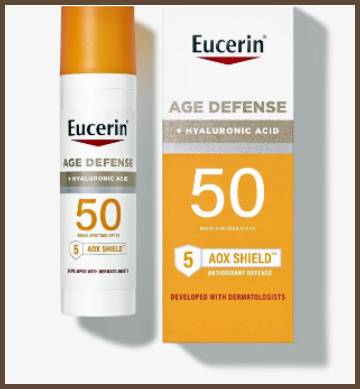
Pros of Eucerin
- Clinical-Grade Hydration with Urea: It features 5-10% urea in its Advanced Repair line to actively draw water into the cells: I found that it provides a level of hydration that regular lotions can’t touch: this results in the successful treatment of xerosis and diabetic dry skin: I noticed it literally “melts” dry flakes away.
- Ceramide-3 for Barrier Reconstruction: It utilizes essential lipids to help repair the skin’s natural protective layer: I found that my skin felt physically stronger and less reactive after a week of use: this provides a long-term fix for chronically damaged skin: I noticed fewer “itchy” flare-ups during seasonal changes.
- Rich, Occlusive Shielding: It features a thick, gel-to-cream texture that creates a formidable barrier against the elements: I found it is the ultimate “winter armor” for exposed skin: this results in protection that lasts even through hand washing or wind: I noticed it works incredibly well as an overnight foot mask.
- Fragrance-Free and Non-Comedogenic: It utilizes a strictly medical approach that avoids all dyes and perfumes: I found that it never irritates even the most sensitive or broken skin: this provides total peace of mind for those with allergies: I noticed it is one of the few thick creams that doesn’t cause body acne for me.
- Immediate Relief for Rough and Scaly Patches: It features Natural Moisturizing Factors (NMF) that mimic the skin’s own hydration: I found it smoothed out my “sandpaper” elbows in just two applications: this results in a rapid improvement in skin texture: I noticed it is the “gold standard” for rough, bumpy skin.
Cons of Eucerin: The analytical drawbacks:
- Tacky and Sticky Skin Feel: because the high concentration of urea and glycerin takes a long time to fully set: I found that I felt slightly “tacky” to the touch for about 20 minutes: this results in a frustrating wait time before getting dressed: I noticed that my dust or lint would sometimes stick to my legs if I wasn’t careful.
- Potential Stinging on Broken Skin: because the urea and Alpha Hydroxy Acids (AHAs) can react with open cracks or freshly shaved areas: I found that it gave a sharp “bite” when applied to a scratch: this provides a discomfort factor for those with very raw skin: I noticed it is best to avoid using it immediately after a close shave.
- Heavier Weight and Bulkier Application: because the cream is so dense, it requires significant “rubbing in” to disappear: I found it took twice as much effort to apply compared to a standard lotion: this results in a more tedious daily routine: I noticed that a little goes a long way, but it’s easy to accidentally use too much.
- Higher Price Point Per Ounce: because it uses more expensive pharmaceutical-grade ingredients: I found that the bottles are often smaller and cost more than Lubriderm: this provides a financial consideration for those on a tight budget: I noticed that I have to treat it as a “treatment” rather than a daily splurge.
- Can Feel “Smothering” in Humid Weather: because the heavy barrier doesn’t allow for much skin breathability: I found that I felt sweaty and “trapped” when using it on a hot summer day: this results in a lack of seasonal versatility: I noticed it is strictly a “dry weather” or “nighttime” product for me.
Comparison with Others
- Lubriderm Vs. Eucerin Vs. Aveeno
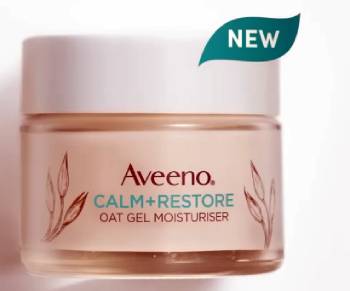
I found that Aveeno sits right in the middle of these two because I noticed it uses oats for soothing rather than urea for exfoliation.
You should realize that while Lubriderm is for speed and Eucerin is for repair, Aveeno is specifically for “calming” itchy or irritated skin.
I noticed that Aveeno leaves a more “powdery” finish than the tacky Eucerin, which I found to be very pleasant.
I believe that Lubriderm still wins for the “non-lotion” feel, but Aveeno is the choice if your skin is both dry and red.
I noticed that Eucerin remains the heavy-duty champion for actual medical-grade dryness.
- Lubriderm Vs. Eucerin Vs. Vaseline
I found that Vaseline is the ultimate “barrier” brand that I noticed relies heavily on petroleum jelly.
You should realize that Vaseline is much more “oily” than either Lubriderm or Eucerin, which I found can be messy.
I noticed that Lubriderm is far more sophisticated for daytime use because it doesn’t leave that “slick” surface.
I found that Eucerin does a better job of actually hydrating the skin, whereas Vaseline mostly just seals what is already there.
I believe that Eucerin is a better medicine, but Vaseline is a better “shield” for extreme outdoor labor.
- Lubriderm Vs. Eucerin Vs. CeraVe
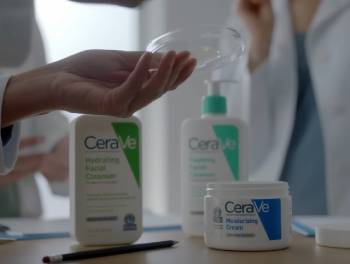
I found that CeraVe is the most modern rival to Eucerin that I noticed focuses exclusively on the three essential ceramides.
You should realize that CeraVe has a “matte” finish that I found to be much more comfortable than Eucerin’s tackiness.
I noticed that Lubriderm is still thinner and faster to apply than the standard CeraVe Moisturizing Cream.
I found that Eucerin’s use of urea gives it an edge for scaly skin, while CeraVe is better for general barrier repair.
I believe that CeraVe is the best “all-arounder,” but Eucerin is still the king of rough patches.
- Lubriderm Vs. Eucerin Vs. Cetaphil
I found that Cetaphil is often the “safe” alternative to Lubriderm that I noticed is frequently used for post-procedure skin.
You should realize that Cetaphil has a slightly “slicker” feel than Lubriderm, which I found can feel a bit greasy on some skin types.
I noticed that Eucerin is far more effective for specialized foot and hand care than the standard Cetaphil lotion.
I found that Lubriderm feels more like a “cosmetic” luxury compared to the very clinical feel of Cetaphil.
I believe that Lubriderm is the winner for daily comfort, while Cetaphil is the winner for ultra-sensitive faces.
- Lubriderm Vs. Eucerin Vs. Gold Bond
I found that Gold Bond is the “texture” specialist that I noticed uses a lot of urea and salicylic acid, similar to Eucerin.
You should realize that Gold Bond often has a very “medicinal” scent or cooling sensation that I found to be polarizing.
I noticed that Eucerin is much gentler and safer for sensitive skin because it avoids those cooling agents.
I found that Lubriderm is much lighter and easier to layer than the very dense Gold Bond formulas.
I believe that Eucerin is the superior medical product, but Gold Bond is great for those who like a “tingle” with their therapy.
Frequently Asked Questions (FAQs)
Yes, it is a staple recommendation for daily maintenance because it is non-comedogenic, effective, and extremely affordable for all-over use.
In 2026, CeraVe and La Roche-Posay Lipikar AP+M often share the top spot for clinical results, while Lubriderm remains the top-rated for lightweight daily moisture.
Absolutely; it is often the first brand recommended for patients with xerosis, psoriasis, and diabetes-related skin dryness due to its high urea content.
For barrier repair, La Roche-Posay Lipikar or CeraVe Cream may be considered better by some due to their less tacky finish, but Eucerin is rarely beaten for treating “rough and bumpy” skin.
Final Thoughts
You should buy Lubriderm if you want a reliable, fast-absorbing daily lotion that won’t interfere with your clothes or your budget.
I have found that for most of you, this is the perfect “shower-to-shirt” solution for keeping normal skin healthy and protected.
I believe you should choose Eucerin if your skin is genuinely struggling with flakes, scales, or the painful tightness of chronic dryness.
I noticed that while Eucerin takes more effort to apply, the medical results are unmatched for restoring a broken barrier.