I have found that the Little Saints mushroom drink is a product you should buy if you are searching for a sophisticated, mezcal-inspired ritual that prioritizes cognitive clarity and sensory depth over the heavy intoxication of traditional spirits.
The main intent of this article is to provide an analytical perspective on the “spirit” of the modern non-alcoholic movement, specifically focusing on how St. Ember by Little Saints utilizes functional fungi to elevate your evenings.
I eventually realized that finding a zero-proof option that actually tastes “expensive” is a mechanical necessity for those of us who enjoy a nightcap but despise the morning-after consequences.
You should buy Little Saints to experience a uniquely smokey, palo santo-infused spirit that rewards your brain with 100 mg of lion’s mane mushroom extract instead of a headache.
My Evening Ritual: A Real User Experience with St. Ember
I remember the day I decided to stop choosing between a boring glass of sparkling water and a drink that I knew would ruin my productivity the next morning.
I am someone who deeply appreciates the ritual of “shaking a drink”—the ice rattling in the tin, the smell of citrus rinds, and the weight of a heavy glass—but I have reached a point where alcohol just doesn’t fit my lifestyle anymore.
I eventually decided to experiment with Little Saints St. Ember because I was intrigued by the idea of a “mushroom spirit” that promised a smokey, mezcal-like profile without the burn.
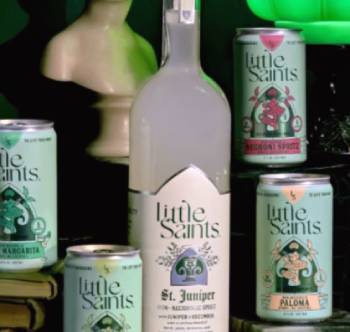
I found that the first thing you notice is the bottle; it is heavy, beautifully designed, and looks absolutely stunning on a bar cart, which makes it feel like a genuine treat rather than a health sacrifice.
I noticed upon opening the seal that the aroma is unlike anything I have ever poured; it’s a pungent, woody mix of ginger and palo santo that almost smells like a high-end apothecary.
I am a user who values complexity, and when I took my first sip neat, I found that the heat from the peppers and ginger provides a “bite” that mimics the back-of-the-throat sensation of a real spirit.
I eventually mixed it with a splash of pineapple juice and a dash of soda water, and I realized that the smokiness of the palo santo perfectly cuts through sweetness, creating a layered cocktail experience.
I found that while I didn’t feel “drunk,” there was a subtle shift in my headspace after about twenty minutes—a sense of groundedness and focus that made me want to engage in conversation rather than scroll through my phone.
I noticed that the finish is slightly peppery and woody, which keeps you from gulping it down like a juice box; it forces you to slow down and savor the botanicals.
I realized that the 100 mg of lion’s mane isn’t a “buzz” in the traditional sense, but it does provide a “zen” clarity that feels remarkably supportive.
I am now at the point where I prefer this to a standard margarita, especially when I have a busy day ahead and need to wake up feeling sharp.
I have found that for someone who doesn’t drink, this is the first non-alcoholic alternative that feels like it has a “soul” and a distinct personality.
Maintenance Tips for the Best Little Saints Experience
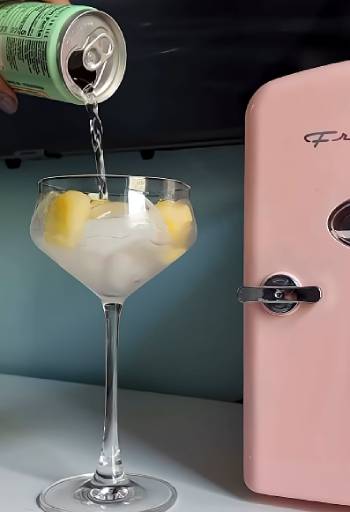
You should realize that botanical spirits are delicate and require specific handling to maintain their aromatic integrity.
Storing your opened bottle of St. Ember in the refrigerator is a vital maintenance tip because the natural extracts and zero-sugar formula can degrade more quickly at room temperature: I found that the flavor stayed “crisp” for much longer when chilled.
Serving the spirit over one large, clear ice cube is a key maintenance tip because it allows the drink to slowly open up without diluting the complex smokey notes too quickly: I noticed that “shaved” ice melted too fast and made the palo santo taste thin.
Using a proper mezcal “copita” or a wide-rimmed glass is a helpful maintenance tip to allow the aromatics of the palo santo and ginger to breathe: I found that drinking it out of a narrow tumbler trapped the scents and made them feel too pungent.
Garnishing your St. Ember cocktail with a slice of charred grapefruit or a sprig of rosemary is an essential maintenance tip to lean into the smokey, woody profile: I noticed that the citrus oils helped bridge the gap between the pepper heat and the earthy mushroom base.
Limiting your consumption to one or two servings per evening is a smart maintenance tip to ensure you aren’t over-consuming the active adaptogens: I found that “more” lion’s mane didn’t necessarily mean “more focus,” and staying moderate kept the ritual special.
Cleaning your bar tools immediately after mixing with Little Saints is a necessary maintenance tip because the botanical terpenes can leave a strong, woody residue on shakers and spoons: I found that the palo santo scent was surprisingly difficult to wash off.
Experimenting with “sparkling” mixers like ginger beer or hibiscus tonic is a crucial maintenance tip for those who find the neat spirit too intense: I noticed that the carbonation helped distribute the 100 mg of lion’s mane more effectively across the palate.
Rotating your mushroom drinks with other adaptogens like reishi or ashwagandha is a helpful maintenance tip to prevent your body from building a tolerance to a single fungi: I found that I felt the “clarity” of St. Ember more when I didn’t drink it every single night.
Checking the “best by” date on the bottom of the bottle before gifting it is a strategic maintenance tip because natural spirits are best enjoyed while the botanicals are fresh: I noticed that older bottles lost their “peppery bite.”
Sipping slowly and mindfully is a final maintenance tip because the goal of Little Saints is to replace the “glugging” of alcohol with a sensory experience: I found that taking ten minutes to finish a glass allowed the functional benefits to settle in more naturally.
Pros and Cons of Little Saints St. Ember
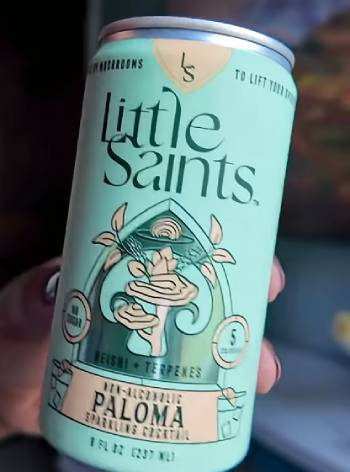
Pros of Little Saints St. Ember: Why It Stands Out
- Sophisticated and Layered Flavor Profile: It features a bespoke blend of ginger, peppers, and palo santo that provides a smokey depth often missing in zero-proof spirits: I found that the “heat” from the peppers effectively simulates the burn of alcohol: this results in a drink that satisfies the palate of a former mezcal lover: I noticed that it doesn’t have the “cloying” sweetness of many juice-based mocktails: I realized that for a craft cocktail enthusiast, this complexity is a major analytical win.
- Functional and Cognitive Benefits: It utilizes 100 mg of organic lion’s mane mushroom extract which is known for supporting focus and mental clarity: I found that it provided a subtle mood lift that felt more productive than relaxing: this provides a “consequence-free” evening that supports your brain health rather than taxing your liver: I noticed that I felt “present” during social interactions: I realized that adding nootropics to a social ritual is a brilliant way to enhance the experience without intoxication.
- Premium Presentation and Versatility: It features gorgeous, giftable packaging and a 750 ml bottle that holds its own among luxury liquors: I found that the included mocktail recipes were incredibly helpful for hosting: this results in a high-value item for housewarmings or party settings: I noticed the formula mixes beautifully with everything from tonic water to fresh fruit juices: I realized that the brand has successfully elevated the image of the “mushroom drink” to something truly classy.
The Critical Cons: An Analytical Reality Check
- Polarizing and Strong Aromatic Profile: It features a very bold palo santo and ginger scent that some users find reminds them more of a “crystal shop” or “incense” than a beverage: I found that if you don’t enjoy earthy, woody flavors, this will be very difficult to finish: this results in a product that is not a “crowd-pleaser” for those with basic tastes: I noticed that the smell can linger in the glass long after the drink is gone: you should realize that this is a “love it or hate it” flavor: I realized that “unordinary” ingredients come with the risk of being too niche for the average consumer.
- Subtle to Non-Existent Functional Effects: It utilizes functional mushrooms, but many reviewers report feeling absolutely no “buzz” or “zen” sensation whatsoever: I found that the “jolt” of lion’s mane is often overshadowed by the strong physical taste of the ginger: this results in a trust gap for users who were expecting a direct “high” or a detectable physiological shift: I noticed that some people felt “ripped off” because they didn’t feel a distinct “high”: you should realize that adaptogens work cumulatively and subtly, not like a drug: I realized that the marketing may lead some to expect a more “pharmaceutical” experience.
- Premium Pricing and Value Concerns: It features a high price point that places it in the same bracket as luxury alcoholic mezcals: I found that for a 5-calorie drink that is mostly water and extracts, the $50 range can feel steep: this results in a lower value-for-money score if you are comparing it to standard mixers or soda: I noticed that the “no returns” policy on many sites makes it a risky purchase for a first-timer: you should realize that you are paying for the food science and the branding: I realized that for those on a tight budget, the “risk/reward” of a $50 bottle of juice-alternative is hard to justify.
- Inconsistent Texture and Aftertaste: It utilizes monk fruit as a sweetener which some users report leaves a lingering, slightly chemical aftertaste on the back of the tongue: I found that the texture can feel “thin” or “watery” when sipped neat: this results in a product that almost requires a mixer to feel “full”: I noticed that the palo santo can sometimes taste “soapy” if not balanced with enough citrus: you should realize that mimicking a spirit’s mouthfeel without sugar or alcohol is a massive mechanical challenge: I realized that while the flavor is bold, the body of the drink doesn’t always match the intensity.
Also Read: My Experience With Road Trip Mushroom Gummies Desert Stardust
Little Saints St. Ember Vs. Other Brands
- Little Saints St. Ember Vs. Three Spirit Nightcap
I found that Three Spirit Nightcap focuses more on deep relaxation and sedation using valerian root and hops, making it very different from the “clarity” of Little Saints.
You should realize that while Little Saints uses lion’s mane for focus, Three Spirit is designed to help you drift off to sleep.
I noticed that the flavor of Three Spirit is much more “syrupy” and medicinal compared to the smokey, mezcal vibe of St. Ember.
I am a user who prefers Little Saints for an active social evening and Three Spirit for a solo night on the couch.
I realized that if you want a “buzz” that feels like a warm hug, the competitor is better, but for a “buzz” that feels like a bright light, Little Saints is the analytical winner.
- Little Saints St. Ember Vs. Kin Euphorics High Rhode
I found that Kin Euphorics High Rhode uses caffeine and 5-HTP to create a more “social” and energetic lift that is more detectable than the lion’s mane in Little Saints.
You should realize that Kin has a much more “tart” and herbaceous flavor that lacks the smokey, woody depth of the palo santo in St. Ember.
I noticed that Little Saints feels more like a “spirit” replacement, while Kin feels like a functional “tonic” designed for a modern party.
I am someone who appreciates that Little Saints is sugar-free, whereas Kin often relies on more complex sweeteners.
I realized that for a sophisticated dinner party, the Little Saints bottle is the better aesthetic and flavor choice.
- Little Saints St. Ember Vs. Ghia Aperitif
I found that Ghia is an alcohol-free aperitif that focuses on a “bitter” profile inspired by the Mediterranean, using gentian root as its primary note.
You should realize that Ghia does not contain functional mushrooms like lion’s mane, meaning it is purely a flavor-based experience without the nootropic “clarity” promise.
I noticed that Ghia is much more “acidic” and refreshing, making it better for an afternoon spritz, while St. Ember is better for a late-night moody cocktail.
I am a user who values the “functional” side of Little Saints, as it makes the $50 price tag feel a bit more justified.
I realized that if you just want the best-tasting bitter drink, Ghia is hard to beat, but for an “experience,” Little Saints offers more layers.
Also Read: My Experience With Host Defense Mushrooms
Frequently Asked Questions (FAQs)
I found that it doesn’t provide a “buzz” like alcohol or THC, but the combination of lion’s mane and aromatic terpenes can create a subtle sense of grounded clarity and focus.
I noticed that despite not securing a deal on the show (Season 16), the brand saw a massive 500% sales increase and has since expanded its presence into over 300 retail locations and restaurants as of 2026.
I realized that “mushroom buzz” is usually a term for the gentle relaxation or mental sharpness provided by adaptogens like reishi or lion’s mane, rather than a state of impairment.
I found that while some earlier formulations or specific ready-to-drink cans have featured CBD in the past, the core St. Ember spirit focuses on lion’s mane and botanical terpenes for its effects.
Final Thoughts
I have found that the Little Saints mushroom drink is a product you should buy if you are ready to trade the “dullness” of sobriety for a sensory journey that rewards your curiosity and your brain.
You should realize that the main intent of this review was to show that while the flavor is bold and polarizing, the quality of the ingredients and the ritual it provides are top-tier.
I am a person who believes that “pleasure with purpose” is the future of the beverage industry, and St. Ember is a leading example of that philosophy.
I have realized that even without a “deal” from the Sharks, this brand has proven that there is a massive market for people who want to feel good without feeling hungover.