I have found that choosing between Kelo-cote and Mederma is a mechanical necessity for anyone navigating the emotional and physical journey of skin recovery after surgery, injuries, or acne.
The main intent of this article is to provide you with a transparent, analytical comparison of silicone technology versus botanical extracts so you can select the formula that fits your specific scar type.
I realized that while both brands dominate the pharmacy shelves, they operate on completely different biological principles to achieve skin restoration.
You should read this guide to discover which product will actually help you reclaim your skin’s natural texture and confidence.
At a Glance: Kelo-cote Vs. Mederma Comparison
| Feature | Kelo-cote Silicone Gel | Mederma Advanced Scar Gel |
| Primary Technology | 100% Medical-Grade Silicone | Cepalin (Onion Extract) & Allantoin |
| Mechanism | Hydration & Occlusion | Cell turnover & Inflammation reduction |
| Application | Twice daily | Once daily |
| Best For | Raised (Hypertrophic) & Keloid scars | Redness, Acne scars, New injuries |
| Texture | Self-drying clear gel | Thick gel (dries to a film) |
| Visibility | Completely invisible once dry | Clear (may peel or flake) |
| Clinical Standing | Gold standard for plastic surgeons | Top pharmacist recommended brand |
My Skin Recovery Journey: A Real User Perspective
I remember the day I caught a glimpse of my surgical scar in the mirror and felt a wave of frustration.
I am someone who used to believe that scars were just permanent reminders of past accidents, but after a recent procedure, I wasn’t ready to let a raised purple line stay on my skin forever.
I eventually decided to experiment with both Kelo-cote and Mederma because I wanted to see if the professional-grade silicone really lived up to the hype compared to the classic onion extract formula.
I found that starting with Mederma was the easiest entry point because the once-a-day application felt like a minor addition to my morning routine.
I noticed right away that Mederma has a specific scent—sort of a mild, botanical tang—and it dries down into a very thin, slightly shiny film on the surface.
I am a user who values results, and after four weeks of Mederma, the “angry” redness of my scar had definitely calmed down, but the height of the scar remained unchanged.
I eventually switched to Kelo-cote for my more stubborn, raised areas because I had heard that silicone is the only thing that can actually flatten out tissue.
I found that the Kelo-cote gel was incredibly silky and, unlike other products I’ve tried, it dried down to a matte finish that didn’t feel sticky under my clothes.
I noticed that within three weeks of using the silicone gel, the actual “bump” of the scar began to feel softer and less rigid.
I realized that Mederma was excellent for fading the color of flat marks, but Kelo-cote was the heavy lifter for changing the physical architecture of the scar tissue itself.
I am now at the point where my scar is almost flush with my skin, and I attribute this success to knowing exactly when to use a botanical and when to use a physical barrier.
I have found that your success depends on your discipline and your understanding of what your skin actually needs—is it hydration and pressure, or is it an anti-inflammatory boost?
The Power of Kelo-cote: Key Features and Benefits
I found that Kelo-cote is a product you should buy if you are dealing with “active” scars that are itchy, raised, or prone to becoming keloids.
It features a patented Cross-Link silicone technology that creates an ultra-thin, flexible sheet over the scar, which stays in contact with the skin for twenty-four hours a day.
I noticed that because it is self-drying, I could apply it in the morning and put my shirt on just a few minutes later without any greasy residue transferring to the fabric.
One of the standout benefits I found is its ability to manage the “scar itch” that usually keeps me up at night during the healing phase.
I realized that the silicone acts as a surrogate for the top layer of skin, preventing the body from overproducing collagen in a panicked attempt to heal the wound.
The Science of Mederma: Why It Remains a Household Name
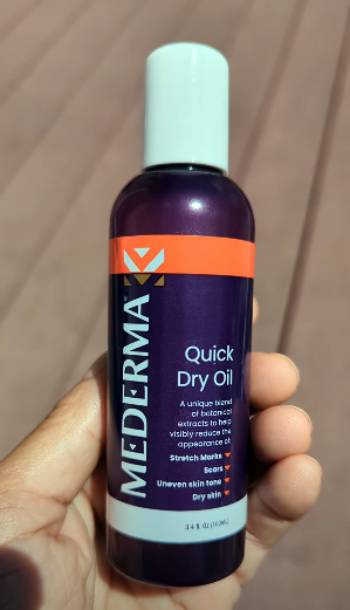
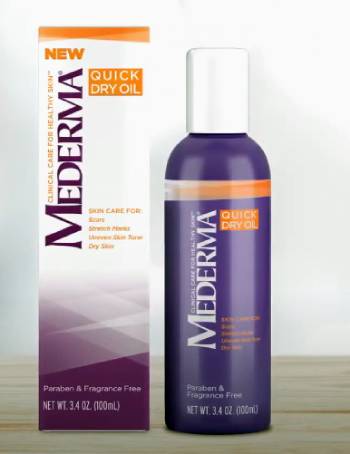
I have found that Mederma is the logical choice for those dealing with acne scarring or hyperpigmentation where the skin is flat but discolored.
It utilizes Cepalin, a proprietary botanical extract derived from onions, which has been clinically shown to reduce the appearance of inflammation in healing tissue.
I noticed that the Advanced formula is specifically designed to work with just one application, which is a massive advantage for anyone with a busy lifestyle.
I realized that the presence of Allantoin in the mix serves as a powerful skin protectant that helps lock in moisture while the active ingredients do the work.
I found that for new, minor injuries, Mederma helps the skin transition back to its original color much faster than leaving it to heal on its own.
Maintenance Tips for Your Scar Care Routine
You should realize that no product can work its magic if you are neglecting the fundamental health of your skin during the remodeling phase.
Applying a high-SPF sunscreen over your scar every single time you go outside is a vital maintenance tip because UV rays darken scar tissue permanently: I found that my scars stayed pink longer when I forgot my sunblock.
Massaging the scar area for five minutes twice a day is a key maintenance tip to break down the dense collagen fibers that create lumps: I noticed that using a bit of Kelo-cote while massaging helped the tissue stay supple.
Ensuring the skin is 100% clean and dry before applying silicone is a helpful maintenance tip to allow the gel to bond properly with the skin: I found that even a tiny bit of sweat can prevent the cross-linking film from forming.
Waiting for the skin to be fully closed and free of scabs before starting any treatment is an essential maintenance tip to avoid infection and irritation: I noticed that starting too early actually made my redness worse.
Keeping your body hydrated from the inside out is a smart maintenance tip because dehydrated skin cannot effectively remodel its structure: I found that drinking more water made my skin more elastic and responsive.
Wiping away any excess gel after application is a necessary maintenance tip to ensure the product dries within the recommended five minutes: I noticed that if I applied too thick a layer, it stayed sticky for far too long.
Storing your scar gel in a cool, dry place away from direct sunlight is a crucial maintenance tip to preserve the integrity of the active ingredients: I found that heat can cause the silicone to separate in the tube.
Using a gentle, fragrance-free cleanser to prep the area is a helpful maintenance tip to ensure no oils are blocking the product: I noticed that Mederma absorbed much better when my skin was freshly washed.
Being patient for at least ninety days is a strategic maintenance tip because skin takes a long time to cycle and rebuild: I found that I didn’t see the real results until I was halfway through my third month.
Consulting a dermatologist if you see the scar growing wider or becoming painful is a final maintenance tip for your safety: I noticed that some keloids need professional injections that no over-the-counter gel can provide alone.
Detailed Pros and Cons of Kelo-cote and Mederma
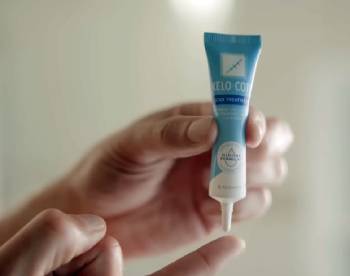
Detailed Pros of Kelo-cote and Mederma
- Gold Standard Silicone Barrier Technology: It features medical-grade silicone that creates an “occlusive” environment, meaning it traps moisture perfectly against the scar: I found that this stops the body from overproducing collagen, which is what causes those thick, raised bumps: this results in a much flatter and softer scar over time: I noticed that the skin underneath felt incredibly hydrated even after a full day: I realized that this is as close to a professional clinical treatment as you can get at home.
- Invisible and Makeup-Friendly Finish: It utilizes a self-drying formula that disappears into a matte film that doesn’t reflect light: I found that I could wear this on my face without anyone noticing I was treating a scar: this provides a high level of confidence for social situations: I noticed that it doesn’t “pill” when sunscreen is applied over it: I realized that for facial scars, this is the most discrete option available.
- Effortless Once-Daily Application Schedule: It features a concentrated formula that only requires one thin layer every twenty-four hours: I found that this was the biggest win for my lifestyle because I never felt like I was “treating” a condition: this provides a high level of compliance, which is often the biggest hurdle in scar care: I noticed that the tube lasts a very long time because you need so little: I realized that if you are a busy person, Mederma is the easiest habit to keep.
- Targeted Redness and Discoloration Fading: It utilizes Cepalin (onion extract) which is a powerful anti-inflammatory and antioxidant: I found that it worked wonders on my purple acne scars, turning them a pale pink within weeks: this results in a more even skin tone that is much easier to cover with a tiny bit of concealer: I noticed that it didn’t just fade the color but also seemed to improve the overall glow of the area: I realized that for flat, discolored scars, this is the most analytical choice.
Detailed Cons: The Realistic Trade-offs
- Premium Pricing and Financial Investment: It features a cost that is significantly higher than most over-the-counter botanical gels: I found that for a large scar, you might go through several tubes that cost upwards of forty dollars each: this results in a product that feels like a luxury medical investment: I noticed that while the results are professional, the price tag reflects that status: you should realize that you are paying for the patented cross-linking technology: I realized that for those on a tight budget, this might be a difficult long-term commitment.
- Noticeable Film and Pilling Issues with Mederma: It features a formula that dries into a visible, plastic-like film on top of the skin: I found that if I tried to rub my skin an hour later, the product would flake off like a light sunburn: this results in a messy appearance if you aren’t careful with your movements: I noticed that applying makeup over it is almost impossible without the whole thing bunching up: you should realize that this product needs to sit undisturbed to work: I realized that nighttime application is almost mandatory for aesthetic reasons.
- Slow Progress on Older, Rigid Keloids: It utilizes non-invasive topicals that may take up to six months to show any change in a scar that is several years old: I found that my oldest marks required extreme patience and twice-daily application without fail: this results in some users giving up before the product has had a chance to work: I noticed that for very hard tissue, the gel works slower than silicone sheets: you should realize that there are no “overnight” miracles in scar management: I realized that discipline is the most important ingredient.
- Potential for Skin Irritation and Scent Sensitivity: It utilizes a botanical base that has a sharp, almost vinegary smell that lingers for several minutes: I found that when I applied it to a relatively fresh scar that hadn’t fully closed, it produced a sharp stinging sensation: this results in a product that you should only use on fully healed, closed skin: I noticed that the smell bothered me more in the morning than at night: you should realize that the onion extract is powerful but not always pleasant for sensitive noses: I realized that the “sting” is a sign to wait a few more days before starting treatment.
Kelo-cote Vs. Mederma: The Comparison
- Kelo-cote Vs. ScarAway
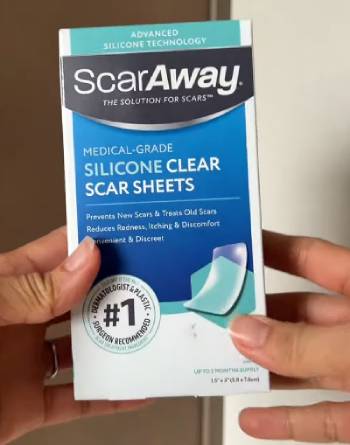
I found that Kelo-cote is a more refined gel that dries much faster and clearer than the ScarAway gel version.
You should realize that ScarAway is better known for its physical silicone sheets, which provide more compression than a gel can.
I noticed that Kelo-cote is often preferred for the face because it is virtually invisible, whereas sheets can be quite obvious.
I am a user who observed that Kelo-cote feels more like a “medical” product, while ScarAway feels like a consumer-friendly alternative.
I realized that for joints and moving parts, the Kelo-cote gel stays on better than a patch or sheet.
- Mederma Vs. Cicatricure
I found that Mederma has a much stronger focus on clinical evidence with its onion extract than Cicatricure does.
You should realize that Cicatricure requires four applications a day, which is much more demanding than the Mederma once-daily routine.
I noticed that Mederma is more effective at targeting the specific purple discoloration of a new scar.
I am someone who thinks Cicatricure is better for general skin smoothing, but Mederma is the specialist for actual injury marks.
I realized that for a busy person, the compliance rate with Mederma will always be higher.
- Kelo-cote Vs. Strataderm
I found that Strataderm is a direct professional rival to Kelo-cote, both being silicone-based and highly rated by doctors.
You should realize that Strataderm is often even more expensive and can be harder to find in a standard local pharmacy.
I noticed that Kelo-cote has been around longer and has a larger volume of published clinical studies backing its formula.
I am a user who found the “matte” finish of Kelo-cote to be slightly superior for wearing under makeup.
I realized that while both are top-tier, Kelo-cote is more accessible for the average person looking for professional results.
- Mederma Vs. Bio-Oil

I found that Bio-Oil is a fantastic hydration tool for widespread marks, but it lacks the active scar-fighting ingredients found in Mederma.
You should realize that Bio-Oil is a liquid that can be quite messy, whereas Mederma stays exactly where you put it.
I noticed that Mederma is much more effective at taking the red out of an angry scar in a short amount of time.
I am someone who thinks Bio-Oil is great for preventing marks during pregnancy, but Mederma is the choice for treating an existing scar.
I realized that for specific, isolated scars, the targeted gel of Mederma is superior to a general-purpose oil.
- Kelo-cote Vs. Dermatix
I found that Dermatix is a silicone gel that is highly regarded in Europe, much like Kelo-cote is globally.
You should realize that both products aim to do the same thing: create a moisture barrier to flatten and soften the skin.
I noticed that Kelo-cote’s cross-linking technology feels slightly more durable once it has dried down onto the skin.
I am a user who prefers the precision tip of the Kelo-cote tube for applying to small, surgical incisions.
I realized that Kelo-cote is the more “tried and true” option for those who want the gold standard of silicone gels.
Frequently Asked Questions (FAQs)
I found that for raised and thick scars, 100% medical-grade silicone gels like Kelo-cote are the most effective due to their ability to hydrate and flatten the tissue through occlusion.
I realized that it is widely considered the best by plastic surgeons because of its patented technology and extensive clinical data proving its efficacy on hypertrophic scars.
I found that most plastic surgeons recommend silicone-based products like Kelo-cote or Strataderm because silicone is the only non-invasive ingredient with overwhelming clinical proof for scar reduction.
I noticed that you should never use Mederma on open wounds, unhealed skin, or near the eyes, and it should be avoided if you have a known sensitivity to onion or botanical extracts.
Final Thoughts
I have found that choosing between Kelo-cote and Mederma is a product you should buy if you are ready to take an active role in how your body heals and want to ensure your skin looks its absolute best after a trauma.
You should realize that the main intent of this comparison was to help you differentiate between the physical flattening power of silicone and the botanical fading power of onion extract.
I am a person who has seen how much confidence is restored when a scar finally begins to blend in, and I know that the right product makes all the difference.
I have realized that by investing in a high-quality treatment now, you are preventing years of self-consciousness in the future.