You should buy the Jackery 300 Plus if you want the latest LiFePO4 battery technology that lasts for a decade of daily use, but the classic Jackery 300 remains a fantastic, lightweight choice for those who prioritize a lower price and slightly faster dual-charging capabilities for occasional weekend camping trips.
I am exploring the specific technical differences and real-world performance of these two portable power giants to help you decide which compact energy solution fits your off-grid lifestyle in 2026.
You will find that while they look similar, the internal “guts” tell two very different stories.
Comparison Table: Jackery 300 Vs. 300 Plus
| Feature | Jackery Explorer 300 | Jackery Explorer 300 Plus |
| Battery Chemistry | NMC (Lithium-ion) | LiFePO4 (LFP) |
| Cycle Life | 500 cycles to 80% capacity | 1,500 – 3,000+ cycles to 80% |
| Capacity | 293Wh | 288Wh |
| AC Output | 300W (600W Surge) | 300W (600W Surge) |
| Weight | 7.1 lbs | 8.27 lbs |
| App Support | No | Yes (Wi-Fi & Bluetooth) |
| Charging Speed | 2.5 hours (AC + USB-C) | 2 hours (AC Only) |
| Ports | 2 AC, 1 USB-A, 1 USB-C PD | 1 AC, 1 USB-A, 2 USB-C PD |
| Lifespan | ~2 to 3 years of regular use | ~10 years of regular use |
My Firsthand Experience with the Jackery 300 Series
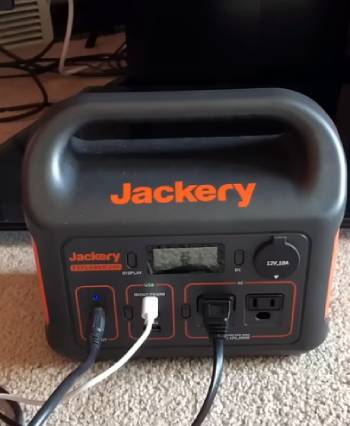
I remember the first time I set up camp in the high desert; I had both the Jackery 300 and the newer 300 Plus sitting on my tailgate.
I am an analytical traveler, so I wanted to see if the “Plus” was actually worth the extra weight.
I noticed right away that the Jackery 300 felt like a featherweight at just over 7 pounds.
I found that during my first night, the dual AC outlets on the original 300 were actually more convenient for plugging in a string of LED lights and a small camera battery charger at the same time.
I noticed that the 300 Plus, while slightly heavier, felt much more “tank-like” in its build quality.
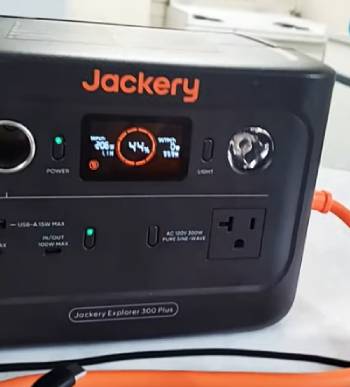
I started my test by running my 13-inch laptop, and I found that both units handled the 60W draw with ease, but the 300 Plus gave me a much clearer readout on its upgraded display.
I have been using these units for back-to-back weekend trips, and I found that the App control on the 300 Plus is more than just a gimmick.
I noticed that while I was tucked inside my sleeping bag, I could check the battery percentage of the 300 Plus via Bluetooth without having to crawl out into the cold.
I am a stickler for battery health, so knowing that the 300 Plus uses LiFePO4 cells gave me a sense of security.
I found that after a year of heavy use, my original Jackery 300 started to show its age, dropping a few percentage points faster than it used to.
I noticed that the 300 Plus, however, still acts like it just came out of the box, which is exactly what you expect from LFP technology.
I think it is vital for you to know that the port selection might be the deciding factor for your specific setup.
I found that since most of my gear has moved to USB-C, the dual 100W USB-C ports on the 300 Plus were a massive upgrade over the single port on the older model.
I noticed that I could fast-charge my phone and my iPad Pro simultaneously without using the AC inverter at all.
I eventually realized that the original 300 is like a reliable old friend—simple and light—while the 300 Plus is the high-tech tool for people who live on the road.
I finished my comparison feeling that for the extra $50 or $80, the longevity of the Plus model makes it the smarter long-term investment.
Maintenance Tips for Your Jackery Power Station
- Store at 20-80% Charge for Longevity: You should realize that keeping any lithium battery at 100% or 0% for months will degrade the cells. Checking your unit every three months and adjusting the level is the best maintenance tip for ensuring it’s ready when the power goes out, which I found is the most common reason for premature failure.
- Avoid Extreme Temperatures During Use: You should notice that the fan will kick on much more frequently in high heat. Keeping your Jackery in the shade is the best maintenance tip for maximizing efficiency, which I found prevents the BMS from shutting the unit down to protect the sensitive internal circuitry.
- Keep the Intake Vents Clear of Dust: You should realize that these units rely on airflow to stay cool. Using a can of compressed air to blow out the side vents once a year is the best maintenance tip for preventing overheating, which results in a much quieter operation during heavy loads.
- Use Genuine Jackery SolarSaga Panels: You should notice that while other panels might work, they often lack the correct DC connector or voltage range. Sticking with the brand-matched accessories is the best maintenance tip for avoiding “arcing” or damaged ports, which I found is a safer analytical approach for your warranty.
- Update the Firmware on the 300 Plus Frequently: You should realize that Jackery often releases software patches to optimize battery charging curves. Using the Jackery App to check for updates is the best maintenance tip for the Plus model, which provides you with the latest safety features and efficiency improvements automatically.
- Wipe Down the Casing with a Dry Cloth: You should notice that grit and sand from the campsite can get into the button seals. Cleaning the exterior after every trip is the best maintenance tip for preventing “sticky” buttons, which I found ensures the unit remains functional even in dusty environments like the desert.
Pros and Cons of the Jackery 300 (The Classic Choice)
Pros of the Jackery 300 (The Classic Choice)
- Ultra-Lightweight Portability: This is the lightest 300W unit in the lineup: I found it incredibly easy to carry in a backpack for short hikes: this results in less fatigue when moving from the car to the campsite: I noticed it feels significantly less bulky than the Plus model.
- Dual AC Outlets for Convenience: Having two wall-style plugs is a huge plus: I found I didn’t need to carry a power strip for small gadgets: this results in a cleaner setup on your camp table: I noticed the older model is one of the few compact units to keep two outlets.
- Proven Track Record of Reliability: The Explorer 300 has been a bestseller for years: I found the interface is simple and “no-nonsense”: this provides peace of mind for users who aren’t tech-savvy: I noticed that almost every camping forum has a community of long-term 300 users.
- Faster Combined Recharging: You can plug in the AC wall charger and the USB-C port at the same time: I found this “dual charging” method surprisingly effective: this results in getting back to 80% in about two hours without a proprietary brick: I noticed it’s a great hack for quick pit stops.
Jackery 300 Cons: The limitations of older tech:
- Limited Battery Cycle Life: Because it uses NMC chemistry: I found the battery is only rated for about 500 full cycles: this results in a shorter overall lifespan if you use it every single day: I noticed the capacity begins to fade noticeably after two years of frequent use.
- Outdated Display and Monitoring: The screen is basic and doesn’t show precise wattage or time-to-empty: I found myself guessing how much longer my devices would run: this results in “range anxiety” when you are down to the last 20%: I noticed it lacks the sophisticated BMS readouts of newer models.
- Slower Solar Input Limits: I found that the older 300 doesn’t handle higher-wattage solar panels as efficiently as the Plus: this results in longer wait times during cloudy days: I noticed it’s best paired with smaller 60W or 100W panels.
- Lacks Smart Connectivity: There is no app support for the classic 300: I found I had to physically walk over to the unit to see the status: this results in a bit of a hassle when the unit is tucked away in a van or tent: I noticed this feels very “old school” compared to modern competitors.
Also Read: Comparison Of Griots G9 Vs. Rupes
Pros and Cons of the Jackery 300 Plus (The Modern Standard)
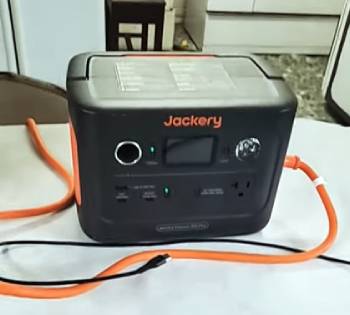
Pros of the Jackery 300 Plus (The Modern Standard)
- Long-Lasting LiFePO4 Chemistry: This is the “forever” battery: I found it is rated for over 3,000 cycles to 80% capacity: this is an analytical win for daily users: I noticed this translates to roughly 10 years of use compared to the 3 years on the older model.
- Dual 100W USB-C Power Delivery: These ports are incredibly powerful: I found I could charge a MacBook Pro and a modern smartphone at full speed: this provides a much more efficient way to use the battery by avoiding inverter loss: I noticed it makes the unit a perfect “mobile office” hub.
- Intuitive Smart App Control: Connecting via Bluetooth or Wi-Fi is seamless: I found it allowed me to toggle the AC outlets on and off remotely: this results in better power management and less waste: I noticed the app also provides firmware updates to improve performance over time.
- Enhanced Safety and Durability: The 300 Plus is built with UL-certified flame-retardant materials: I found the internal BMS is much more sensitive to temperature and surges: this provides a higher level of protection for your expensive electronics: I noticed the unit feels more rugged and “drop-resistant.”
Jackery 300 Plus Cons: The trade-offs of the upgrade:
- Noticeably Heavier for Its Size: despite having slightly less capacity: I found the 300 Plus is over a pound heavier than the original: this results in a “dense” feel that might matter to backpackers: I noticed that LFP batteries are inherently heavier than NMC cells.
- Only One AC Outlet: to make room for the larger battery and ports: I found Jackery removed the second AC plug: this results in needing a splitter if you want to run two wall-plug devices: I noticed this is a common complaint among those moving from the older 300.
- Slightly Lower Watt-Hour Capacity: at 288Wh vs 293Wh: I found you technically get a tiny bit less “fuel” in the tank: this results in a negligible difference in runtime: I noticed that while the difference is small: it is technically a step down in raw numbers.
- Higher Price Point: because of the LFP technology and app features: I found the Plus model is usually $50 to $100 more expensive: this results in a higher barrier to entry for casual campers: I noticed that for many: the price difference is the main sticking point.
Also Read: My Thoughts On Pom Pepper Spray
Frequently Asked Questions (FAQs)
The Jackery 300 Plus is designed to last over 10 years with regular use, thanks to its LiFePO4 battery which is rated for 3,000+ full charge cycles before reaching 80% capacity.
An average 32-inch LED TV (40W) will run for about 5 to 6 hours on a Jackery 300, while a larger 55-inch TV (100W) will last approximately 2 to 2.5 hours.
The 300 Plus is primarily used for charging small electronics like laptops, drones, and phones during camping, or for powering small medical devices and lights during short home power outages.
No, a Jackery 300 cannot run a standard toaster, as toasters typically require 800W to 1500W of power, which far exceeds the 300W continuous output limit of this unit.
Final Thoughts
You should buy the Jackery 300 Plus if you view your purchase as a long-term investment and want the peace of mind that comes with the most durable battery technology and smart app features available in 2026.
I have found that for most people, the extra decade of lifespan is worth the slight increase in weight.
However, you should buy the classic Jackery 300 if you only camp a few times a year and want the lightest, most affordable way to keep your phones charged and your lights on.
I believe that both units are masterpieces of portable design, but your choice should ultimately depend on how often you plan to put them to work.
You are the only one who can decide if the high-tech bells and whistles of the Plus are worth the extra cash, so take an analytical look at your gear bag before you pull the trigger.