When you are struggling with stubborn dark spots, a dull complexion, or uneven texture, you should buy Innisfree Vitamin C Serum because it offers a unique dual-action formula that brightens and exfoliates without irritating sensitive skin.
I have spent considerable time analyzing the ingredient synergy in this Korean beauty staple to help you understand why it stands out in a crowded market.
My intent is to provide an analytical review of the Innisfree Vitamin C Green Tea Enzyme Brightening Serum so you can decide if its gentle approach fits your routine.
You should choose this serum if you want visible glow and refined skin in as little as seven days.
My personal experience with Innisfree Vitamin C Serum
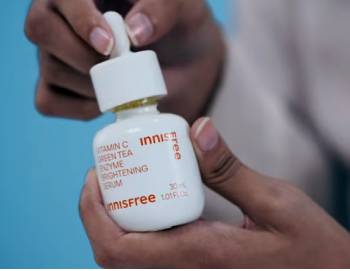
I remember the first morning I incorporated this serum into my routine; I was actually quite nervous because my skin has a history of reacting poorly to high-strength ascorbic acid.
I am someone who deals with post-breakout marks that linger for months, and I had nearly given up on finding a brightening product that didn’t leave my face red and stinging.
I started using the Innisfree Vitamin C Green Tea Enzyme Brightening Serum after hearing that it was formulated specifically with sensitive folk in mind, and the texture was the first thing that caught me off guard.
It has a beautiful, watery consistency that feels more like a hydrating essence than a sticky, traditional oil-based serum.
However, the real magic happened during the application process over the first few weeks. I found that it absorbed almost instantly, allowing me to layer my moisturizer and sunscreen without any pilling or heavy residue.
I am an analytical observer of my own skin, and I noticed that while it took about three weeks to see a major shift in my darkest sun spots, the overall “glow” was apparent by day four.
I also noticed that my skin felt significantly more moisturized than it ever did with other Vitamin C products, likely due to the hyaluronic acid and tangerine peel extract working in tandem.
I think it is vital for you to know that there is no awkward, metallic scent here; it is clean and refreshing, making the AM and PM application a genuine pleasure.
You will likely find that the green tea-derived enzymes provide a very subtle exfoliation that keeps your pores clear without the “peeling” effect of harsh acids.
I found that my makeup sat much smoother on my face because the micro-texture of my skin was being refined daily.
I began to feel much more confident skipping foundation because my skin tone looked more even and had a youthful, bouncy quality to it.
I also appreciated that it didn’t trigger any new acne; in fact, my breakouts seemed to diminish during the trial period.
By the end of my first bottle, I realized that this is a “slow and steady” winner that values skin barrier health over aggressive, immediate chemical changes.
Maintenance and tips for Innisfree Vitamin C Serum

- Apply Directly After Your Toner While Skin is Damp: You should never apply this serum to a completely bone-dry face. Utilizing the moisture from your toner allows the hyaluronic acid in the serum to pull that hydration deeper into the dermis, which is the most analytical way to maximize the “plumping” effect while ensuring the Vitamin C is evenly distributed across your complexion.
- Store the Bottle in a Skincare Fridge or Dark Drawer: You should keep this product away from the heat and humidity of your shower. Vitamin C and enzymes are sensitive to temperature fluctuations; maintaining a consistent, cool environment is the best maintenance tip for ensuring the serum doesn’t oxidize or lose its potency before you reach the bottom of the bottle.
- Always Layer with a Minimum of SPF 30 in the Morning: You should remember that Vitamin C makes your skin more efficient at fighting free radicals, but the exfoliating enzymes can also make you more sensitive to the sun. Using a high-quality sunscreen ensures that you aren’t undoing the brightening work of the serum by allowing new sun spots to form.
- Gently Pat the Serum into the Skin Instead of Rubbing: You should use a pressing motion with your palms to encourage absorption. Rubbing can sometimes cause irritation or micro-tears on sensitive skin, whereas patting helps the green tea enzymes settle into the pores more effectively, which is a smarter way to handle active ingredients.
- Use Consistently for at Least 28 Days: You should not give up after the first week if your spots haven’t vanished. Skin cell turnover typically takes about a month; being disciplined with your AM and PM application is the only way to see the full analytical results of the formula’s ability to fade deep-seated pigmentation.
- Avoid Mixing with High-Strength AHAs or BHAs in the Same Step: You should be careful not to overwhelm your skin barrier. While the enzymes in the Innisfree serum are gentle, combining them with a strong 10% glycolic acid peel in the same routine might cause unnecessary sensitivity; it is best to use this as your primary exfoliating step for a more balanced approach.
Pros and Cons of Innisfree Vitamin C Serum
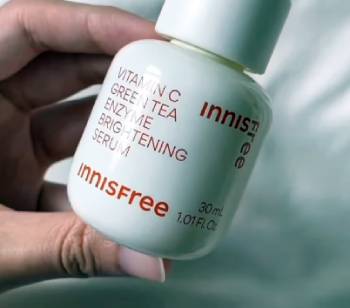
Pros of Innisfree Vitamin C Serum
- Gentle dual-action brightening and exfoliation: The serum uses a patented green tea-enzyme to slough off dead skin cells while Vitamin C targets melanin: this ensures that fresh skin is constantly being revealed: this is far more effective for long-term clarity than a serum that only focuses on one aspect of skin renewal.
- High compatibility with sensitive skin types: Unlike many high-percentage ascorbic acid serums that cause redness: this formula is clinically tested to be safe and non-irritating: this makes it an analytical choice for those who have previously failed to use Vitamin C.
- Fast-absorbing watery texture with no stickiness: You won’t have to wait ten minutes for your face to dry before moving to the next step: it sinks in deeply and leaves a soft, supple finish: this is a major benefit for busy morning routines where every second counts.
- Inclusion of Niacinamide and Hyaluronic Acid: It acts as a multi-tasking powerhouse by soothing inflammation and boosting hydration simultaneously: this prevents the dryness often associated with brightening actives: this results in a plump, dewy look rather than a tight or stripped feeling.
- Visible results on sun spots and post-acne marks: Clinical studies and real user feedback confirm a reduction in discoloration within 7 to 28 days: this provides a reliable timeline for those tracking their skincare progress: this builds trust in the product’s efficacy.
- Safe for both AM and PM usage: Because the formula is stable and gentle: you can double down on your brightening efforts without overstressing the skin: this accelerates the fading of stubborn pigmentation.
- Fragrance-free and hypoallergenic formulation: There are no hidden perfumes or dyes that might trigger a reaction: it feels clean and professional: this makes it suitable for a wide variety of skin conditions and sensitivities.
Cons of Innisfree Vitamin C Serum: An analytical look at the downsides:
- Lower concentration of active Vitamin C compared to “medical-grade” serums: if you are used to a 20% L-ascorbic acid formula: you might find the results here too subtle or slow: this requires patience that some skincare enthusiasts might lack.
- The price point is relatively high for a 30ml bottle: when compared to budget drugstore brands: you are paying a premium for the patented technology and Korean manufacturing: this might make it a luxury investment rather than a budget staple for some.
- Glass packaging requires careful handling: if you drop this on a bathroom floor: it is likely to shatter: this makes it less travel-friendly than products in plastic or airless pump containers.
- May not show dramatic results on very deep, old scars: while it excels at sun spots and fresh marks: deep dermal pigmentation might require professional-grade treatments: this is a reality of over-the-counter skincare that is important to keep in mind.
- Requires consistent use to maintain the “glow”: if you stop using it for a week: you may notice your skin returning to its previous dullness: this is not a permanent fix but a maintenance tool.
- Potential for oxidation if stored in direct sunlight: despite the tinted bottle: Vitamin C is notoriously unstable: this means you must be diligent about keeping it in a cool, dark place to preserve the active enzymes.
- The oil-like slip may be too much for extremely oily skin in humid weather: although it absorbs well: those with very high sebum production might feel a slight residue during the peak of summer: this is a subjective experience based on climate and skin type.
Innisfree Vitamin C Serum Vs. Other Brands
- Innisfree Vitamin C Serum Vs. COSRX The Vitamin C 23 Serum
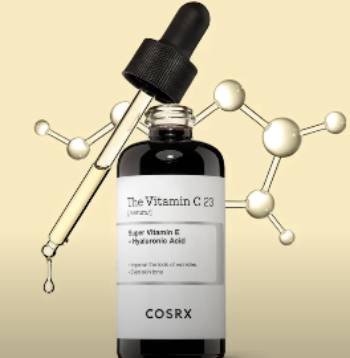
COSRX is another legendary Korean brand known for its high-potency “The Vitamin C 23” which contains a whopping 23% pure Vitamin C.
I have found that the COSRX version is much more aggressive and often comes with a stinging sensation and a slight “hot dog” smell that many users find off-putting.
Analytically, Innisfree is the much better choice for daily, long-term maintenance and sensitive skin, as it focuses on enzymes rather than pure acid strength. COSRX is for those who want a heavy-duty “shock” treatment for their skin, but it can be very unstable and oxidizes quickly.
You will find that Innisfree offers a much more pleasant, stable, and hydrating experience that integrates easily into a multi-step routine.
- Innisfree Vitamin C Serum Vs. Klairs Freshly Juiced Vitamin Drop
Klairs is often cited as the “beginner’s” Vitamin C because it only contains 5% L-ascorbic acid. I have noticed that the Klairs serum has a very distinct oily texture that can feel quite warm upon application, which some users find strange.
Analytically, the Innisfree Vitamin C serum is more advanced because it includes the green tea enzymes for exfoliation, which Klairs lacks. Innisfree also feels much “lighter” and more watery on the skin, making it superior for those who hate the feeling of oil on their face.
If you want the most basic entry-level product, Klairs is fine, but if you want refined texture and faster brightening, Innisfree is the analytical winner.
- Innisfree Vitamin C Serum Vs. Laneige Radian-C Cream
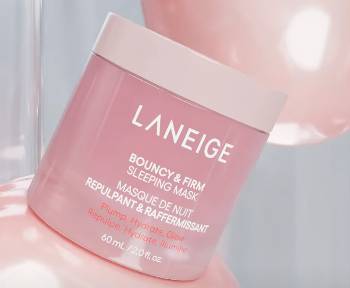
Laneige offers the Radian-C line which is famous for its cream-based delivery of Vitamin C derivatives. I find that the Laneige cream is excellent for those with very dry skin who want a 2-in-1 moisturizer and brightener.
Analytically, the Innisfree serum is a more potent treatment because serums are designed to penetrate deeper into the skin than thick creams.
The Innisfree serum also provides exfoliation, whereas the Laneige cream focuses more on hydration and surface-level glow.
Choose Laneige if you are lazy and want a single step, but choose Innisfree if you are serious about targeting specific dark spots and skin texture.
- Innisfree Vitamin C Serum Vs. Beauty of Joseon Light On Serum
Beauty of Joseon uses a Vitamin C derivative called 3-O-Ethyl Ascorbic Acid combined with Centella Asiatica. I have noticed that the Beauty of Joseon serum is incredibly soothing and great for calming redness while brightening.
Analytically, Innisfree has the edge when it comes to refining skin texture because of the patented green tea enzymes.
Beauty of Joseon is a fantastic “calming” serum, but Innisfree is a more comprehensive “resurfacing” serum. If you have active inflammation, go with Beauty of Joseon; if you have rough skin and dullness, go with Innisfree.
Frequently Asked Questions (FAQs)
Innisfree is widely considered the best for sensitive skin and texture refinement, while COSRX is often favored for high-potency, targeted brightening.
Yes, it is formulated to be gentle enough for daily use, and it is actually recommended to use it both morning and night for the fastest results on dark spots.
In the Korean beauty market, the Innisfree Vitamin C Green Tea Enzyme serum consistently ranks at the top for its non-irritating formula and ability to smooth skin.
You should use it twice daily, in your AM and PM routines, after cleansing and toning but before applying your heavier creams or sunscreen.
Final Thoughts
When you are ready to invest in a brighter, more refined version of yourself, you should buy Innisfree Vitamin C Serum as the cornerstone of your daily skincare ritual.
I have found that the intelligent blend of green tea enzymes and stable Vitamin C provides a level of clarity that most products simply cannot match without causing irritation.
You should choose this serum if you value a science-backed, gentle approach to fading hyperpigmentation and achieving that elusive “glass skin” glow.
I believe that skincare should be a comforting experience, and this serum delivers results without the sting or the sticky residue of its competitors.
You deserve to wake up to a complexion that looks youthful and revitalized, and this little bottle is the most analytical way to get there.