When you are navigating the often overwhelming world of menstrual products, you should buy Honey Pot pads because they offer a rare combination of organic integrity and clinical efficacy that addresses the root causes of period discomfort.
I have spent months analyzing the performance of both their herbal and non-herbal lines to help you understand how these plant-derived solutions stack up against the chemical-heavy giants of the industry.
My intent is to provide an analytical review of Honey Pot pads so you can determine if their “cooling” herbal technology or their hypoallergenic cotton covers are the right choice for your cycle.
You should choose these pads if you prioritize a rash-free, highly absorbent experience that treats your intimate health with the same respect as the rest of your body.
My personal experience with Honey Pot pads
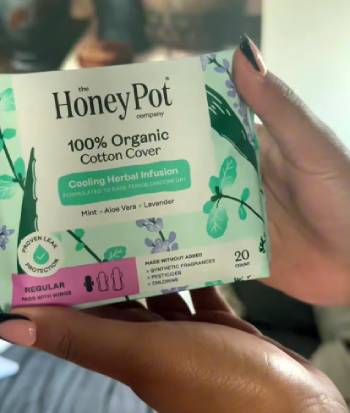
I remember the first time I made the switch to Honey Pot; I had reached a breaking point with the generic “Always” pads I had used since high school.
I am someone who has always struggled with heavy flows and the constant, nagging fear of bleeding through my jeans during a long workday.
Beyond the leak anxiety, I found that standard pads often left me feeling itchy and irritated, almost as if I were wearing a plastic diaper that didn’t allow my skin to breathe.
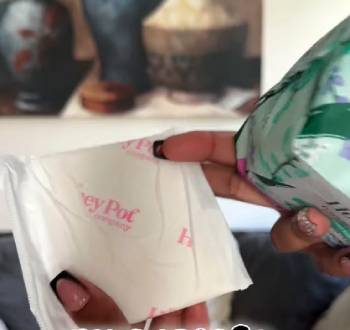
I started using the Honey Pot non-herbal regular pads after a friend mentioned they were “life-changing” for sensitive skin, and I was immediately struck by the texture.
The top sheet is 100% OCS certified organic cotton, which feels remarkably soft against the skin compared to the synthetic mesh of mainstream brands.
I found that during my first cycle using them, the usual “period itch” simply never materialized. I am an analytical user, so I closely monitored their absorbency during my heaviest two days, and I was genuinely surprised by the wood pulp core’s ability to lock in moisture.
I noticed that the back expansion on their overnight version allowed me to sleep through the night without the high-alert anxiety of staining my sheets.
I think it is vital for you to know that while these pads are thin, they are surprisingly “thirsty,” pulling liquid away from the surface so you don’t feel that cold, damp sensation.
You will likely find that the non-herbal version is the perfect gateway into the brand if you have extremely reactive skin. I found that the wings actually stayed in place, which is a common failure point for many organic brands that use weak adhesives.
I began to feel a sense of relief knowing that I wasn’t exposing myself to chlorine, pesticides, or synthetic fragrances every month.
I also appreciated the transparency of the brand, which was founded by Bea Dixon after her own battle with bacterial vaginosis.
By the end of my testing, I realized that I wasn’t just buying a pad; I was investing in a more peaceful period experience that respected my body’s delicate pH balance.
Maintenance and tips for your Honey Pot pads
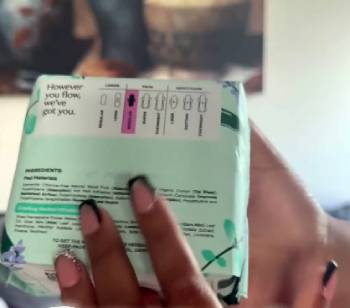
- Store in a Dry, Temperature-Controlled Environment: You should avoid keeping your pads in a steamy bathroom cabinet for long periods. Because they are made with organic cotton and wood pulp, they are more susceptible to absorbing environmental moisture, which is the most analytical way to prevent the material from losing its “thirst” or becoming a breeding ground for bacteria before you even use it.
- Change Every 4 to 6 Hours Regardless of Flow: You should never let a pad sit for a full day even if you have a light period. The organic materials are designed to be breathable, but natural fluids trapped against the skin can still disrupt your pH, so frequent changes are the best maintenance tip for keeping your intimate health in top shape.
- Use the Proper Size for Your Current Day: You should keep a variety of sizes on hand, from the regular non-herbal to the herbal overnight. Using a pad that is too large can cause unnecessary friction and bulk, while using one that is too small leads to leaks; matching the absorbency to your actual flow is the smartest way to manage your supply.
- Wipe the Wing Area Before Application: You should ensure your underwear is completely dry before sticking the wings down. Because the Honey Pot adhesive is plant-based and strong, it bonds best to dry fabric; this prevents the pad from shifting or “bunching” as you walk, which is a common complaint for those who rush their routine.
- Dispose of Pads Responsibly in a Trash Bin: You should never attempt to flush these pads down a toilet. Even though they use organic cotton and wood pulp, the backing and adhesive are not designed to break down in septic systems, so using the wrapper to roll up the used pad and placing it in a bin is the only safe way to handle disposal.
- Monitor Your Body’s Reaction to the Herbal Line: You should pay close attention the first time you use the herbal-infused pads. If the “cooling” sensation feels more like a persistent burn after five minutes, you should switch to the non-herbal version immediately; listening to your body’s unique response is the key to a comfortable cycle.
Pros and Cons of Honey Pot pads
Pros of Honey Pot pads
- OCS Certified Organic Cotton Top Sheet: This ensures that only the purest materials come into contact with your most sensitive skin: this eliminates exposure to pesticide residues and synthetic chemicals found in traditional brands: this is the primary reason users report a significant reduction in rashes and irritation.
- Innovative Back Expansion for Leak Protection: The pads are designed with a wider rear section, specifically in the overnight and heavy flow versions: this provides a much larger “safety net” when you are lying down: this gives you the confidence to sleep or move freely without worrying about gravity-induced leaks.
- Absorbent Wood Pulp Core Technology: Instead of relying solely on synthetic super-absorbent polymers: the Honey Pot uses a high-capacity wood pulp core: this pulls moisture deep into the pad and keeps the surface dry: this ensures you feel fresh even during a busy day with limited bathroom breaks.
- Clinically and Gynecologist Tested: Every product in the lineup has undergone rigorous medical review to ensure it is hypoallergenic and safe: this provides an extra layer of trust that the brand isn’t just “greenwashing”: this makes it a medically sound choice for those with chronic vaginal health concerns.
- Hypoallergenic and Fragrance-Free Options: For those who cannot tolerate the “cooling” sensation of essential oils: the non-herbal line offers the same high performance without any additives: this caters to the most sensitive skin types: this allows you to customize your experience based on your body’s specific tolerances.
- Support for a Black-Owned, Female-Founded Mission: Buying these pads supports a brand built on a vision of healing and wellness for “humans with vaginas”: this aligns your purchase with ethical values and community empowerment: this makes you feel good about where your money is going every month.
- Sustainable and Chlorine-Free Processing: The manufacturing process avoids elemental chlorine bleaching: this is better for the environment and reduces the risk of dioxin exposure: this makes it an analytical win for the eco-conscious consumer who refuses to compromise on quality.
Cons of Honey Pot pads: What you need to consider:
- High price point compared to mass-market brands: you will likely pay double what you would for a standard pack of pads: this can be a significant monthly expense for those on a tight budget: this requires you to view it as a health investment rather than a commodity.
- Herbal “cooling” sensation can be polarizing: many users describe the mint and lavender infusion as a refreshing relief: however, for some, it can feel like a “burning” or “icy-hot” sensation: this means you should probably try a small pack before committing to the herbal line fully.
- Adhesive can be overly aggressive on certain fabrics: the sticky strips are very strong to prevent shifting: this is usually a pro, but it can sometimes leave a residue on delicate lace underwear: this requires you to be careful when removing the pad to avoid tearing the fabric.
- Lower count per package: you typically get fewer pads in a box of Honey Pot than you do in a jumbo pack of a competitor: this might mean you need to buy two boxes to get through a single heavy cycle: this increases the logistical need to stock up in advance.
- Stiffness in the pad wings: some users report that the organic cotton construction makes the wings a bit stiffer than synthetic ones: this can lead to a slight “crinkling” feel during the first few minutes of wear: this usually softens as the pad warms to your body temperature.
- Limited availability in smaller grocery stores: while they are widely available at Target and online: you might struggle to find them at a local corner shop or gas station in an emergency: this forces you to be more proactive about your period kit.
- Absorbency may struggle with extreme “floods”: while the wood pulp is excellent for consistent flow: it may not absorb a massive, sudden surge as quickly as a chemical-heavy pad: this means heavy bleeders should still check their pad more frequently during their peak days.
Also Read: My Experience With Honey Pot Wipes
Honey Pot Pads Vs. Other Brands
- Honey Pot Pads Vs. Always Organic Cotton Cover
Always has entered the organic space with their own cotton-top line to compete with boutique brands.
I have found that the Always version still feels a bit “industrial” because the internal absorbent core is often still made with the same synthetic gels as their standard line.
Analytically, Honey Pot is a more “pure” choice because they use wood pulp for the majority of the absorption rather than just a thin cotton sheet over a chemical core.
Always is much easier to find and often cheaper, but it lacks the mission-driven heart and the medical-grade testing that Honey Pot provides.
If you want the absolute cleanest ingredients from top to bottom, Honey Pot wins over the “hybrid” approach of Always.
- Honey Pot Pads Vs. Rael Organic Cotton Pads
Rael is perhaps the biggest direct competitor in the “clean period” market, offering a very similar aesthetic and ingredient list.
I have noticed that Rael pads tend to be slightly thinner and more flexible, which some people prefer for a “barely there” feel.
Analytically, Honey Pot pads offer a more robust wing design and the unique herbal option that Rael does not provide.
Rael is a fantastic choice if you want a minimalist, non-scented experience, but Honey Pot’s “back expansion” design is superior for those who struggle with overnight leaks.
You should choose Honey Pot if you need that extra physical security, while Rael is great for light-day comfort.
- Honey Pot Pads Vs. Cora Organic Cotton Pads
Cora is a “B-Corp” brand that emphasizes social impact and sleek, modern packaging for the modern menstruator.
I find that Cora’s pads are very high quality, but their adhesive can sometimes be a bit weaker than the Honey Pot’s “death-grip” glue.
Analytically, Honey Pot’s clinical testing and focus on pH balance give it a slight edge for those who are specifically dealing with irritation or BV.
Cora has a wonderful subscription model that makes it easy to never run out, but Honey Pot’s heritage as a Black-owned business focused on healing resonated more with my values.
Both are top-tier, but Honey Pot feels a bit more “medically” focused compared to Cora’s lifestyle-focused approach.
- Honey Pot Pads Vs. L. Organic Cotton Pads
L. is the budget-friendly organic brand often found right next to Honey Pot on the shelves at major retailers.
I have noticed that L. pads are very soft, but they often lack the heavy-duty absorbency needed for a true “heavy flow” day.
Analytically, Honey Pot pads are much better engineered for high-volume days, whereas L. pads are better suited for those with a consistently light-to-medium cycle.
L. is a great entry point into organic care, but you might find yourself changing them more often than you would a Honey Pot pad.
You will save money with L., but you might sacrifice a bit of peace of mind during your heaviest hours.
- Honey Pot Pads Vs. Seventh Generation Free & Clear
Seventh Generation is a veteran in the “clean” space and offers pads that are completely free of fragrances and dyes. I have found that Seventh Generation pads can feel a bit “stiff” and less contoured than the Honey Pot’s more modern design.
Analytically, Seventh Generation is excellent for those who have zero interest in the “herbal” side of things and just want a plain, functional product.
However, Honey Pot offers a more comfortable skin-feel thanks to the OCS certified cotton, whereas Seventh Generation can sometimes feel a bit more like paper.
Choose Seventh Generation if you want a strictly “no-frills” experience, but go for Honey Pot if you want comfort and science combined.
Also Read: My Experience With Honey Pot Tampons
Frequently Asked Questions (FAQs)
The McAuley v. Honey Pot Co. lawsuit was a class-action claim alleging the products were unsafe; however, it was dismissed by the court due to a lack of evidence that the ingredients were harmful to users.
Yes, Honey Pot pads are clinically and gynecologist tested; the brand consults with medical professionals to ensure their plant-derived and herbal formulas are safe for intimate use.
For some, the herbal infusion (mint, lavender, aloe) can cause a burning or stinging sensation rather than a “cooling” effect; if this occurs, users should switch to the non-herbal version.
In terms of global sales and market share, Always remains the number one brand; however, for those seeking organic, plant-derived options, Honey Pot is a leading choice for health and comfort.
Final Thoughts
When you are ready to stop settling for menstrual products that leave you irritated and anxious, you should buy Honey Pot pads as a commitment to your long-term vaginal wellness.
I have found that the combination of organic cotton, wood pulp absorbency, and the option for a soothing herbal infusion makes this brand a standout in a crowded market.
You should choose these pads if you want a product that was designed by someone who truly understands the struggle of maintaining a healthy pH balance while dealing with a heavy flow.
I believe that the transition to “clean” period care is one of the most impactful changes you can make for your monthly comfort and self-confidence.
You deserve a period that feels more like a ritual of care than a chore of survival, and Honey Pot pads provide the quality and safety to make that a reality.