You should buy this hip hook alternative if you are tired of living with nagging lower back pain, tight hip flexors, or that stubborn “pinch” in your pelvis that stretching alone never seems to fix.
I have discovered that most people spend hundreds on physical therapy when the real issue is a hidden muscle called the iliacus that needs direct pressure.
You should realize that this adjustable release tool provides the same professional-grade relief as expensive brand-name versions but with more customization for your specific body type.
I am confident that adding this to your recovery routine will finally unlock your mobility.
My Personal Experience Using This Hip Hook Alternative
I remember the first time I tried to release my psoas using a lacrosse ball; it was frustrating because the ball kept sliding away, and I could never quite hit the right angle.
I am a person who sits at a desk for eight hours a day, so my hips always feel like they are made of concrete by five o’clock.
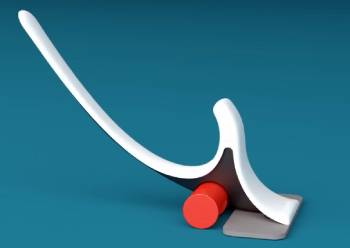
I noticed immediately that the weight and build quality of this hip hook alternative felt incredibly durable and stable on my hardwood floor.
When I first laid down on it, I was worried about the intensity, but I found that having the option to swap between the hard and soft massage heads was a complete game changer for my comfort levels.
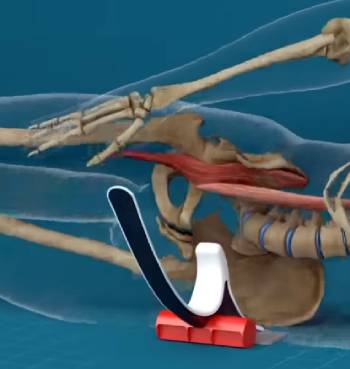
I started by using the soft heads to warm up my pelvic area, and I noticed that the adjustable width allowed me to find the exact inner edge of my hip bone where the iliacus hides.
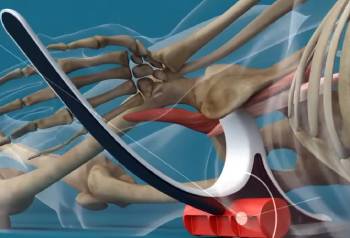
I realized that for the first time, I wasn’t just pressing on my stomach; I was actually getting behind the bone to where the tension lives.
I found that by slowly shifting my body weight onto the single peak, I could feel a “melting” sensation that I had never achieved with standard stretching.
I am someone who usually struggles with a “clicky” hip when I walk, and I noticed that after just ten minutes of focused work with this tool, that clicking sound disappeared for the rest of the afternoon.
I eventually switched to the hard heads to target my glutes and piriformis, and I was impressed by how the tool didn’t budge or slip even under my full weight.
I realized that the versatility of this device makes it so much more than just a hip tool; it actually works wonders on my calves and even my chest muscles after a gym session.
I found that the relief wasn’t just physical; there is a weird emotional release that happens when those deep pelvic muscles finally let go. I am consistently impressed by how easy it is to use once you find your “sweet spot.”
I eventually made this a part of my nightly routine before bed, and I noticed that my lower back felt significantly less “compressed” when I woke up the next morning.
I found that I no longer had to rely on expensive massage appointments to feel like a functioning human being again.
Maintenance Tips for Your Hip Release Tool
You should realize that keeping your tool clean and well-maintained is essential for long-term hygienic use.
Wiping down the massage heads after every session with a simple damp cloth is a vital maintenance tip for removing sweat and skin oils: I found that this prevents the soft heads from becoming slippery or developing an odor.
Checking the locking screws on the base once a month is a key maintenance tip to ensure the adjustable width stays secure: you should notice that the vibrations of use can sometimes slightly loosen the fittings.
Storing the device in its original box or a dedicated gym bag is an essential maintenance tip for protecting the massage heads from dust: I found that the “grippy” texture of the heads tends to attract pet hair if left out on the floor.
Keeping the tool away from direct sunlight or extreme heat is a mandatory maintenance tip: you should realize that high temperatures can degrade the material of the soft massage heads over time.
Using a mild soap and water solution for a deep clean every few weeks is a smart maintenance tip: I noticed that this keeps the colors looking vibrant and the material feeling fresh against my skin.
Ensuring the base is free of any debris or grit before placing it on your floor is a crucial maintenance tip: I found that a small pebble under the base can scratch your hardwood or cause the tool to wobble.
Inspecting the massage peaks for any signs of wear or cracking is a fundamental maintenance tip for your safety: you should realize that a damaged head could provide uneven pressure and cause discomfort.
Lubricating the sliding tracks with a tiny drop of silicone spray if they become stiff is a helpful maintenance tip: I noticed that this makes adjusting the width much smoother and easier to manage.
Drying the heads completely after cleaning before you re-attach them to the base is a necessary maintenance tip: I found that trapped moisture can lead to unwanted mildew inside the attachments.
Avoiding the use of harsh chemical cleaners or bleach is a final maintenance tip: you should realize that these can break down the integrity of the plastic and rubber components.
Pros and Cons of This Hip Hook Alternative
Pros of This Hip Hook Alternative: Customizable Recovery
- Fully Adjustable Width for Precision: It features a sliding mechanism that allows you to change the distance between the massage peaks: I found that this is essential because everyone’s pelvic structure is a different width: this results in a tool that actually fits your body instead of forcing you to fit the tool: I noticed I could target my QL and my iliacus with the same device just by shifting the heads.
- Dual Head System for Progressive Intensity: It utilizes both firm and cushioned massage attachments to suit your current pain tolerance: I found that starting with the soft heads prevented me from tensing up against the pressure: this provides a much more effective myofascial release because your brain allows the muscle to relax: I realized that the hard heads are perfect for breaking up deep scar tissue in the glutes.
- Single Peak Targeting for Deep Release: It features a design that focuses all your body weight onto one specific trigger point at a time: I found that this mimics the thumb of a deep-tissue massage therapist perfectly: this results in the ability to reach the psoas and iliacus muscles which are buried deep behind other tissues: I noticed that general rollers simply cannot reach these specific areas.
- Exceptional Durability and Build: It utilizes high-quality, heavy-duty materials that feel like they will last a lifetime: I found that the base stays perfectly flat on the ground without wobbling or tipping: this provides a safe and secure platform for you to relax your full weight onto: I realized that the “locked-in” assembly makes it feel very professional and sturdy.
- Full-Body Versatility Beyond the Hips: It features a design that works effectively on the hamstrings, calves, back, and even the arms: I found that I could use the base to release tension in my feet after a long day of standing: this results in an all-in-one recovery station that replaces multiple other foam rollers or balls: I noticed it is especially effective as a piriformis release tool for sciatic relief.
The Realistic Downside: Cons of Using Deep Release Tools
- Initial Discomfort During the Release Process: It features a very direct application of pressure to muscles that are often chronically tight and sensitive: I found that the first few sessions can feel quite intense and almost painful: this results in a need for a very slow and patient approach to avoid bruising: I noticed that you really have to focus on deep breathing to get through the initial “bite” of the tool.
- Requirement for a Hard Flat Surface: It utilizes a base that must be placed on a firm floor like wood or tile to function correctly: I found that using it on a thick rug or a soft bed made the heads unstable and less effective: this provides a limitation for people who only have carpeted areas in their homes: I realized that the locking mechanism depends on that flat contact to stay secure.
- Physical Effort Required to Position Body: It features a manual design where you must use your own body weight and positioning to find the trigger points: I found that it can be a bit of a “workout” just to get situated correctly on the tool: this results in a bit of trial and error before you find the perfect angle for your iliacus: I noticed that people with very limited mobility might find the floor-based movements challenging.
- Not a Fast Fix for Chronic Issues: It utilizes a process of myofascial release that often requires weeks of consistent use to see permanent changes: I found that my hips would tighten back up if I skipped more than two days in a row: this provides a reminder that this is a maintenance tool rather than a one-time cure: I realized that the “magic” happens in the repetition, not just the first use.
- Potential for Overuse if Not Careful: It features such deep pressure that it is easy to overdo it and cause temporary soreness: I found that staying on a single spot for more than three minutes actually made me feel tighter the next day: this results in a necessity to follow the instructions and listen to your body’s signals: I noticed that “more pressure” is not always “more better” when it comes to nerve-heavy areas.
Also Read: My Thoughts On Mad Hippie Eye Cream
Hip Hook Alternative Vs. Other Brands
- Hip Hook Alternative Vs. The Original Markakis Hip Hook
I found that the primary difference between this alternative and the original tool is the adjustability of the width.
You should realize that the original tool has a fixed position, which might not align perfectly with your specific pelvic bones.
I noticed that this alternative allows me to widen the peaks, making it much more comfortable for someone with wider hips like myself.
I believe that the addition of the soft massage heads in this version gives it a significant advantage for beginners who find the original “hook” too aggressive.
I noticed that the price of this alternative is usually much more reasonable, allowing you to get the same medical-grade relief for a fraction of the cost.
I realized that while the original brand started the trend, the alternative has refined the design to be more user-friendly for different body types.
- Hip Hook Alternative Vs. The Pso-Rite
I found that the Pso-Rite is a very popular tool that looks like a plastic mountain range. You should realize that the Pso-Rite is great for general psoas work, but it lacks the “hook” angle needed to get underneath the hip bone for the iliacus.
I noticed that when I use this hip hook alternative, I can actually feel the muscle being pulled away from the bone, whereas the Pso-Rite just presses straight down.
I believe that for people with deep-seated hip “pinching,” the Pso-Rite simply doesn’t get deep enough to solve the root issue.
I noticed that the adjustable width of this tool makes it far superior to the fixed peaks of the Pso-Rite.
I realized that if you only want to work on your psoas, the Pso-Rite is fine, but for true hip mobility, you need the “hook” style.
- Hip Hook Alternative Vs. A Lacrosse Ball
I found that a lacrosse ball is the cheapest option, but it is also the most difficult to control. You should realize that a ball will always roll toward the path of least resistance, which is usually away from your tightest muscles.
I noticed that this hip hook alternative stays exactly where you put it, allowing you to relax your nervous system and sink into the pressure.
I believe that trying to balance on a ball actually causes your muscles to “guard” and tense up, which defeats the purpose of the release.
I noticed that the ball cannot get into the “L-shape” of the pelvic bowl to reach the iliacus effectively.
I realized that while a ball is better than nothing, it is a very primitive tool compared to the precision of this adjustable device.
Also Read: My Thoughts On Aletha Hip Hook
Frequently Asked Questions (FAQs)
Yes, if you suffer from chronic lower back pain or hip tightness that hasn’t responded to stretching, the ability to release the iliacus muscle directly is often the “missing link” in recovery.
You can attempt to use your own thumbs to press into the inside of your hip bone while lying down, but it is physically exhausting to maintain the necessary pressure for a full release.
While many prefer the Pso-Rite for the psoas, a hip hook style tool is technically superior because it can address both the psoas and the iliacus simultaneously for a complete release.
The hip hook specifically targets the iliacus and the psoas (collectively known as the iliopsoas), as well as the piriformis and other deep rotators depending on your positioning.
Final Thoughts
You should buy this hip hook alternative if you are ready to stop managing your hip pain and start actually fixing it from the inside out.
I have found that the ability to customize the width and intensity of the massage heads makes this the most versatile recovery tool in my gym bag.
I believe that once you experience that first “release” of the iliacus, you will understand why stretching alone was never enough to give you long-term relief.
I hope this guide helps you feel more confident in taking control of your mobility and living a more active, pain-free life.