Smoothing out forehead lines and those pesky 11s often feels like a choice between expensive needles or a drawer full of products that do nothing.
I have spent months testing Frownies and various silicone patches to see which one actually delivers a refreshed look by morning.
In this article, I will explain the mechanical differences, the comfort levels, and the long-term results of Frownies vs silicone patches to help you decide which tool fits your lifestyle.
Whether you want to hydrate or physically retrain your muscles, you deserve a solution that makes you feel confident in your own skin.
Frownies Vs. Silicone Patches Comparison Table
| Feature | Frownies Facial Patches | Silicone Wrinkle Patches |
| Material | Unbleached Kraft Paper | Medical-grade Silicone |
| Action | Muscle Splinting (Mechanical) | Deep Hydration (Occlusion) |
| Adhesive | Water-activated Vegetable Glue | Self-adhesive Silicone Surface |
| Best For | Deep Expression Lines / Muscle Training | Fine Lines / Dehydration / Texture |
| Reusability | Single-use only | Reusable (15-30 times) |
| Overnight Feel | Stiff, cast-like shield | Soft, flexible, and “rubbery” |
| Price Point | Low (High volume per box) | Mid-to-High (Per individual pad) |
Understanding the Battle for a Smoother Face
When you first look into non-invasive wrinkle treatments, you will likely run into these two titans.
I was initially confused because they both claim to do the same thing: make you look younger without the Botox.
However, after using both, I realized they are working on completely different principles of skin biology.
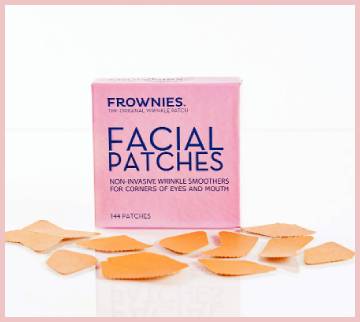
Frownies have been around since the late 1800s, which is wild when you think about how many beauty trends have come and gone since then.
They are essentially stiff pieces of paper that you wet and stick to your face.
The idea is to create a “splint” for your muscles so you cannot physically scowl or furrow your brow while you sleep.
Silicone patches are the modern contender, using a soft, jelly-like material that sticks to your skin without any extra water.
They don’t necessarily stop your muscles from moving as much as Frownies do, but they create a sealed environment.
This environment pulls moisture from the lower layers of your skin to the surface, plumping everything up.
I found that choosing between them depends entirely on whether your wrinkles are caused by strong facial expressions or simple dehydration.
Frownies: The Old-School Muscle Trainer
I have a very expressive face, which means my “angry lines” between my eyebrows are quite prominent even when I am perfectly happy.
Frownies were the first thing I tried because I liked the idea of a physical barrier.
Applying them is a bit of a ritual; you have to tear the perforated triangles and mist them with water or rosewater.
Once they dry, they become hard, almost like a tiny cast on your forehead.
I found this incredibly effective for preventing “sleep scowling,” which is something I didn’t even realize I was doing until I started wearing these.
If you try to frown while wearing them, the paper pulls and reminds you to relax.
Over time, this actually retrains the muscle memory so you don’t furrow your brow as deeply during the day.
The main drawback for me was the learning curve of getting the right amount of moisture on the glue.
If it is too wet, it slides; if it is too dry, it won’t stick at all.
Also, they are not particularly glamorous to look at, as you end up with brown paper patches all over your face.
Maintenance Tips for Longevity and Success
Regardless of which patch you choose, how you care for your skin and the product determines the results.
For Frownies, maintenance is all about your skin prep.
You must avoid using any heavy oils or nighttime balms on the areas where the patches will go.
If your skin is too slick, the vegetable glue simply won’t bond.
I suggest washing your face and waiting at least fifteen minutes for your natural moisture levels to stabilize before applying.
For the patches themselves, keep the box in a dry area.
If you leave them in a humid bathroom, the patches might start sticking to each other inside the box.
When it comes to silicone patches, maintenance is a bit more involved because they are reusable.
You need to wash them after every few uses with a mild, oil-free cleanser to remove skin cells and sweat.
Let them air dry with the sticky side up, and never pat them dry with a towel, as lint will ruin the adhesive.
Once they are dry, place them back on their original plastic storage sheet immediately.
I have found that if I am diligent about cleaning them, a single forehead silicone patch can easily last me a full month.
If you notice the edges starting to lift, it is usually a sign that there is oil buildup on the patch or your skin.
Pros and Cons of Frownies
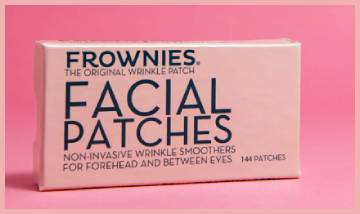
Pros
- Physically prevents muscle movement, which addresses the root cause of expression lines.
- Very affordable with over 140 patches in a single box.
- Made from natural, unbleached paper and vegetable adhesive.
- Excellent for deep, set-in static lines on the forehead.
- Does not contain any active chemicals that might irritate very sensitive skin.
Cons
- The adhesive has a distinct, earthy smell that some find unpleasant.
- Can be difficult to remove if you don’t soak them properly with water first.
- Requires a perfectly clean, oil-free face to stick effectively.
- Not reusable, so you generate more paper waste over time.
Silicone Patches: The Hydration Powerhouse
If you have ever woken up with “pillow creases” on your chest or fine lines around your eyes, silicone patches are a dream.
I love how they feel on the skin—cool, soft, and flexible.
Unlike Frownies, which feel like a helmet, silicone patches move with you.
The science here is all about occlusion.
By covering the skin with medical-grade silicone, you are preventing moisture from evaporating.
I noticed that when I peeled these off in the morning, my skin looked incredibly “bouncy” and hydrated.
They are particularly good for the delicate skin under the eyes or the neck, where Frownies might be too stiff and uncomfortable.
The best part is the convenience; you just peel them off the plastic backing and press them on.
No water, no waiting for glue to get tacky, and no earthy smell.
However, I did find that they didn’t quite have the “grip” needed to stop my deep 11 lines from moving.
My muscles were still able to contract under the silicone, which meant the lines weren’t being “trained” as effectively as they were with the paper patches.
Also Read: My Thoughts On Dime Blue Facial Oil
Pros and Cons of Silicone Patches
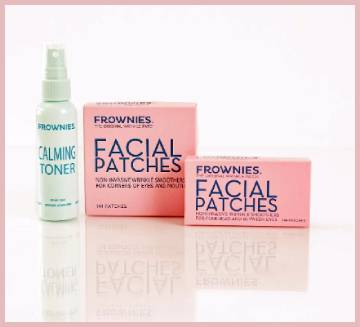
Silicone patches represent a modern, high-tech approach to skincare that relies on the science of occlusion rather than mechanical resistance.
I have found that these are particularly appealing for anyone who wants a more comfortable, flexible experience that doesn’t feel like wearing a hard shell on their face.
They work by creating a protective seal over the skin, which stops transepidermal water loss and forces moisture from the deeper dermis up into the top layers.
This results in a temporary “plumping” effect that can make fine lines and sleep creases vanish almost instantly after you remove the patch in the morning.
If you are someone who suffers from “crinkly” skin or dehydration lines rather than deep muscular furrows, these might be your best bet.
However, they do come with a specific set of requirements and limitations that you should consider before investing.
Pros
- Medical-grade silicone creates a healing environment that draws natural moisture to the surface of your skin for immediate plumping.
- The material is incredibly soft and flexible, allowing it to move with your facial expressions and sleep positions without digging in.
- These patches are reusable, often lasting between fifteen and thirty uses if you are diligent about washing them with oil-free soap.
- They are almost entirely clear and discreet, making them much less noticeable than brown paper patches if you have company.
- Effective for treating large, delicate areas where paper would be too stiff, such as the décolletage, neck, and under-eye area.
- Does not require any extra water or messy adhesives for application since the silicone itself has a naturally tacky surface.
- Helps to soften the appearance of newer scars by keeping the tissue hydrated and protected from external irritants.
Cons
- Higher initial cost per patch can be a barrier for some, especially since you have to replace them once the adhesive wears out.
- Lacks the structural rigidity necessary to physically stop strong forehead or “11 line” muscles from contracting during the night.
- Can trap sweat and bacteria against the skin, which might lead to breakouts or heat rashes for those with oily or acne-prone complexions.
- The adhesive strength diminishes quickly if you apply even a tiny amount of moisturizer or serum to the skin beforehand.
- In humid or hot climates, the patches can feel “sweaty” or uncomfortable, occasionally sliding off the face during the night.
- Requires a specific cleaning routine after every use to maintain the stickiness, which can feel like an extra chore in the morning.
How to Maximize the Life of Your Silicone Patches
Maintaining these patches is the only way to ensure you get your money’s worth, as the adhesive is very sensitive to environmental factors.
I have learned the hard way that a single stray hair or a bit of lint can ruin the seal entirely.
Always wash the patch with a clear, fragrance-free, and oil-free liquid soap to remove the dead skin cells that naturally accumulate on the sticky side.
Rinse it thoroughly with lukewarm water and let it air dry in a dust-free environment with the adhesive side facing upward.
Never use a towel or a paper product to dry the patch, as the fibers will stick to the silicone and make it unusable.
Once it is bone dry, place it back onto the protective storage shield that came in the original packaging to keep it pristine until your next use.
Also Read: My Thoughts On Frownies Facial Patches
Frequently Asked Questions (FAQs)
No, because they require different skin conditions. Frownies need bone-dry skin to stick, while silicone patches work by trapping moisture, and they would physically overlap and interfere with each other.
Frownies are generally better for deep lines because they provide the mechanical strength to keep the muscle flat, whereas silicone is better for surface texture and fine lines.
Both products offer immediate temporary results after one night, but for long-lasting changes, you should expect to wear them consistently for at least 30 nights.
They can be risky because the occlusion traps sweat and bacteria. If you are prone to breakouts, Frownies are a safer bet as the paper is breathable and won’t clog pores.
Final Thoughts
Selecting between Frownies and silicone patches is about identifying your primary concern.
If you are a “face-talker” who scowls in your sleep and wants to physically stop those muscles from moving, I recommend going the Frownies route.
It is a discipline-based approach that yields impressive, long-term structural results.
On the other hand, if your skin feels thin and looks crinkly due to dryness or age, silicone patches will give you that juicy, hydrated glow you are looking for.
I personally use a mix of both, focusing Frownies on my forehead and silicone on my neck and chest.
Whichever you choose, remember that consistency is your best friend in the world of non-invasive beauty.