Choosing between the two most famous hair tools in the world feels like a high-stakes decision when you consider the price tag.
I have spent years experimenting with high-end beauty tech to provide an analytical Dyson Supersonic vs. Airwrap review that clarifies which device truly fits your lifestyle.
My intent is to show you the fundamental differences in airflow, heat application, and styling results to prevent an expensive mistake.
You should buy the Dyson Supersonic if you prioritize lightning-fast drying, while the Airwrap is for those who want a versatile styler that replaces multiple tools.
Comparison Table: Dyson Supersonic Vs. Airwrap
| Feature | Dyson Supersonic | Dyson Airwrap |
| Primary Function | High-speed hair dryer | Multi-styler and curler |
| Main Technology | Air Multiplier (High pressure) | Coanda Effect (Air wrapping) |
| Wattage | 1,600 Watts | 1,200 Watts |
| Heat Settings | 4 (including cold shot) | 3 (including cold shot) |
| Speed Settings | 3 | 3 |
| Best For | Thick hair, fast drying, sleekness | Fine/Medium hair, curls, volume |
| Wet-to-Dry | Yes (From soaking wet) | Partially (Best on damp hair) |
| Typical Price | ~$429 | ~$599 |
My user experience with the Supersonic and the Airwrap
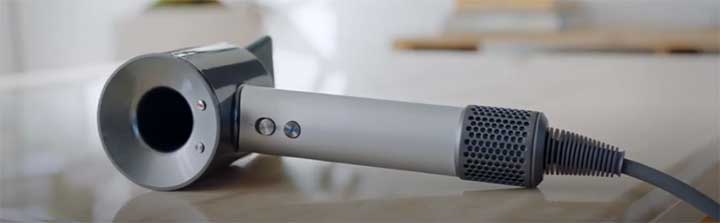
I remember the morning I decided to test both of these tools side-by-side on my medium-thick, wavy hair.
I started with the Dyson Supersonic on the right side of my head while my hair was still dripping wet from the shower.
The sheer power of the V9 motor is something you have to feel to understand; it doesn’t just “blow” air, it feels like a focused jet that pushes water off the hair strands instantly.
I was able to get my roots bone-dry and the lengths smooth in about six minutes using the styling concentrator and a round brush.
The left side of my head was a completely different story with the Dyson Airwrap.
I quickly realized that I couldn’t start with the Airwrap while my hair was soaking wet, or I would be standing there for twenty minutes.
I had to use the “pre-styling dryer” attachment first to get my hair to about 80 percent dry.
Once I reached that damp stage, the magic of the Coanda effect took over.
Holding the barrel near a section of hair and watching it literally jump onto the tool and wrap itself around is a thrill that never really gets old.
The result on the Supersonic side was a very sleek, professional-looking blowout that felt incredibly soft.
The Airwrap side, however, looked like I had spent an hour in a salon chair getting a bouncy, voluminous “supermodel” look.
What I noticed over the next few days was that the Supersonic side stayed straight and frizz-free longer, while the Airwrap curls began to drop into soft waves by day two.
The Airwrap felt much lighter in my hand during the styling process, but the Supersonic gave me a sense of efficiency that is hard to beat when I am running late for work.
I am someone who values sleep, so the speed of the Supersonic often wins on weekdays, but the “wow factor” of the Airwrap makes it my go-to for any weekend event or special occasion.
Maintenance and tips for your Dyson tools
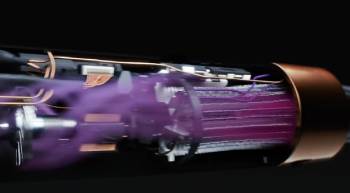
To ensure your $500+ investment lasts for a decade, you have to be disciplined about maintenance.
- Clean the filter once a week: Both tools have a mesh filter that can quickly become clogged with dust and hairspray particles. For the Supersonic, the filter is at the bottom of the handle; for the Airwrap, it’s also at the base. Use the small brush provided in the box to clear the mesh. If the lights on your device start flashing red, it’s almost always a sign that the filter is dirty and the motor is suffocating.
- Check the Airwrap barrels for residue: Over time, the heat and hair products can leave a sticky film on the curling barrels. This interferes with the Coanda effect, preventing the air from flowing smoothly along the surface. I use a slightly damp microfiber cloth to wipe the attachments down after every few uses.
- Don’t pull on the cord: The junction where the cord meets the handle is a common failure point for all high-end electronics. When you are done styling, avoid wrapping the cord tightly around the tool. Instead, loop it loosely.
- Use the right moisture level for the Airwrap: This is more of a performance tip than maintenance. If your hair is too wet, the Airwrap can’t create enough tension. If it’s too dry, the hydrogen bonds won’t “reset” into the new shape. The “sweet spot” is about 80% dry—where it feels cool to the touch but doesn’t leave water on your hands.
- Store in a dust-free environment: If you don’t have the presentation case, try to keep your tools in a drawer rather than out on the counter. Bathroom humidity and dust can settle inside the motor housing over time, which can lead to a decrease in airflow efficiency.
- Let the attachments cool before swapping: While Dyson uses “cool touch” tips, the internal magnets and the base of the attachments get very hot. Constantly yanking on hot attachments can wear down the locking mechanism. Use the release switch and wait a few seconds before pulling them off.
Pros and Cons of the Dyson Supersonic
Pros of the Dyson Supersonic
- Unmatched Drying Speed: The 1,600-watt motor and Air Multiplier technology create a high-velocity jet that dries thick hair twice as fast as most traditional dryers.
- Ergonomic Weight Distribution: Because the motor is in the handle rather than the head, the tool feels balanced and doesn’t cause the typical shoulder ache associated with long drying sessions.
- Precision Styling Attachments: The magnetic attachments, like the Flyaway tool and the Styling Concentrator, allow you to smooth out specific sections with surgical precision.
- Intelligent Heat Control: It measures the air temperature 40 times per second, ensuring your hair is never exposed to extreme heat that could cause permanent damage to the protein structure.
- Quiet Professionalism: While it isn’t silent, the acoustic tuning makes it much quieter than standard dryers, allowing you to actually hold a conversation while using it.
Cons of the Dyson Supersonic
- Limited Curvature Capability: The Supersonic is designed to dry and smooth: you cannot create curls or waves with this tool alone unless you are already highly skilled with a round brush and manual tension.
- High Entry Cost for a Single Function: While it is the best hair dryer on the market, it is still “just” a hair dryer: paying over $400 for a tool that doesn’t curl can be a hard pill to swallow for some shoppers.
- Lack of Storage Case with Base Model: Unlike the Airwrap, the standard Supersonic often doesn’t come with a high-quality presentation case: you usually have to buy a stand or a bag separately to keep the attachments organized.
- Potential for Over-Drying: Because the airflow is so powerful, it is easy to accidentally blow your hair into a tangled mess if you don’t use the attachments correctly: you must keep the nozzle pointed down the hair shaft at all times.
- Heavy Power Brick on the Cord: The cord features a large, heavy rectangular box that can get caught on the edge of your vanity or feel cumbersome when you are trying to move around a large bathroom.
- Not Ideal for “Refreshing” Dry Hair: The Supersonic is at its best when starting from wet: if you try to use it to fix a two-day-old style, you might find it just adds frizz rather than reshaping the hair without adding water.
Pros and Cons of the Dyson Airwrap
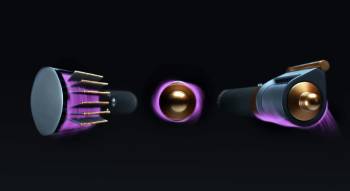
Pros of the Dyson Airwrap
- Heat-Free Curling Sensation: By using air to wrap the hair around the barrel, the Airwrap creates curls at much lower temperatures than a traditional curling iron, drastically reducing split ends.
- True Multi-Functionality: One base unit replaces your hair dryer, your round brush, your flat iron, and your curling wand, which declutters your bathroom vanity significantly.
- The Coanda Effect for Smoothness: The re-engineered smoothing brushes use the same aerodynamic phenomenon to attract hair to the surface of the brush, mimicking a professional stylist’s tension.
- Volume at the Roots: The round volumizing brush is specifically designed to direct air into the roots, giving flat or fine hair a lift that usually requires a lot of backcombing or product.
- Easy Directional Switching: The newer barrels allow you to change the direction of the curl with a simple twist of the cool tip, so you don’t have to swap out attachments halfway through your head.
Cons of the Dyson Airwrap
- Significant Learning Curve for Beginners: The Airwrap is not a “plug and play” device: you have to learn the right moisture levels, section sizes, and “cool shot” timing to ensure your curls don’t fall out within an hour.
- Underwhelming Drying Power for Thick Hair: If you have very dense or long hair, the pre-styling dryer attachment will feel slow: it lacks the raw “oomph” of the Supersonic, which can make the initial drying phase feel tedious.
- Style Longevity Issues on Fine Hair: Without the right prep products, the soft “air-set” curls can vanish quickly: unlike a 400-degree curling iron that “bakes” the style in, the Airwrap requires a more methodical approach to make the look last all day.
- Bulkier for Travel: Even though it replaces multiple tools, the long wand and the array of attachments take up a lot of space in a suitcase: the presentation case is beautiful but definitely not travel-friendly for carry-on only flyers.
- High Price Point Premium: The Airwrap is one of the most expensive consumer beauty products in existence: you are paying a massive premium for the research and development of the Coanda technology which may feel excessive.
- Requirement for Damp Hair: You cannot use the curling barrels on bone-dry hair: if you wake up and want to add a quick curl to dry hair, you have to mist it with water first, which adds an extra step to your morning routine.
Also Read: Comparison Of Dyson Supersonic Vs. Nural
Dyson Airwrap Vs. Other Brands
- Dyson Supersonic Vs. Shark HyperAIR
Shark has become the primary “Dyson disruptor” in recent years.
In the comparison of Dyson Supersonic vs. Shark HyperAIR, the focus is on value.
The Shark uses a very similar high-velocity airflow and even has an “IQ” system that recognizes attachments.
However, I find that the Dyson Supersonic still has the edge in terms of weight and noise quality.
The Shark feels a bit more “plasticky” and the motor has a higher-pitched whine that can be grating.
If you want the Dyson experience for half the price, the Shark is the analytical winner, but for pure luxury and balance, the Supersonic remains the king.
- Dyson Airwrap Vs. Shark FlexStyle
This is the most frequent comparison I hear.
Looking at Dyson Airwrap vs. Shark FlexStyle, the Shark’s biggest advantage is that the wand “bends” into a hair dryer shape.
This makes the Shark a better actual hair dryer than the Airwrap.
However, the Dyson’s Coanda effect is noticeably stronger and more refined.
I find that the Airwrap barrels “catch” the hair more reliably than the Shark’s version.
The Shark is a fantastic tool for those who can’t justify $600, but the Dyson still offers a more “seamless” styling experience with less manual effort.
- Dyson Supersonic Vs. GHD Helios
GHD is the choice for many professional stylists who want a traditional “gun-shaped” dryer.
In the debate of Dyson Supersonic vs. GHD Helios, the GHD offers a more familiar feel for those who have spent years using salon tools.
The Helios is incredibly fast and has a very concentrated nozzle that is perfect for “poker-straight” hair.
But the Dyson is much lighter and easier to use on your own head.
If you are a professional drying other people’s hair all day, you might prefer the GHD’s power, but for a home user, the Supersonic’s ergonomics are far superior.
- Dyson Airwrap Vs. T3 Aire360
T3 is known for its sleek white-and-gold aesthetic and high-performance ceramic tech.
In the matchup of Dyson Airwrap vs. T3 Aire360, the T3 uses a similar air-curling technology.
The T3 tends to run a bit hotter than the Airwrap, which some users find helps the curls stay in longer.
However, the Dyson Airwrap’s intelligent heat control is more advanced, making it the safer choice for those with heavily bleached or damaged hair.
The Airwrap also has a much wider variety of brush attachments, whereas the T3 is more focused on the curling barrels.
- Dyson Supersonic Vs. BaBylissPRO Nano Titanium
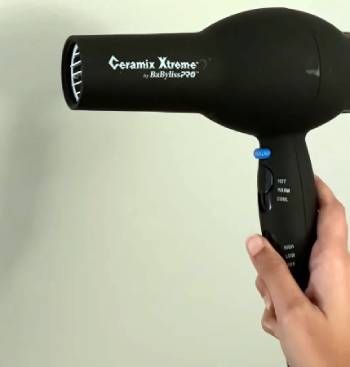
The BaByliss is the classic “old school” powerhouse found in every hair salon.
Comparing Dyson Supersonic vs. BaBylissPRO Nano Titanium highlights how far technology has come.
The BaByliss is loud, heavy, and gets incredibly hot—which can be great for thick hair but terrible for long-term health.
The Dyson dries just as fast but with much less heat and a fraction of the noise.
While the BaByliss is a quarter of the price, the “health cost” to your hair over several years makes the Supersonic a better analytical investment for your beauty future.
Frequently Asked Questions (FAQs)
It depends on your goal; the Supersonic is better for fast, efficient drying and smoothing, while the Airwrap is better for styling, curling, and adding volume.7
Most people do not need both, as the Airwrap has a drying attachment; however, those with very thick hair may prefer the Supersonic for daily drying and the Airwrap for special styling.8
Not on its own; you would need to use a round brush and a “twist and pull” technique with the concentrator nozzle to create waves, which takes significant practice.
People are obsessed because it uses the Coanda effect to style hair with air rather than extreme heat, protecting hair health while providing a salon-quality blowout at home.9
Final Thoughts
Choosing between the Dyson Supersonic vs. Airwrap is ultimately a choice between speed and versatility.
I have found that the Supersonic is the perfect companion for a busy professional who wants to look polished in minutes without damaging their hair.
However, you should buy the Airwrap if you love the look of a fresh blowout and want a single tool that can handle everything from sleek straightness to bouncy curls.
You should assess your hair’s thickness and your own patience for learning new techniques before you tap that “buy” button.
Whatever you choose, the shift toward lower heat and higher airflow will be the best gift you ever give your hair’s long-term health.