I have found that comparing Cicatricure vs Mederma is a mechanical necessity for anyone looking to reclaim their skin’s texture after surgery, acne, or unexpected injuries.
The main intent of this article is to provide you with a transparent, analytical breakdown of how these two heavyweights stack up in terms of active ingredients, speed of results, and overall skin compatibility.
I eventually realized that choosing between them depends entirely on whether you prioritize the botanical blend of Cicatricure or the onion-extract science of Mederma.
You should read this review to discover which formula aligns with your specific scar type and lifestyle habits.
At a Glance: Cicatricure Vs. Mederma Comparison
| Feature | Cicatricure Scar Gel | Mederma Advanced Scar Gel |
| Primary Active | Allantoin, Chamomile, Aloe Vera | Allantoin, Cepalin (Onion Extract) |
| Application Frequency | 4 times daily | Once daily |
| Best For | Face & Body, Stretch Marks | Surgery, Burns, Acne Scars |
| Texture | Lightweight, non-greasy gel | Thick, stay-put gel |
| Visibility of Results | As little as 2 weeks | 8 to 12 weeks |
| Vegan Friendly | Often contains animal-derived ingredients | Most formulas are vegan |
| Sun Protection | Typically requires separate SPF | Some variants include SPF 30 |
My Skin Recovery Journey: A Real User Perspective
I remember the day I decided to stop hiding my surgical scar and actually do something about it.
I am someone who has always been a bit clumsy, leading to a collection of “adventure marks” on my knees and elbows, but a recent procedure left a raised, purple line that made me feel incredibly self-conscious.
I eventually decided to start with Mederma Advanced because the “once-a-day” promise fit my chaotic schedule perfectly.
I found that the Mederma gel has a distinct, slightly medicinal scent—likely from the onion extract—but it dries down into a thin film that feels like a protective seal over the skin.
I noticed during the first month that the redness started to fade, but the texture was still quite firm and raised.
I am a user who values variety, so after finishing my first tube of Mederma, I switched to Cicatricure to see if its botanical approach would soften the texture more effectively.
I noticed right away that Cicatricure feels much more like a traditional skincare product; it smells like chamomile and has a cooling effect that I found very soothing after a long day.
I found that the requirement to apply it four times a day was a bit of a commitment, but I turned it into a mindful habit during my work breaks.
I eventually observed that the combination of both products over six months led to a scar that is now almost flush with my skin and significantly lighter in color.
I realized that while Mederma was the “heavy hitter” for initial redness, Cicatricure was the “gentle refiner” that really improved the softness and elasticity of the area.
I am now at the point where I don’t feel the need to cover up with heavy concealer, and I attribute that to the consistent, rotating use of these two distinct formulas.
The Power of Cicatricure: Key Features and Benefits
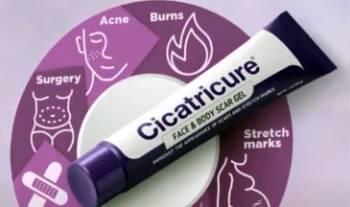
I found that Cicatricure is a product you should buy if you have sensitive skin or are dealing with a mix of scars and stretch marks.
It features a unique combination of natural extracts like chamomile, onion bulb, and aloe vera that work synergistically to hydrate and soothe the dermis.
I noticed that the gel is exceptionally lightweight, which makes it an excellent choice for facial application where you might want to layer makeup on top.
One of the standout benefits I found is its versatility; it is marketed for both the face and body, making it a “one-bottle-does-it-all” solution for various imperfections.
I realized that the cooling sensation it provides is not just for comfort; it actively helps reduce the itching and tension often associated with healing tissue.
The Science of Mederma: Why It Remains a Clinical Leader
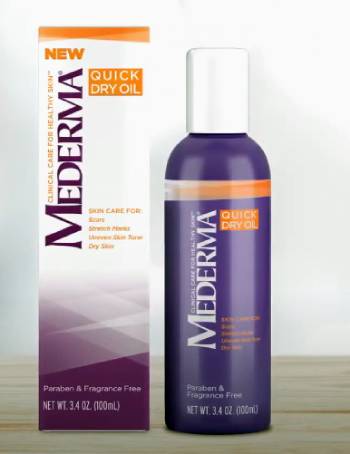
I have found that Mederma is the logical choice for the busy professional who wants a “set it and forget it” scar treatment.
It utilizes Cepalin, a proprietary botanical extract derived from onions, which has been clinically shown to inhibit the overproduction of collagen that leads to raised scars.
I noticed that the “Advanced” formula is specifically designed to work with just one application, which is a massive advantage over competitors that require multiple reapplications.
I realized that the presence of Allantoin in the mix serves as a powerful skin protectant that helps lock in moisture while the active ingredients do the heavy lifting.
I found that for older scars that have already turned white or silver, Mederma’s ability to soften the hard tissue is significantly more pronounced than many other over-the-counter options.
Detailed Pros and Cons of Cicatricure and Mederma
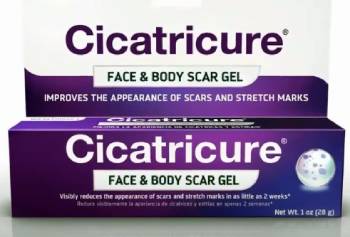
Detailed Pros of Cicatricure and Mederma
- Soothing Botanical Infusion for Sensitive Areas: It features chamomile and aloe vera which act as natural anti-inflammatories: I found that this significantly reduced the “tight” feeling of my skin after a long day in the sun: this results in a comfortable wearing experience that doesn’t cause secondary irritation: I noticed that it didn’t sting even when applied near sensitive areas of the face: I realized that it acts as much like a skin-repair serum as a scar treatment.
- Rapid Texture Refinement on New Scars: It utilizes a blend that encourages skin cell turnover and collagen elasticity: I found that the surface of my scar felt smoother to the touch within just 14 days: this provides a psychological boost because you can actually feel the progress: I noticed that it works particularly well on the “bumpy” edges of acne scars: I realized that for texture issues, this formula is exceptionally efficient.
- Exceptional Convenience with Once-Daily Dosing: It features a concentrated formula that only requires a single thin layer every 24 hours: I found that this made it impossible to “fail” the treatment even on my busiest workdays: this results in better long-term compliance and, ultimately, better results: I noticed that I didn’t have to carry a tube with me throughout the day: I realized that time-saving is a major factor in skin recovery success.
- Proven Clinical Track Record for Redness Reduction: It utilizes onion bulb extract (Cepalin) which is a gold standard in non-prescription scar management: I found that the purple and red hues of my surgical mark faded much faster than expected: this provides a more uniform skin tone that blends naturally with the surrounding area: I noticed that the “angry” look of the scar subsided within the first six weeks: I realized that for color correction, this is the superior tool.
Detailed Cons: The Realistic Trade-offs
- High Maintenance Application Schedule for Cicatricure: It features a requirement to apply the gel four times daily for optimal results: I found that if you are a person with a busy office job or someone who travels frequently, missing doses is incredibly easy: this results in a slower healing process if you aren’t strictly disciplined: I noticed that the tube empties much faster than expected because of the high frequency: you should realize that you are trading convenience for a botanical approach: I realized that for some, this might feel like a chore rather than a routine.
- Noticeable Scent and Film Layer in Mederma: It utilizes a potent onion extract that carries a distinct, sharp aroma that some users find off-putting: I found that the gel dries into a slightly shiny film that can peel if you rub it: this results in a “flaky” appearance if you try to apply makeup directly over it without waiting: I noticed that the film can sometimes catch on the edges of tight clothing: you should realize that this is a functional treatment, not a luxury beauty cream: I realized that applying it at night is often the best strategy.
- Potential for Skin Irritation with High Biotin and Allantoin: It features active ingredients that, while effective, can cause itching or mild redness in the first week of use: I found that I had to perform a patch test on my inner arm to ensure I didn’t have a reaction: this results in a need for a “ramp-up” period where you use the product sparingly: I noticed a slight tingling sensation upon application: you should realize that your skin might need time to adjust to the concentrated botanical extracts: I realized that sensitivity is a highly individual factor.
- Variable Results on Very Old or Keloid Scars: It utilizes non-invasive topicals that may not be strong enough for thick, decades-old keloids: I found that while it softened the area, it did not completely “erase” the scar: this results in a need for realistic expectations regarding “miracle” cures: I noticed that older scars require much more patience, often upwards of six months: you should realize that OTC gels have limits that only a dermatologist or laser treatment can bypass: I realized that these are best used as part of an early intervention strategy.
Comparing Others in the Scar Treatment Market
- Cicatricure Vs. Bio-Oil

I found that Bio-Oil is an oil-based treatment that is phenomenal for widespread stretch marks and overall skin hydration.
You should realize that while Bio-Oil is great for preventing marks, Cicatricure is much better at treating the actual texture of a raised scar.
I noticed that Bio-Oil can be quite greasy and takes longer to absorb, making it less ideal for use under clothing compared to the Cicatricure gel.
I am a user who prefers the “active” feel of the gel when dealing with a specific surgical site rather than a general oil.
I realized that for deep hydration, Bio-Oil wins, but for scar-specific repair, Cicatricure has the edge.
- Mederma Vs. ScarAway Silicone Sheets
I found that ScarAway uses medical-grade silicone to provide a physical barrier and constant pressure on the scar.
You should realize that silicone sheets are often considered the “gold standard” by surgeons, but they are very visible and can be uncomfortable to wear in public.
I noticed that Mederma is much more discrete, as it is a clear gel that you can apply and forget about for the rest of the day.
I am someone who found that silicone sheets are better for large, flat areas like the stomach, while Mederma is perfect for the face or joints where sheets might fall off.
I realized that the choice comes down to visibility versus the theoretical superiority of silicone.
- Cicatricure Vs. Strataderm
I found that Strataderm is a professional-grade silicone gel that dries into a very durable, water-resistant film.
You should realize that Strataderm is usually much more expensive and harder to find in a typical pharmacy compared to the accessible Cicatricure.
I noticed that Cicatricure focuses more on botanical healing and skin soothing, whereas Strataderm is purely about creating a silicone environment.
I am a user who appreciates the “natural” side of Cicatricure, but I acknowledge that Strataderm is often preferred for high-risk surgical scars.
I realized that Cicatricure is the best “everyday” option for minor injuries, while Strataderm is a specialized medical tool.
- Mederma Vs. Kelo-Cote
I found that Kelo-Cote is another silicone-based gel that is highly recommended for preventing hypertrophic scars after surgery.
You should realize that Mederma uses a botanical active (onion extract) which works differently than the physical barrier provided by Kelo-Cote.
I noticed that Kelo-Cote is self-drying and odorless, which solves the “scent” issue I sometimes found with Mederma.
I am someone who observed that Mederma is generally more affordable for the average consumer who has a small, non-surgical scar.
I realized that Kelo-Cote is a superior preventative, but Mederma is a fantastic reactive treatment for existing marks.
Also Read: My Experience With Bio-Oil for Stretch Marks
Frequently Asked Questions (FAQs)
I found that silicone-based gels like ScarAway or Kelo-Cote are technically the most effective for preventing raised scars, though Mederma is the leader for redness reduction.
I noticed that visible improvement in the texture and color of your scar can start in as little as two weeks, provided you follow the four-times-daily application rule.
I realized that it is widely considered the best over-the-counter treatment for the general consumer because of its clinically proven onion extract and ease of use.
I found that most plastic surgeons recommend 100% medical-grade silicone gels or sheets, such as Silagen or BioCorneum, especially for post-operative care.
Final Thoughts
I have found that comparing Cicatricure vs Mederma is a product you should buy if you want to take an active role in your skin’s healing process rather than just waiting for nature to take its course.
You should realize that the main intent of this article was to show that there is no “one size fits all” answer, but rather a choice between botanical soothing and clinical convenience.
I am a person who has used both and seen the benefits of the different active ingredients firsthand on my own scars.
I have realized that whether you choose the four-step ritual of Cicatricure or the one-step power of Mederma, consistency is the only variable that truly guarantees results.