
I have spent countless hours comparing the labels of ByHeart and Kendamil to find the absolute best for my baby, and I want to help you do the same.
The main intent of this article is to analyze whether ByHeart’s patented ingredient blend or Kendamil’s heritage-focused whole milk approach is the better choice for your family.
I have found that while both aim for the highest standards of infant nutrition, they offer very different experiences in terms of sourcing, digestion, and even mixing.
You should read this breakdown to see which of these premium formulas actually lives up to the hype and which one is the right fit for your little one’s tummy.
Comparison Overview: ByHeart Vs. Kendamil
| Feature | ByHeart Whole Nutrition | Kendamil Organic (Stage 1) |
| Milk Base | Organic Whole Milk | Organic Whole Milk |
| Whey:Casein Ratio | 80:20 (Colostrum-Like) | 60:40 (Mature Milk-Like) |
| Key Proteins | Alpha-lactalbumin & Lactoferrin | Natural Milk Fat Globule Membrane |
| DHA Source | Algal Oil (Hexane-Free) | Algal Oil (Plant-Based) |
| Palm Oil | None | None |
| Soy/Corn Syrup | None | None |
| Manufacturing | Owns the full supply chain | Family-owned in the UK |
My Real-World Experience: Switching Between Two Giants

I remember the first time I held a can of Kendamil; it felt like I was holding a piece of history because of their long-standing reputation in the UK.
I am a person who obsesses over the “no-no” list, so seeing a formula without palm oil or fish oil was a massive relief for me.
I noticed immediately that Kendamil has a very creamy, slightly sweet smell that reminds me of actual fresh milk.
I found that when I mixed it for the first time, it didn’t have that “soapy” foam that some other organic brands tend to produce.
I eventually decided to try ByHeart because I was fascinated by their clinical trial results and their focus on breast milk proteins.
I realized that ByHeart’s approach is much more about modern lab-backed innovation rather than just traditional farming.
I found that the 80:20 whey-to-casein ratio made a noticeable difference in how quickly my baby felt full and satisfied.
I am someone who values transparency, and I appreciated that ByHeart owns their entire production facility, which is rare in the US.
I noticed that after switching to ByHeart, my baby’s spit-up decreased significantly, which was a huge win for my laundry pile.
I found that the powder itself is incredibly fine, almost like powdered sugar, which makes it feel very high-end.
I realized that while Kendamil is the “traditionalist’s” dream, ByHeart is the “scientist’s” choice.
I am consistently impressed by how both brands have pushed the standard for what American parents should expect in a bottle.
Maintenance Tips for Your Feeding Routine
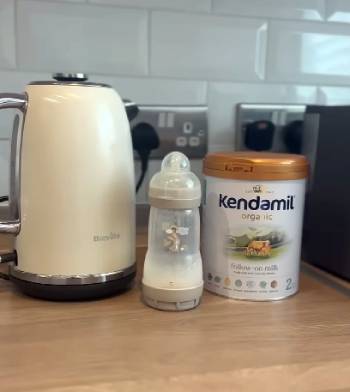
You should realize that how you prepare the formula is just as important as the brand you choose, so follow these maintenance tips.
Using water that is around 100°F (40°C) is a vital maintenance tip for helping ByHeart’s fine powder dissolve without clumping: I found that cold water is the number one cause of “clogged nipples” when using premium whole-milk brands.
Adding the water to the bottle before the powder is a key maintenance tip to ensure you are getting the correct volume: you should notice that adding powder first makes the formula too concentrated and can cause tummy aches.
Swirling the bottle in a circular motion rather than shaking it up and down is an essential maintenance tip to keep air bubbles out of the milk: I found this significantly reduced my baby’s gas after a full feed.
Cleaning your formula scoops and letting them air dry on a clean paper towel is a smart maintenance tip for preventing bacterial growth: you should realize that a damp scoop inside a dark can is an invitation for trouble.
Storing your opened cans in a cool, dry pantry rather than a cabinet above the stove is a mandatory maintenance tip to prevent heat from breaking down the vitamins: I noticed that the powder stays much fresher when it’s kept at a stable room temperature.
Discarding any prepared formula that has been sitting at room temperature for more than two hours is a helpful maintenance tip to avoid foodborne illness: I found it’s better to waste a few ounces than to risk a sick baby.
Checking the expiration date on the bottom of the can every time you open a new one is a crucial maintenance tip for safety: you should realize that even “new” shipments can sometimes have older stock mixed in.
Using a dedicated bottle sterilizer once a day is a fundamental maintenance tip for keeping your feeding gear hospital-clean: I noticed that just “hand washing” wasn’t enough to remove the oily film that whole milk formulas leave behind.
Feeding the baby in an upright position and keeping them elevated for 20 minutes after a feed is a necessary maintenance tip for reducing spit-up: I found that even the best formula needs a little help from gravity.
Wiping the rim of the can with a clean cloth before resealing it is a final maintenance tip to prevent powder from building up and preventing a tight seal: you should realize that an airtight can is the only way to keep the nutrients stable for the full 30 days.
Pros and Cons of ByHeart

Pros of ByHeart: The Innovation Leader
- Patented Protein Blend for Easy Digestion: It features a specific combination of alpha-lactalbumin and lactoferrin which are the most abundant proteins in breast milk: I found that this led to much softer stools for my baby: this results in a digestive experience that closely mimics nursing: I noticed that my little one didn’t have the typical “formula grunts” after a feed.
- Clinically Proven Benefits: It utilizes data from a large-scale clinical trial to prove that it reduces gas and fussiness compared to standard formulas: I found this gave me a lot of confidence when I was dealing with a colicky infant: this provides a level of scientific backing that most boutique brands simply don’t have: I realized that the “marketing” was actually backed by real results.
- Farm-to-Formula Supply Chain Control: It features a manufacturing process where the company owns the factory and sources their own ingredients directly: I found this refreshing because it minimizes the risk of third-party contamination: this results in a more transparent and accountable product: I noticed that they are very quick to communicate about their quality checks.
- High Whey-to-Casein Ratio: It utilizes an 80:20 ratio that is intended to mirror the protein composition of early breast milk or colostrum: I found that this was much gentler on my newborn’s stomach in those first few months: this provides a “light” feel that doesn’t sit heavily in the gut: I realized that this is why it’s so popular for babies with reflux.
Cons of ByHeart: The Hurdles I Noticed
- Mixing Difficulties and Clumping: It features a very fine powder that can sometimes clump if you don’t use warm enough water: I found that I had to shake the bottle quite aggressively to get a smooth consistency: this results in more air bubbles being introduced into the milk: I noticed that using a “whisk” or a bottle mixer was almost a necessity with this brand.
- Recent Safety and Recall History: It has been involved in a significant voluntary recall in late 2025 due to potential contamination concerns during an FDA investigation: I found that this made me pause and double-check my lot numbers every single time: this provides a layer of anxiety for parents who are already stressed about safety: I realized that even the most “controlled” facilities can have issues.
- Limited Retail Presence: It features a model that is heavily focused on their own subscription website rather than local grocery stores: I found that if my shipment was late, I couldn’t just run to the store to find it: this results in a high dependency on shipping logistics: I noticed that having a “backup can” is a mandatory requirement with ByHeart.
Also Read: Comparison Of Lansinoh Vs. Evenflo Bottles
Pros and Cons of Kendamil
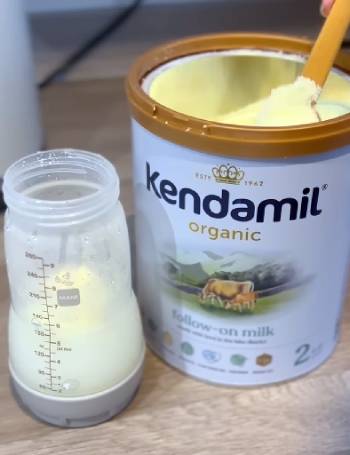
Pros of Kendamil: The Heritage Gold Standard
- Whole Milk Fat with No Skimming: It features a full-cream milk base that preserves the natural milk fat globule membrane (MFGM) for brain development: I found that the taste was the closest to breast milk of any formula I tried: this results in a calorie-dense feed that supports healthy weight gain: I noticed that my baby seemed much more satisfied and slept longer after a Kendamil bottle.
- Plant-Based DHA for a Better Taste: It utilizes marine algae instead of fish oil to meet the essential fatty acid requirements: I found that there was absolutely no “fishy” aftertaste or smell: this provides a more pleasant experience for both the baby and the parent: I realized that I didn’t have to worry about heavy metals often associated with low-grade fish oils.
- No Palm Oil for Better Absorption: It features a vegetable oil blend that excludes palm oil, which has been linked to lower calcium absorption and harder stools: I found that my baby’s diapers were much more manageable on Kendamil: this results in a healthier gut environment: I noticed that the “iron-rich” smell of some formulas was almost non-existent here.
- Decades of Trust and Expertise: It utilizes over 60 years of experience from a family-owned British company: I found that their “long game” approach to nutrition felt more stable than a new startup: this provides a sense of security for parents who are weary of “next-gen” marketing: I realized that Kendamil is a staple for a reason.
Cons of Kendamil: What to Watch For
- Potential for Supply Chain Delays: It features a high demand in the US market that can sometimes lead to “out of stock” signs at major retailers like Target: I found myself checking the app daily to see when more would arrive: this results in a bit of a “formula hunt” that can be exhausting for new parents: I noticed that the goat milk version is particularly hard to find.
- Heavier Casein Content in Stage 1: It utilizes a 60:40 whey-to-casein ratio which is more like “mature” breast milk rather than the colostrum-like 80:20 of ByHeart: I found that for some newborns, this can feel a bit “heavier” on the stomach: this provides a slightly higher chance of constipation if the baby isn’t well-hydrated: I realized that while it’s great for older infants, some newborns might need a slower transition.
- UK vs. US Labeling Confusion: It features different names and stages depending on whether you buy the British version or the US-regulated version: I found it confusing to keep track of which can was which: this results in a bit of a learning curve for parents who are new to European-style formulas: I noticed that the ingredients can vary slightly between the two markets.
Also Read: Comparison Of Bobbie Formula Vs. Byheart
Frequently Asked Questions (FAQs)
There is no single “healthiest” brand, but organic whole-milk formulas like Kendamil, Bobbie, and ByHeart are widely considered the gold standard in 2026 because they avoid palm oil, corn syrup, and soy.
Khloe Kardashian has publicly shared that she used Kendamil Goat milk for her son Tatum because it was easier on his digestion, while Kylie Jenner was known to use HiPP Organic from Europe for her daughter Stormi.
Yes, you can switch, but most pediatricians recommend a gradual transition over 5 to 7 days by mixing the two formulas together to allow your baby’s gut enzymes to adjust to the different protein ratios.
While many pediatricians still recommend major brands like Similac and Enfamil due to their long clinical history, there is a growing trend of recommending organic brands like Kendamil and Bobbie for parents seeking “clean label” ingredients.
Final Thoughts
I have found that the choice between ByHeart and Kendamil usually comes down to whether you value “high-tech innovation” or “traditional whole-milk heritage.”
You should buy ByHeart if your baby has a particularly sensitive stomach and you want the clinically-proven benefits of their colostrum-like protein ratio.
I am confident that if you are looking for a formula that is “closest to breast milk” in terms of modern science, ByHeart is an incredible option.
You should realize that Kendamil is the better choice if you want a reliable, family-owned brand with a creamy taste that has been trusted for generations.
I am hopeful that this comparison gives you the peace of mind to choose the bottle that makes your baby happy and healthy.