I have found that the Breo scalp massager is a product you should avoid if you are seeking a seamless, multi-functional hair growth tool that justifies its premium price tag.
The main intent of this article is to provide an analytical perspective on the Breo Scalp 3L series, highlighting why its technical limitations and inconsistent hardware performance might lead to significant user frustration.
I eventually realized that finding a device where the massage and laser functions actually operate simultaneously is a mechanical necessity for a truly efficient grooming routine.
You should buy a more reliable alternative if you want to ensure your investment leads to consistent hair stimulation rather than a customer service headache.
My Frustrating Journey: A Real User Experience with the Breo Scalp 3L
I remember the day I decided to upgrade my hair care routine with what I thought was the ultimate high-tech solution for thinning hair.
I am someone who values efficiency, so when I saw a device promising both medical-grade 650nm infrared technology and a 360-degree scalp massage, I was ready to commit to the premium price.
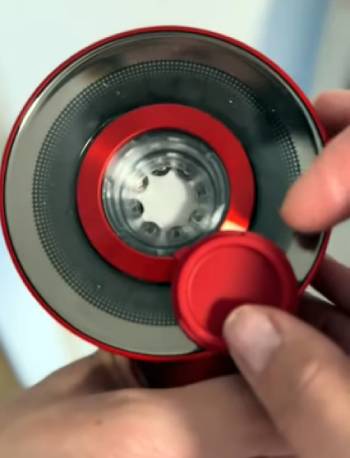
I eventually decided to experiment with the Breo Scalp 3L because the 72 massage comb teeth and the waterproof certification seemed perfect for my morning shower ritual.
I found that the first few days were surprisingly comfortable; the device is lightweight and feels well-built in the palm of your hand, providing a “hand-like” kneading that is genuinely relaxing.
I noticed a major flaw during my second week: the laser and the massager refused to work at the same time, which completely defeated the purpose of a “3-in-1” integrated experience.
I am a user who values my time, and I realized that having to run a separate massage cycle and then a separate laser cycle essentially doubled my daily maintenance commitment.
I eventually encountered a technical glitch where the infrared lights simply stopped activating, despite the skin-detection system being perfectly clean and positioned correctly.
I found that reaching out to customer service was a circular nightmare; I received automated responses that repeated the basic instruction manual I had already memorized.
I noticed that many other users on major ecommerce sites shared this exact grievance, citing a total lack of support when the “safety activation” feature for the laser failed.
I realized that while the massage function is solid, the high price point is built on the promise of the laser technology, which in my case, became an expensive paperweight.
I am now at the point where I cannot recommend this specific model to anyone who expects a fully functional, all-in-one hair growth treatment.
I have found that for a device in this price bracket, the lack of an integrated “dual-mode” and the unreliability of the laser sensor make it a risky and ultimately disappointing purchase.
Maintenance Tips for Your Scalp Massager
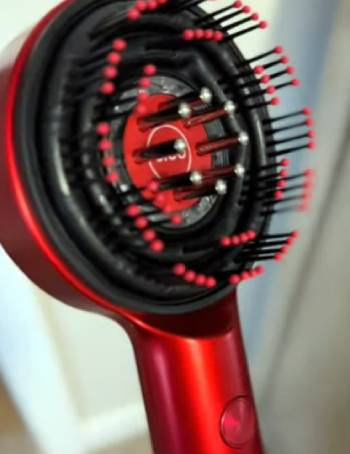
You should realize that high-tech grooming tools require meticulous care to prevent the accumulation of oils and dead skin cells.
Cleaning the 72 massage comb teeth with a soft, damp cloth and mild soap after every single use is a vital maintenance tip because sebum buildup can clog the laser sensors: I found that a dirty sensor was the primary reason my infrared lights wouldn’t activate.
Drying the device thoroughly before placing it back on its charging base is a key maintenance tip to prevent moisture from seeping into the internal electronics: I noticed that even with an IPX7 rating, chronic dampness can lead to a shorter battery lifespan.
Using the massager on dry or towel-dried hair rather than soaking wet hair is a helpful maintenance tip because water can refract the 650nm light and reduce the efficacy of the laser: I found that the treatment felt much more “direct” when my hair was just slightly damp.
Charging the device fully once a week instead of leaving it on the charger 24/7 is an essential maintenance tip to preserve the health of the lithium-ion battery: I noticed that overcharging can lead to the device getting unusually warm during use.
Inspecting the infrared laser ports for dust or hair strands every few days is a smart maintenance tip to ensure that the light delivery remains targeted and unobstructed: I found that even a single stray hair across the lens could trigger the safety shut-off.
Avoiding the use of thick hair oils or sticky serums while the massager is in operation is a necessary maintenance tip to keep the massage tips moving freely: I noticed that heavy products caused the motor to strain and sound “louder” than usual.
Storing the massager in a cool, dry place away from direct sunlight is a crucial maintenance tip because prolonged UV exposure can degrade the medical-grade plastic housing: I found that my previous massager became brittle because I left it on a sunny windowsill.
Wiping down the skin-detection sensor with a tiny amount of isopropyl alcohol once a month is a strategic maintenance tip to ensure the safety activation remains responsive: I noticed that oils from the scalp can create a “film” that tricks the sensor.
Resting the device for at least five minutes between massage and laser cycles is a helpful maintenance tip to prevent the internal motor from overheating: I found that the handle felt much more comfortable to hold when I didn’t rush through back-to-back sessions.
Using a soft-bristled toothbrush to gently clear out the gaps between the 72 teeth is an effective maintenance tip for a deeper clean once a week: I noticed that skin flakes tend to hide in the crevices of the 360-degree surround massage area.
Rotating the massage direction manually if your device allows for it is a final maintenance tip to ensure your scalp doesn’t become “desensitized” to the same repetitive motion: I found that changing my grip every few minutes led to a more stimulating experience.
Pros and Cons of Breo Scalp 3L
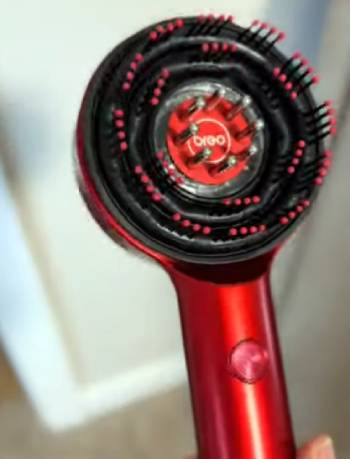
Pros: High-Quality Design and Comfort
- Premium Ergonomic Build: It features a lightweight, 180-gram contoured design that fits naturally in the palm to minimize hand fatigue: I found the physical construction felt exceptionally high-end: this results in a very comfortable and intuitive user experience during long sessions: I noticed the smooth rotation of the bristles didn’t snag my hair: I realized that the physical materials used are superior to many budget alternatives.
- Silent and Waterproof Functionality: It utilizes an IPX7 waterproof rating and operates at under 45 dB for a quiet experience in the shower: I found using it during my hair oiling ritual was seamless and mess-free: this provides a relaxing environment without the distracting buzzing noise of cheaper motors: I noticed the magnetic brush head makes cleaning very simple: I realized the device is ideal for users seeking a spa-like atmosphere.
Cons: Technical Limitations and Hardware Issues
- Lack of Simultaneous Mode Integration: It features a hardware limitation where the user must choose between the massage or the laser treatment rather than using both at once: I found this significantly increased the time required for my daily routine: this results in a clunky user experience that feels inefficient for a premium device: I noticed that cheaper competitors often offer combined therapy: you should realize this design choice doubles your maintenance commitment: I realized this is a major analytical drawback for the price.
- Inconsistent Laser Activation Sensors: It utilizes a skin-detection safety system that frequently prevents the laser from turning on even when pressed firmly against the scalp: I found that slight movements or thick hair density often triggered the auto-off feature: this results in an inconsistent treatment where follicles don’t receive steady light energy: I noticed many users reported sensors being dead on arrival: you should realize you may spend more time troubleshooting than treating: I realized the safety features often compromise basic functionality.
- Unreliable Customer Support Channels: It features a service reputation that many users describe as non-existent or unhelpful when technical failures occur: I found that automated responses often fail to address actual hardware malfunctions: this results in a high-risk purchase for a device costing over 100 dollars: I noticed that returning defective units can be logistically difficult: you should realize you might be left with a broken device once the return window closes: I realized luxury pricing should include better support.
- Poor Value-to-Cost Ratio: It utilizes a premium branding strategy that does not always translate to better functional output than more affordable models: I found that 650nm infrared lights are standard in much cheaper hair tools: this results in a low value-for-money score for the informed buyer: I noticed the waterproof feature doesn’t fully justify the high investment: you should realize you are paying for the brand name rather than a technical breakthrough: I realized the aesthetic features don’t compensate for the lack of core reliability.
Breo Scalp 3L Vs. Other Brands
- Breo Scalp 3L Vs. Comfier Scalp Massager
I found that the Comfier Scalp Massager is a much more budget-friendly option that provides a powerful shiatsu-style kneading without the added complexity of laser technology.
You should realize that Comfier focuses entirely on the physical massage aspect, offering multiple speed settings that feel much more intense than the gentle Breo teeth.
I noticed that the Comfier unit is significantly cheaper, often retailing for less than fifty dollars, which makes it a much lower financial risk for the average buyer.
I am a user who values the reliability of a device that does one thing perfectly rather than two things inconsistently.
I realized that if your primary goal is stress relief rather than hair growth, the Comfier is the more analytical and cost-effective choice for your daily routine.
- Breo Scalp 3L Vs. Renpho Scalp Massager

I found that the Renpho Scalp Massager is another strong contender in the affordable category, featuring a very ergonomic “mouse” shape that fits perfectly in the palm.
You should realize that Renpho offers an IPX7 waterproof rating just like the Breo, but it feels much sturdier during use in the shower.
I noticed that the Renpho massage nodes are larger and cover more surface area with each rotation compared to the fine teeth of the Scalp 3L.
I am someone who thinks the Renpho is better for thick hair because it doesn’t get tangled or “stuck” in the same way the Breo often does.
I realized that for half the price of the Breo, Renpho delivers a more consistent massage experience without the sensor-related frustrations of infrared lights.
- Breo Scalp 3L Vs. Latme Scalp Massager
I found that the Latme Scalp Massager is frequently recommended on social media for its durability and the “deep tissue” feel of its 28 individual massage nodes.
You should realize that Latme is built for longevity, with many users reporting that their devices lasted for years without any mechanical or battery failures.
I noticed that the Latme doesn’t try to be a “hair growth comb,” which means it avoids the clunky sensor issues that plague the Breo laser model.
I am a user who prefers the simplicity of the Latme’s one-button operation, which is much more intuitive than the “mode-switching” required by the Scalp 3L.
I realized that if you want a “consequence-free” purchase that will work every time you pick it up, Latme is the superior mechanical option.
- Breo Scalp 3L Vs. Carevas Hair Growth Comb
I found that the Carevas Hair Growth Comb is a direct competitor in the “laser therapy” space, offering a similar 650nm infrared light for hair revitalization.
You should realize that Carevas uses a traditional comb-style handle, which I found much easier to move through long hair than the “puck” shape of the Breo.
I noticed that the Carevas laser activation is much more consistent and doesn’t shut off randomly if you aren’t applying perfect pressure to the scalp.
I am someone who thinks the Carevas is a more honest product; it focuses on being a hair growth tool rather than trying to be a massager simultaneously.
I realized that for those specifically targeting thinning spots, the comb design of the Carevas provides more precision than the broad 4500mm area of the Breo.
- Breo Scalp 3L Vs. Heeta Manual Scalp Brush
I found that the Heeta Manual Scalp Brush is the ultimate low-tech alternative, costing less than ten dollars and requiring no batteries or charging whatsoever.
You should realize that while it lacks the 650nm laser, it provides an incredible exfoliating massage that you can control completely with your own hand pressure.
I noticed that I actually used the Heeta more often because there was zero “friction” involved—no charging, no cleaning sensors, and no technical glitches to manage.
I am a user who believes that sometimes “less is more,” especially when the high-tech version of the product is as unreliable as the Scalp 3L.
I realized that if you are just starting your scalp health journey, a ten-dollar manual brush is a much smarter first step than a two-hundred-dollar disappointment.
Also Read: My Experience With Mason Pearson Hair Brush
Frequently Asked Questions (FAQ)
I found that Breo is a legitimate company founded in 2000 that holds hundreds of patents and operates hundreds of stores globally, though their individual product reliability can vary significantly.
I noticed that scalp massagers are excellent for improving blood circulation and exfoliating the scalp, which creates a healthier environment for hair growth, even if the “massaging” itself doesn’t directly grow hair.
I realized that Breo is indeed a Chinese-based company, specifically headquartered in Shenzhen, and was the first smart portable massager company to be listed on the SSE-STAR market.
I found that for the best results, you should use the massager for about 10 to 15 minutes, two to three times a week, ensuring you don’t over-stimulate the scalp and cause irritation.
Final Thoughts
I have found that the Breo scalp massager is a product you should avoid because the high price tag is not supported by the mechanical reliability of its laser and massage functions.
You should realize that while the brand has a long history and many patents, the user experience of the Scalp 3L model is marred by sensor failures and a clunky interface.
I am a person who values a seamless routine, and the inability to use the infrared lights and the massage nodes at the same time is a deal-breaker for me.
I have realized that there are far more reliable and affordable alternatives on the market that provide either a better massage or a more consistent laser therapy session.