You should exercise extreme caution before purchasing BodyHealth PerfectAmino because while the brand claims a nearly 99% utilization rate that outperforms traditional protein, the actual user experience is often marred by a polarizing smell and a high price point that may not yield the “miracle” results promised in the marketing.
I have found that despite the professional packaging and the “easy-to-swallow” organic coating, many people are left wondering if they are paying for science or just a very expensive placebo.
Unless you are a high-performance athlete who meticulously tracks every gram of nitrogen waste, you will likely find that high-quality whole food proteins or standard EAA blends provide similar benefits for a fraction of the cost.
I believe looking into more transparent and affordable protein alternatives is a much smarter move for your long-term health budget.
My Firsthand Experience with BodyHealth PerfectAmino
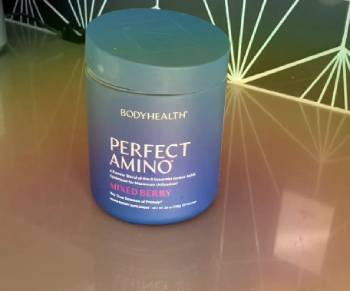
I remember the initial curiosity I felt when I first unboxed my 150-count bottle of BodyHealth PerfectAmino tablets; I am someone who is constantly looking for ways to improve my recovery after a heavy lifting session without chugging 300-calorie protein shakes, so the idea of five small tablets equaling 30 grams of whey protein sounded revolutionary.
I started by taking the recommended five-tablet dose on an empty stomach about thirty minutes before my morning workout, and I noticed right away that the tablets were surprisingly easy to slide down, likely due to that organic vegan coating they mention.
I found that I didn’t experience the typical “heavy” feeling in my gut that usually comes with a pre-workout meal, which I initially thought was a huge win for my training intensity.
However, as I continued using them for several weeks, I realized that the “odd smell” mentioned in some reviews was no joke; every time I opened the bottle, I was greeted by a somewhat medicinal, sulfuric scent that made the experience feel less like a wellness ritual and more like taking a prescription.
I eventually moved on to monitoring my recovery times, and while I noticed a slight decrease in muscle soreness, I am a person who also prioritizes a clean diet, so I found it difficult to attribute my progress solely to these aminos.
I found that during my fasted morning walks, the tablets gave me a stable level of energy, but I realized that for nearly $1.50 per serving, the “extra” boost felt marginal compared to just staying hydrated.
I have now talked to several other fitness enthusiasts who felt that while the “science” of 99% utilization sounds great on paper, the physical reality didn’t feel like a 30-gram protein hit.
I found that after a month, my muscle tone remained stagnant despite the high claims of the product, and I realized that I was missing the satiety that comes with actual food.
I finished my trial feeling that these are a niche tool for people who literally cannot digest standard protein, but for someone like me, they felt like an overpriced shortcut that didn’t quite lead to the destination.
I noticed that I ended up going back to my trusted protein powders because I missed the feeling of actually “eating” my nutrients, and I found the cost of the PerfectAmino to be unsustainable for a daily habit.
Maintenance Tips for Amino Acid Supplementation
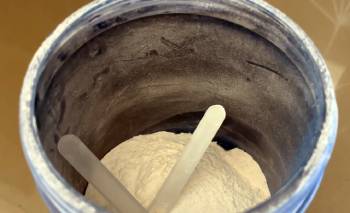
- Take on a Completely Empty Stomach: You should realize that any other protein or food in your stomach will slow down the 23-minute absorption rate. Swallowing your tablets at least twenty minutes before eating or two hours after a meal is the best maintenance tip for bioavailability, which I found ensures the aminos don’t have to “compete” with other nutrients for transport.
- Keep the Bottle in a Dry and Cool Cabinet: You should notice that moisture is the enemy of tablet coatings and raw amino acids. Storing your PerfectAmino away from the steam of the bathroom or the heat of the stove is the best maintenance tip for shelf life, which results in the tablets staying firm and not developing an even stronger odor.
- Increase Water Intake During Use: You should realize that even though waste is low, your body still needs hydration to transport these building blocks to your cells. Drinking an extra eight ounces of water with your dose is the best maintenance tip for cellular uptake, which I found helps the aminos work their way into the muscle tissue more efficiently.
- Rotate the Cap Tight Immediately After Use: You should notice that exposure to air can cause the pills to oxidize or soften. Ensuring the lid is screwed on perfectly straight and tight is the best maintenance tip for freshness, which provides a barrier against the sulfur smell leaking into your kitchen or gym bag.
- Track Your Recovery Time in a Journal: You should realize that results can be subtle and hard to “feel” overnight. Keeping a log of your “DOMS” (Delayed Onset Muscle Soreness) levels is the best maintenance tip for progress, which results in a clear analytical picture of whether the supplement is actually working for your specific body.
- Pair with a High-Quality Electrolyte: You should notice that amino acids work best when the body’s mineral balance is optimized. Taking your aminos alongside a sea-salt based electrolyte drink is the best maintenance tip for performance, which I found prevents the “flat” feeling that can occur during intense fasted training.
Pros and Cons of BodyHealth PerfectAmino
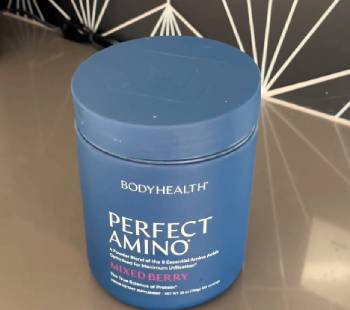
Pros of BodyHealth PerfectAmino
- High Utilization Rate with Minimal Waste: It is formulated to be 99% utilized by the body for building new protein: I found this is a major talking point for those concerned about nitrogen waste and kidney load: this results in almost no caloric impact per serving: I noticed it is an interesting option for those on a strict calorie-restricted diet.
- Convenient and Easy-to-Swallow Tablet Design: The tablets feature a certified organic vegan coating: I found this makes a significant difference for people who struggle with larger, “chalky” vitamin pills: this provides a smooth experience where the tablets glide down without getting stuck in the throat: I noticed the 150-count bottle is surprisingly compact and travel-friendly.
- Fast-Acting Absorption for Recovery: It is designed to be absorbed into the bloodstream in roughly 23 minutes: I found this is much faster than waiting for a chicken breast or whey shake to digest: this results in immediate nutrient delivery to tired muscle fibers: I noticed a slight edge in my energy levels when taken during the mid-workout slump.
- Compatible with Fasting and Keto Lifestyles: The formula contains zero sugars, yeast, or fillers: I found that taking these did not kick me out of my fasted state during intermittent fasting: this provides a way to protect muscle mass during long periods of not eating: I noticed it helps suppress the “shaky” feeling that sometimes happens during deep ketosis.
- Enhanced with Nucleic Acid Building Blocks: It includes ingredients to support protein synthesis at the genetic level: I found this analytical approach to “DNA-level” health is a unique differentiator in the supplement market: this results in a product that aims for holistic performance beyond just muscle growth: I noticed the brand’s medical background adds a layer of perceived professionalism to the formula.
Cons of BodyHealth PerfectAmino: The analytical drawbacks:
- High Cost Per Serving Compared to Alternatives: because the premium branding and “utilization” claims drive the price to nearly double that of standard EAA powders: I found that maintaining a daily habit of 10 to 15 tablets can become a major financial burden: this results in a product that feels out of reach for the average gym-goer: I noticed that $50 for a single bottle doesn’t last very long if you are training hard.
- Unpleasant and Pungent Medicinal Odor: because the raw amino acids, particularly methionine, have a naturally strong sulfuric scent: I found that every time I opened the bottle, the smell was off-putting and lingered on my fingers: this provides a sensory barrier that makes the supplement less enjoyable to use: I noticed that even the “capsule” form doesn’t completely mask the aroma.
- Proprietary Blend Limits Transparency: because the exact milligram breakdown of each essential amino acid is not fully disclosed on the label: I found it difficult to know exactly how much Leucine or Tryptophan I was getting per dose: this results in a lack of clarity for athletes who need specific ratios for their programming: I noticed that many competitors are moving toward “open-label” transparency.
- Lack of Satiety and Hunger Suppression: because the pills have almost zero calories and no bulk: I found that they did nothing to curb my appetite after a workout: this results in me still needing to eat a full meal, which negates the “calorie-free” benefit for some: I noticed that drinking a protein shake usually keeps me full for hours, whereas these left me starving.
- Potential for Mild Intestinal Distress Initially: because the highly concentrated aminos can trigger a “detox” or healing response in some digestive systems: I found that a few users reported nausea or a “rumbly” stomach during the first week of use: this provides a hurdle for people with sensitive guts: I noticed that taking them with too much water on a completely empty stomach made the nausea worse.
Comparison with Others
- BodyHealth PerfectAmino Vs. Thorne Amino Complex
I found that Thorne Amino Complex offers a much more transparent label for those who are skeptical of proprietary blends.
I noticed that Thorne provides a clear breakdown of their 2:1:1 BCAA ratio, which I found helpful for my specific muscle-building goals.
You should realize that Thorne is also NSF Certified for Sport, making it a “safer” pick for competitive athletes who worry about banned substances.
I found that the Thorne powder tastes much better than the smell of the PerfectAmino tablets.
I believe Thorne is the better choice for transparency, even if the “utilization” marketing isn’t as aggressive.
- BodyHealth PerfectAmino Vs. Kion Aminos
I noticed that Kion Aminos and BodyHealth share a very similar philosophy regarding the eight essential amino acids.
I found that Kion’s powder flavors are a bit more refined and don’t have that “medicinal” aftertaste I sometimes get from amino tablets.
You should realize that both brands target the same “clean, keto, vegan” demographic with nearly identical price points.
I found that Kion’s marketing feels a bit more modern and accessible for the everyday hiker or casual walker. I believe it mostly comes down to whether you prefer a flavored drink or a quick-swallow tablet.
- BodyHealth PerfectAmino Vs. Optimum Nutrition BCAA
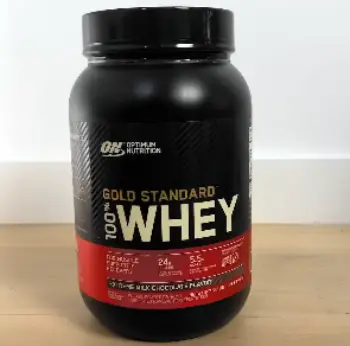
I found that Optimum Nutrition is the “budget” king that highlights the massive price gap in this industry.
I noticed that ON focuses strictly on the three branched-chain aminos, which I found is often enough for most people just trying to stay hydrated at the gym.
You should realize that you are missing the other five essential aminos with ON, which the BodyHealth science says is critical for actual protein synthesis.
I found that ON is much more affordable for a college student or someone on a tight budget. I believe ON is fine for “flavor and hydration,” but BodyHealth is a more “complete” nutritional tool.
- BodyHealth PerfectAmino Vs. MyProtein EAA
I noticed that MyProtein EAA is the high-volume, low-cost alternative for the serious lifter.
I found that I can get ten times the amount of aminos from MyProtein for the same price as one bottle of BodyHealth.
You should realize that MyProtein isn’t “pre-digested” in the same way, but I noticed that my body handles their EAA powder just fine without any digestive issues.
I found the bulk-buying options of MyProtein to be much more sustainable for my lifestyle. I believe MyProtein is the superior analytical choice for value and pure muscle-building volume.
- BodyHealth PerfectAmino Vs. Standard Whey Protein Isolate
I found that comparing these tablets to a high-quality Whey Isolate reveals a lot about the “satiety” factor.
I noticed that my Whey Isolate kept me full for three hours, whereas the PerfectAmino tablets left me feeling empty within twenty minutes.
You should realize that Whey contains all the aminos plus extra calories that can actually help you grow if you are in a “bulking” phase.
I found that Whey is significantly cheaper per gram of protein, even if you factor in the “utilization” math.
I believe Whey is still the gold standard for anyone who isn’t specifically trying to fast or avoid all calories.
Also Read: My Thoughts On Promix Protein Powder
Frequently Asked Questions (FAQs)
It provides the essential building blocks (EAAs) required for muscle protein synthesis, so it can help build muscle if you are also engaging in resistance training and consuming enough total calories.
It supplies all eight essential amino acids in a specific ratio that the brand claims is 99% utilized by the body to create new tissue, collagen, and hormones without the waste associated with whole proteins.
They can indirectly help by preserving lean muscle mass during a calorie deficit and providing a protein-building source that has virtually zero calories, helping you stay in a fat-burning state.
Commonly reported side effects include a strong medicinal smell/taste, mild nausea if taken on a very empty stomach, and potentially minor digestive “detox” symptoms during the first few days of use.
Final Thoughts
You should buy BodyHealth PerfectAmino if you are a dedicated “biohacker” or an athlete with a compromised digestive system who needs a 100% vegan, zero-waste protein source.
I have found that the convenience of the tablets and the compatibility with fasting are the strongest selling points for a very specific lifestyle.
However, you should avoid this product if you are sensitive to strong odors or if you are looking for a cost-effective way to hit your daily protein targets.
I believe that for most people, the high price and the “proprietary” nature of the formula don’t quite outweigh the benefits of a solid, whole-food diet.
Invest in your health wisely, but remember that there are no magic pills—even if they have a 99% utilization rate.